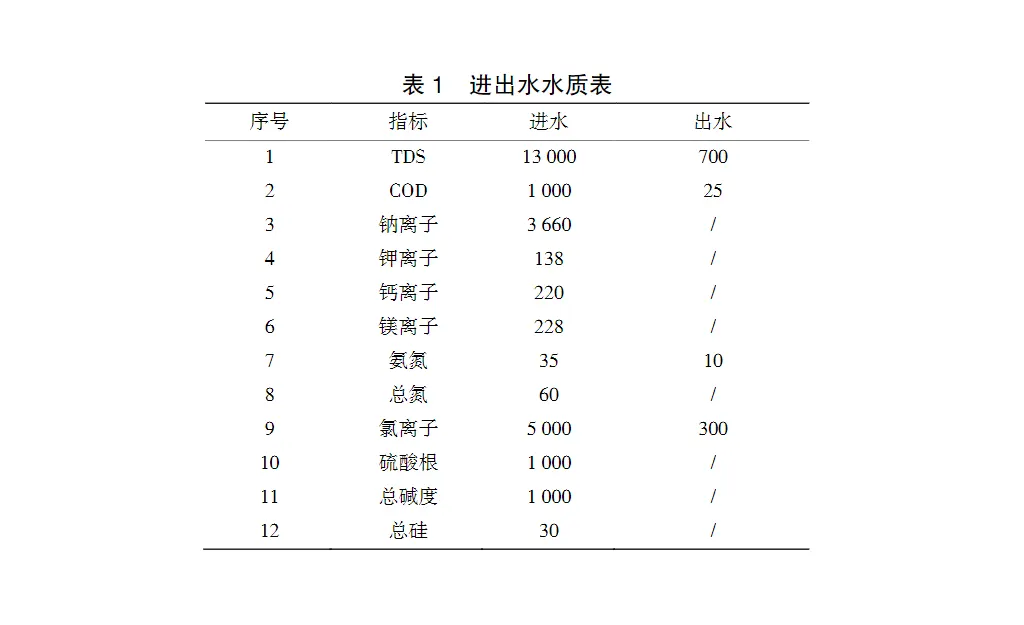
Biopharmaceutical enterprises use soybean oil, corn starch, betaine, corn germ, corn protein powder, soybean meal, cottonseed protein and other raw materials to produce vitamin B12, methylcobalamin, vitamin B2, adenosylcobalamin and other APIs. The production process generates about 3000 m3-d-1 of wastewater with high salt and high organic matter, which is discharged after biochemical treatment to meet the standard. In order to save water resources, the enterprise new wastewater zero-discharge process, the effluent water quality to meet the "recycled cooling water reclaimed water quality standards" (HG/T3923-2007) standards [1], the reuse rate of not less than 95%. Concentrate for evaporation and salt separation, evaporation and crystallisation of by-products of sodium chloride to meet the GB / T 5462 -2015 "Industrial Salt" industrial dry salt secondary standards, the rate of impurity salt is less than or equal to 15% [2-5].1 Zero-discharge process 1.1 Water quality The wastewater is high in salt, chloride ions, sodium ions and other monovalent ions account for the total salt ratio is high, and the design of the incoming and outgoing water quality is shown in Table 1, and the units are mg-L-1.
1.2 Process flow as shown in Figure 1, water reuse and zero discharge process for "pretreatment system + NF system + NF concentrate reduction system + RO system + secondary dehardening to remove silica system + high-pressure HPRO concentration + subsequent MVR evaporation and cryocrystallisation system". The processing idea of the whole system is to separate COD, divalent salt and monovalent salt through nanofiltration membrane retention, and then separate COD and divalent salt and monovalent ions in NF concentrate through material membrane, so that the divalent salt and COD in the whole sewage are enriched in the secondary concentrate of the reduced concentrate and the primary concentrate, and the COD in the concentrate after the primary reduction is non-biochemical degradation of COD, which can be improved by advanced oxidation technology to improve biochemical degradation. The COD in the concentrated liquid after the first reduction is non-biochemical degradable COD, which is used as the carbon source of the biochemical system after improving the biochemistry through advanced oxidation technology. The concentrate after secondary reduction mainly contains most of the divalent salts, which can be removed by the subsequent freeze crystallisation unit. The clear liquid after treatment by NF and NF reduction units contains mainly monovalent salts, at which point the salt concentration can be carried out. After RO treatment, the total hardness of calcium and magnesium in the concentrated liquid rises, and the hardness, alkalinity and total silica are removed through the synergistic removal of the per-caustic soda-soda ash-magnesium chloride agent [6]. For the subsequent HPRO re-concentration as a front-end guarantee pretreatment, HPRO concentrate for high TDS, high COD. can through the NF into the NF clear liquid of organic matter molecular weight, most of which belongs to the volatile substances, will not have a greater impact on the subsequent MVR evaporation operation process. Therefore, the main idea for the first separation of COD and divalent salt, a salt concentrate evaporation salt crystallisation, divalent salt concentrate freezing crystallisation, COD by oxidation pretreatment into the biochemical system to deal with, so as to achieve the purpose of zero emission. The whole process consists of pretreatment system, NF system, NF concentrate reduction system, reverse osmosis system, softening system, HPRO system, sludge disposal system, seven major components.
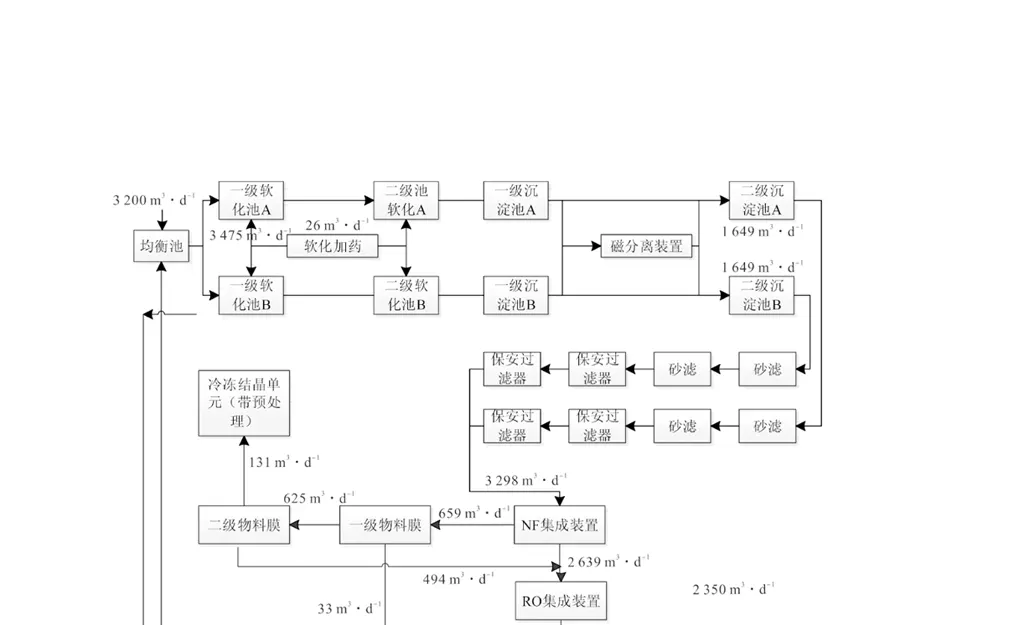
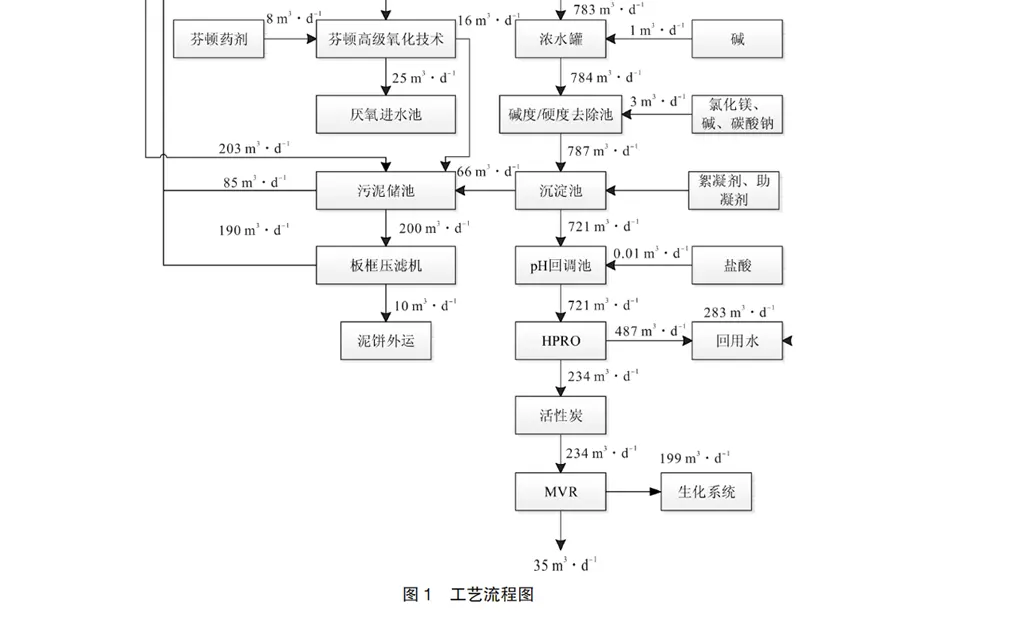
Pre-treatment system includes: hardening and softening system, magnetic separation system, sand filter, security filtration system, etc. NF system includes: NF inlet pump, NF inlet tank, NF integrated equipment, NF clear liquid tank, NF concentrate tank and other ancillary dosing units, etc. RO system includes: RO inlet pump, RO integrated equipment, RO concentrate tank, and scale inhibitor required for the RO system, such as dosing and cleaning units, etc. NF concentrate reduction system includes: a feed pump, two feed pumps, a booster pump, two booster pumps, intermediate tanks, storage tanks at all levels of materials and other units, cleaning and dosing units. Deep softening system: including pH adjustment tank, calcium and magnesium precipitation area and hardness removal reaction area. Sludge disposal system includes: diaphragm-type plate and frame filter press, press pump, press tank, belt conveyor, dewatering clear liquid conveyor pump, sludge hopper, flap system, sludge storage tank, plate and frame feed pump, and so on.
2 Parameters of major structures and equipment
2.1 Pre-treatment system Biochemical system of the second sedimentation tank effluent presents high COD, high suspended solids, high hardness characteristics, in order to meet the minimum requirements of the NF influent, it is necessary to carry out pre-treatment to precipitate COD, calcium and magnesium hardness and TSS, etc. first. Then sand filter and security filter to retain the suspended solids and organic matter that are not completely precipitated. The main role of raw water pretreatment is to prevent fine particles from contaminating the NF membrane; to prevent colloidal substances from contaminating and clogging the NF membrane; and to prevent oxidative damage to the NF membrane by strong oxidants. The project design adopts the combination of "softening in addition to hardness + magnetic separation + sedimentation + sand filtration + security filters" to pre-treat the original biochemical system of the two sedimentation tank water. There are 4 softening reaction areas, each with a capacity of 50 m3, dosing sodium hydroxide, magnesium chloride, calcium oxide, sodium carbonate, 2 sedimentation tanks, each with a capacity of 275 m3, sedimentation time of 3 h. There are 4 sets of sand filtration equipment, with a single set of processing capacity of 70 m3-h-1 and a filtration speed of 10 m-h-1. There are 2 sets of security filters, with folded high-flow cartridges, with a length of 1,016 mm, and a filtration precision of 5 μm.
2.2NF system biochemical system after treatment of the secondary sedimentation tank effluent difficult to biochemical degradation of organic matter formed COD, salinity and chromaticity exceeded the serious, after the front-end pretreatment system, the effluent suspended solids, hardness is greatly reduced, but the COD, salinity and so on is still very high. NF using integrated modular device, according to the design of 3,298 m3-d-1, a total of four sets of 900 m3-d-1NF integrated equipment, total capacity of 3600 m3-d-1. Single set of 9 membrane shells, 54 membrane elements, a total of 216 membrane elements, designed membrane flux 16 LHM, designed production capacity of 16 LHM. 1NF integrated equipment, a total treatment capacity of 3600 m3-d-1, a single set of configuration 9 membrane shells, 54 membrane elements, a total of 216 membrane elements, the design of the membrane flux 16 LHM, the design of the water production rate of 80%.
2.3 RO system using RO system will be monovalent salt concentration, clear liquid reuse, RO membrane concentration of liquid volume into the high-pressure HPRO for further concentration treatment, as far as possible to reduce the amount of evaporation.RO using integrated modular device, according to the design of 3200 m3-d-1, a total of 4 sets of capacity of 800 m3-d-1 RO integrated equipment, a single set of configuration of 12 membrane shells, 72 membrane elements, a total of 288 membrane elements, designed membrane flux of 12 LHM, design yield 75%. Total 288 membrane elements, design membrane flux 12 LHM, design water yield 75%.
2.4 NF concentrate reduction system For the characteristics of NF membrane concentrate with high COD and high divalent salt, in order to improve the overall water resource recovery rate, COD and divalent salt need to be separated. A total of four sets of integrated equipment for NF concentrate reduction are designed for this project. The single set is divided into two stages of separation, with the first stage divided into two sections, one section of clear liquid from the first stage enters the second stage to ensure the COD of the clear liquid effluent, and one section of concentrated liquid from the first stage enters the first stage of the second stage for re-concentration, which reduces the amount of the tailing of the NF concentrate to the maximum extent. The clear liquid produced by the reduction system is mixed with the nanofiltration clear liquid to carry out reverse osmosis treatment, the first two sections of the concentrated liquid by the original Fenton advanced oxidation technology to improve the biochemical system, then enter the original anaerobic unit for treatment, the second stage of the concentrated liquid enters the freezing crystallisation unit to carry out the sodium sulphate crystallisation. n F concentration liquid reduction and concentration module device, according to the design of 659 m3-d-1, 495 m3-d-1 of water, the design of the Primary membrane flux 12 LMH, secondary membrane flux 5.8 LMH, total number of membrane elements 112.
2.5 Depth softening system RO concentrate is enriched with most of the calcium, magnesium and other divalent ions in the NF produced water as well as silica, which has a strong tendency of scaling and fouling in the subsequent HPRO treatment system, and therefore needs to be chemically softened [8]. Depth softening reaction area 4, a single pool capacity of 30 m3, dosing order were sodium hydroxide, magnesium chloride, calcium oxide, sodium carbonate, sedimentation tank 2, a single pool capacity of 150 m3, sedimentation time of 6 hours.
2.6 HPRO system RO concentrate is still 721 m3-d-1, directly on the evaporation and crystallisation, then the investment and operating costs will be high, after the material balance calculation and ion concentration estimation, the TDS of RO concentrate is about 35,000 mg-L-1, through the HPRO to further concentrate the TDS to about 100,000 mg-L-1, the amount of water into the evaporation can be reduced to 234 m3-d- 1 [9]. 1[9].The HPRO is an integrated modular unit designed according to 730 m3-d-1 with 84 membranes, a design membrane flux of 10 LHM, and a design water yield of 60%.
2.7 Sludge disposal system The sludge generated by this project is mainly softening process, Fenton oxidation system, coagulation and precipitation system generated by the chemical sludge is mainly, moisture content of 95% ~ 98% between the cohesive properties, the main components of calcium carbonate, magnesium hydroxide, magnesium silicate, calcium silicates, calcium silicate, ferric hydroxide, and some of the flocculants and organic pollutants [11], suitable for the selection of plate and frame filter presses For treatment, the design adopts 2 sets of high-pressure diaphragm dewatering machine, with a single filtration area of 200 m2, a feeding capacity of 297 m3-d-1, a supporting feeding pump of 40 m3-h-1, a synchronous supporting discharge silo, sludge thickening tank, etc., and the water content of the dewatered sludge is 60%~70%.
3 Running Costs Running costs include chemicals, electricity and labour. Calculated on the basis of the project's water treatment capacity of 3200 m3-d-1, the steam is on-site waste heat steam, which is not costed, and is offset by the proceeds from the finished salt of sodium chloride and sodium sulphate and the disposal fee.
(1) Pharmaceutical costs: including membrane cleaner, scale inhibitor, hydrochloric acid, coagulant aid, flocculant, magnesium chloride, sodium carbonate, sodium hydroxide, calcium oxide, hydrogen peroxide, ferrous sulphate, biocide and reducing agent a total of 12 kinds of chemicals, the cost of treatment of tonnes of water is about 13.23 yuan;
(2) Electricity: the total operating power of the sewage treatment system equipment running every day is 1593.347 kW. the maximum daily electricity consumption for tonnes of water is: 1593.47 kW × 0.8 × 24h ÷ 3200m3 = 9.56 kW-h-m-3. industrial electricity is calculated at 0.407 yuan - (kW-h)-1. The electricity cost for tonnes of water treatment is 3.89 yuan-m-3.
(3) Labour cost: the project requires a total of about 24 personnel, estimated at 100,000 yuan/person-year, the labour cost of tonnes of water is about 2.27 yuan. The comprehensive operating cost is about 19.39 yuan-m-3, of which the cost of pharmaceuticals will change with the change of water quality and quantity.
4 Conclusion
(1) The wastewater generated by biopharmaceuticals can be treated by biochemical system and the standard water can be reused by way of hardness removal, filtration and membrane separation to achieve water reuse, and the water quality reaches the Water Quality Standard for Recycled Water of Circulating Cooling Water (HG/T3923-2007).
(2) The mono- and divalent salts in the wastewater can be separated by the NF nanofiltration membrane integrated equipment, and the NF concentrate can be separated by two-stage material separation membrane to achieve the separation of COD and salts, which further reduces the volume of the NF concentrate and at the same time reduces the COD value of the influent of the sodium sulphate evaporation and crystallisation system, and improves the quality of the sodium sulphate crystalline salt.
(3) The clear liquid after separation by NF membrane system is concentrated by RO and HPRO, which effectively reduces the scale of sodium chloride evaporation and crystallisation system and saves investment and operation cost.
(4) The setting of the softening and hardening system reduces the cleaning frequency of the membrane, which can improve the service life of the membrane.
(5) Overall water reuse rate of 95% or more.
Welcome to call us for consultation, technical exchange, and material experiment.
In addition, sludge generated by treatment facilities specialised in treating industrial wastewater (or treating a small amount of domestic wastewater at the same time) may have hazardous characteristics and should be identified in accordance with the National List of Hazardous Wastes, the National Environmental Protection Standard Technical Specification for the Identification of Hazardous Wastes (HJ/T298-2007), and the hazardous waste identification standard.
(c) In the third category, if a public sewage treatment plant, whose main function is to treat domestic sewage, receives and treats industrial wastewater, and if that industrial wastewater can stably meet the national or local pollutant discharge standards before it is discharged into the public sewage treatment system, the sludge from the public sewage treatment plant may be managed in accordance with the provisions of the first article. However, in the event of a significant change in the discharge of industrial wastewater, the hazardous characteristics shall be identified in accordance with the provisions of article II.
In the fourth category of cases, where an enterprise discharges industrial wastewater outside its legal boundaries in a direct or indirect manner, the quality of the effluent water shall comply with the national or local pollutant discharge standards; sludge generated in the process of wastewater treatment, which is a solid waste being generated, and for which the hazardous characteristics are to be identified, shall be sampled in the process of wastewater treatment in accordance with the provisions of the "Technical Specification for Identification of Hazardous Wastes" and the minimum number of samples shall be determined in accordance with the amount of sludge generated. The minimum number of samples should be determined according to the amount of sludge generated.
A few typical sludge discriminations
1. Electroplating wastewater and electroplating sludge with excessive heavy metals:
Electroplating sludge belongs to hazardous waste, the waste category often belongs to HW17, HW21, HW22, HW23 at the same time.Electroplating wastewater with excessive heavy metals belongs to the scope of wastewater pollution prevention and control and is included in the management of wastewater, which does not apply to the scope of the Law of the People's Republic of China on Prevention and Control of Environmental Pollution by Solid Wastes and is not a hazardous waste. Although the excessive wastewater is not included in the management of hazardous waste, according to the "Two High Judicial Interpretations" (2016 version), if the wastewater exceeds the standard of one type of heavy metal (such as lead, mercury, chromium, cadmium, arsenic) by three times, or the standard of two types of heavy metals (such as nickel, copper, zinc, manganese, vanadium) by more than 10 times, in addition to imposing administrative penalties, as usual, they will be held criminally liable.
2. Sludge from domestic sewage treatment plants:
It is a solid waste, not a hazardous waste. According to the Environmental Office [2010] No. 157, this type of waste in the process of transfer management, "reference to the management of hazardous waste, the establishment of sludge transfer joint list system." The reference to hazardous waste management means that this type of sludge does not belong to hazardous waste, but it is necessary to raise the management level, especially to strengthen the management of accounts, to prevent the transport process of spilling, dripping and illegal dumping. However, the sludge generated in the process of sewage treatment in industrial enterprises, often because of its leaching toxicity exceeds the standard, or contains other toxic and hazardous substances and other dangerous characteristics, the vast majority of which should be classified as hazardous wastes (the method of determination is mainly based on the enterprise's environmental assessment, the industry law, the source of the material, the experts identified, the properties of the identification, etc.).
3. Fly ash from domestic waste incineration:
It is a hazardous waste (HW18). However, after meeting the requirements of Article 6.3 in the "Pollution Control Standards for Domestic Waste Landfills" (GB16889-2008), it is not included in the management of hazardous waste to enter the landfill of domestic waste; the other situation is that if after pretreatment, it meets the relevant requirements of the "Pollution Control Standards for the Cooperative Disposal of Solid Waste in Cement Kilns" (GB30485-2013), the process of co-disposal is also included in the Exemptions from management.
Most of them are hazardous waste. The Regulations on the Management of Medical Waste (State Council Decree No. 380) stipulate that "medical waste refers to directly or indirectly infectious, toxic and other hazardous wastes generated by medical and health institutions in the course of medical treatment, prevention, health care and other related activities." Infectious wastes" in the "Classification Catalogue of Medical Wastes" (Health and Medical Development [2003] No. 287) include "other items contaminated by patients' blood, body fluids and excreta", and the slag, sedimentation sludge and septic tank sludge generated in the process of sewage treatment in medical institutions should be treated as "infectious wastes". Grate sludge, sedimentation sludge and septic tank sludge generated in the process of sewage treatment in medical institutions should be included in this category. The waste code in the new National Hazardous Waste List is 841-001-01.
If a healthcare facility has a specially designed wastewater treatment process in its EIA and has made a determination of the properties of the sludge, and if management believes that the sludge should be included in the management of hazardous wastes, a final determination should be made through the hazardous waste identification process.
Five Steps to Identify Sludge as Hazardous Waste
According to the "National Hazardous Waste List" and "Hazardous Waste Identification Criteria - General Principles" issued by the Ministry of Environmental Protection, the National Development and Reform Commission and the Ministry of Public Security, combined with the "Technical Policy on Treatment, Disposal and Pollution Prevention of Urban Sewage Treatment Plant Sludge (for Trial Implementation)" jointly issued by the Ministry of Housing, Ministry of Construction, Ministry of Environmental Protection and the Ministry of Science and Technology on 28th February 2009, the sewage sludge can be determined in five steps Whether sewage sludge is hazardous waste, as shown in the figure below:
Step 1 Classification
Step 2 Basis for judgement
Step 3 How to regulate
Step 4 Resource utilisation
Step 5 What can be exempted?
According to the Ministry of Emergency Management news, the State Council Safety Committee recently issued the National Work Safety Special Remediation Three-Year Action Plan (referred to as the "Three-Year Action Plan") specifies two thematic implementation programmes, nine special remediation implementation programmes, special remediation of the three-year action from the start of April 2020 to the end of December 2022, which includes the organization of a comprehensive investigation of waste hazardous chemicals and other hazardous wastes. These include the organisation of a comprehensive investigation of hazardous wastes such as abandoned hazardous chemicals, with chemical parks and chemical enterprises being the key targets for remediation, and the requirement that the whole process of hazardous waste storage, transport and disposal be regulated and implemented to ensure the safe disposal of hazardous wastes.
As a result, the three-year campaign to specialise in hazardous waste has begun!
Hazardous waste special management is one of the three-year special rectification focus - a special risk prevention and control of hazardous chemicals, will be carried out in four stages.
With regard to the safety and remediation of hazardous wastes, the Three-Year Action Plan indicates several major aspects, such as carrying out hazardous waste investigations, improving hazardous waste management mechanisms and accelerating the construction of hazardous waste disposal capacity. In order to ensure the supervision of hazardous wastes in the whole process, the relevant units should establish and improve the means of control from various aspects:
First, the establishment of a standardised hazardous waste inventory ledger, the classification of hazardous waste into zones for storage, and the setting up of hazardous waste identification markers for collection, storage, transport and disposal, in particular to strengthen the supervision and inspection of chemical parks, chemical and hazardous chemical units, and hazardous waste disposal units within the jurisdiction.
Secondly, the implementation of the hazardous waste declaration and registration system, and will be seriously investigated and dealt with at the same time into the credit management, the implementation of joint disciplinary action; at the same time to establish and improve the transfer of hazardous waste from the generation of disposal of various links in the joint system, the use of information technology, control of the flow of hazardous wastes, and dynamic supervision;
Thirdly, we have established a system of departmental liaison, regional collaboration and consultation and supervision of major cases to form a whole-process supervision system, and have revised and improved the Hazardous Waste Storage and Pollution Control Standards to promote the implementation of relevant laws, regulations and standards and norms by enterprises through rigorous means and close supervision.
Accelerating the construction of hazardous waste disposal capacity is the final link in the treatment of hazardous waste, and should not be overlooked. In this regard, the Three-Year Action Plan proposes that, according to the types and quantities of hazardous wastes generated in the region, reasonable planning should be made for the deployment of disposal enterprises or the use of disposal by enterprises themselves in a variety of ways, so as to strengthen regional hazardous waste disposal capacity, and at the same time to pay attention to high-risk grades of hazardous wastes, in particular to speed up the research and development of comprehensive disposal technology and equipment.
The unit that generates hazardous waste should also develop a hazardous waste management plan and declare to the competent environmental protection department at or above the county level where it is located the type of hazardous waste, the amount generated, the flow direction, the level of danger, the storage facilities, the use of their own disposal facilities or entrusted to an outside unit to use the disposal method and other relevant data and information. It should be noted that the storage of hazardous wastes shall not exceed one year, and it is strictly prohibited to mix hazardous wastes into non-hazardous wastes for storage.
This means that, in the field of hazardous waste treatment, the next may make, revise a number of relevant mandatory national standards, industry standards to regulate enterprises and industrial parks to carry out the management of hazardous waste, prompting China's hazardous waste generation to reduce the amount of treatment capacity has been significantly improved. (Part of the picture source: environmental protection new classroom, edited by net superior hazardous waste)
The total amount of sewage treatment in China is currently about 200 million tonnes/day, which roughly produces a staggering amount of wet sludge of about 200,000 tonnes/day. However, the proportion of its portion properly treated and disposed of is still low. The current situation of sludge treatment and disposal in China is very unpromising.
According to relevant data, about 30 million tonnes of sludge are not properly disposed of out of the large amount of sludge produced in China every year. The previous disposal practice was to send it to landfills. At present, the disposal of sludge is dominated by sludge resource utilisation. Most of the sewage treatment plants in China have a long service life and were constructed earlier, with a low level of synchronised sludge treatment. Due to national as well as local attention, sludge treatment has been incorporated into the sewage treatment process, but it still faces the dilemma of disproportionate production and disposal. On the one hand, the cost of sludge disposal is high; on the other hand, the technical route of sludge disposal is not yet perfect.
With regard to sludge treatment and disposal, China has issued a series of policies and regulations, such as the "Urban Sewage Treatment and Pollution Prevention and Control Technology Policy" and "Pollutant Emission Standards for Urban Sewage Treatment Plants" during the period of 2000-2002; the Ministry of Housing and Construction, the Ministry of Environmental Protection, and the Ministry of Science and Technology jointly issued the "Sludge Treatment and Disposal and Prevention and Control of Pollution Technology Policy (Trial)" in 2009; the Ministry of Environmental Protection introduced the "Sludge Treatment and Disposal In 2010, the Ministry of Environmental Protection issued the "Guidelines on the Best Available Techniques for Sludge Treatment, Disposal and Pollution Prevention and Control", "Technical Specifications for Sludge Treatment and Disposal in Urban Sewage Plants (Draft)", and the Ministry of Housing and Construction issued the "Technical Guidelines for the Treatment and Disposal of Sludge in Urban Sewage Treatment Plants (Trial)", and so on.
CAC membrane composting technology is a major innovation based on aerobic composting technology, CAC membrane composting technology is to add auxiliary materials and microbial decomposition bacterial agent for sludge pretreatment, and then through the CAC functional membrane will be completely covered by the material, the formation of micro-positive pressure within the membrane of the "artificial climate box", through the intelligent control system control of the ventilation and oxygen supply process, to achieve aerobic microbial high temperature fermentation of organic compounds contained in the treated sludge. It can achieve aerobic microbial fermentation at high temperature to deal with the organic compounds contained in the sludge, and the microbial metabolism generates a high temperature of 60°C-70°C for more than 10 days, which can completely kill the pathogenic bacteria, block the emission of odour and stench to the outside environment, and achieve the harmless treatment of the sludge.
In the future, sludge treatment and disposal will be the next pass in the battle against environmental pollution, the next important grip on environmental protection, and the next windfall in the environmental protection market.Sludge Filter Press
So what are the six national standard limits for sludge disposal? And how is sludge disposal categorised? The relevant national standards are collated below:
Pollutant Control Standards for Agricultural Sludge (GB 4284-2018)
This standard specifies the pollutant control indicators, sampling, testing, monitoring and sampling methods when the urban sewage treatment plant for agricultural use. The standard applies to the control of pollutants when urban sewage treatment plant sludge in arable land, garden land and pasture land.Filter Press Manufacturers
When sludge products are used for agricultural purposes, they are classified into Class A and Class B sludge products according to their pollutant concentrations, and their pollutant concentration limits shall meet the requirements of Table 1, and the conditions for the use of Class A and Class B sludge products are as follows.
When sludge products are used for agricultural purposes, their hygienic indicators and limit values shall meet the requirements of Table 3.
When sludge products are used for agricultural purposes, their physicochemical indicators and limit values shall meet the requirements of Table 4.
When sludge products are used for agricultural purposes, the cumulative annual use should not exceed 7.5t/h㎡ (on a dry basis), and the continuous use should not exceed 5 years.
Disposal of sludge from urban sewage treatment plants Mud quality for brick-making (GB/T 25031-2010)
This standard specifies the mud quality, sampling and monitoring of sludge from urban sewage treatment plants for sintering and utilisation. The standard applies to urban sewage treatment plant sludge disposal and sludge system sintered brick use.
When sludge is used to make bricks, the physical and chemical indexes of sludge should meet the requirements of Table 1.
When sludge is used to make bricks, the sludge burning loss and radionuclide index should meet the requirements of Table 2.
When sludge is used to make bricks, the sludge pollutant concentration limits shall meet the requirements of Table 3.
When sludge is used in brick making and crowd contact situations, the sludge hygiene indicators should meet the requirements of Table 4.
Disposal of sludge from urban wastewater treatment plants: Mud quality for separate incineration (GB/T 24602-2009)
This standard specifies the urban sewage treatment plant sludge separate incineration and utilisation of mud quality indicators and limits, sampling and monitoring, etc., the standard applies to urban sewage treatment plant sludge disposal and sludge
Separate incineration for utilisation.
When sludge is separately incinerated and utilised, its physical and chemical indexes and limit values should meet the requirements of Table 1, and the sand content of sludge should be fully considered when selecting the furnace type of incinerator.
Sludge Filter Press
Disposal of Sludge from Urban Sewage Treatment Plants Mud for Land Improvement (GB/T 24600-2009)
This standard specifies the sludge indicators and limits, sampling and monitoring of urban sewage treatment plant sludge land improvement and utilisation. The standard applies to urban sewage treatment plant sludge disposal and sludge
Land improvement use. The quality of the sludge used for land reclamation in drainage pipe pass-through sludge can be referred to this standard.
When sludge land improvement and use, its physical and chemical indicators and limit values should meet the requirements of Table 1.
Nutrient indicators and limit values for sludge land improvement and utilisation shall meet the requirements of Table 2.
The microbiological indicators and limit values of sludge for land improvement and utilisation shall meet the requirements of Table 3.
When sludge land improvement and utilisation, its pollutant indicators and limit values shall meet the requirements of Table 4.
Mud quality for mixed landfill for sludge disposal in urban sewage treatment plants (GB/T 23485-2009)
This standard specifies the urban sewage treatment plant sludge into the domestic waste sanitary landfill mixed landfill disposal and used as mulch soil mud quality indicators and limits, sampling and monitoring. The standard applies to urban sewage treatment plant sludge disposal and sludge and domestic waste mixed landfill.
When sludge is used for mixed landfill, its pollutant indicators and limit values shall meet the requirements of Table 1.
When sludge is used as landfill cover soil additive, its pollutant indicators and limits shall meet the requirements of Table 2, and basic indicators and limits shall meet the requirements of Table 3.
When sludge is used as an additive to landfill final cover soil, its biological indicators must also meet the requirements of GB 18918.
Disposal of sludge from urban sewage treatment plants Mud for landscaping (GB/T 23486-2009)
This standard specifies the urban sewage treatment plant sludge gardening green use of mud quality indicators and limits, sampling and monitoring. The standard applies to urban sewage treatment plant sludge disposal and sludge landscaping use.
When sludge gardening is utilised in population contact situations, the biological indicators and limit values should meet the requirements of Table 3.
When sludge is used in gardening, its pollutant indicators and limit values shall meet the requirements of Table 4.
Classification of Sludge Disposal in Urban Sewage Treatment Plants (GB/T 23484-2009)
Classification of Electroplating Sludge Treatment and Disposal (GB/T 38066-2019)
]]>In order to guide localities to carry out the construction and operation management of urban sewage treatment plant sludge treatment and disposal project, comprehensively promote the sludge treatment and disposal of urban sewage treatment plant in our province, and promote the resourceful utilisation of sludge, our department has formulated the "Technical Guidelines for the Treatment and Disposal of Sludge from Urban Sewage Treatment Plants in Sichuan Province (for trial implementation)". It is now issued to you, please refer to the implementation of the actual situation in the region.
Sichuan Provincial Department of Housing and Urban-Rural Development
Date and place of birth: 9 September 2021
Technical Guidelines (Trial)
The sludge of urban domestic wastewater treatment plant (hereinafter referred to as "sludge") referred to in this technical guideline refers to the semi-solid or solid material produced in the process of urban domestic wastewater treatment, excluding slag, scum and sand.
The sludge-derived products (hereinafter referred to as "sludge products") referred to in this technical guideline refer to the derivatives that can be utilised in a resourceful manner after the sludge of urban domestic wastewater treatment plants has been reduced, stabilised and rendered harmless.
This technical guideline is applicable to the management and technology selection of sludge generation, storage, treatment, transport and final disposal in order to enhance the science of sludge treatment and disposal management decisions.
Sludge treatment and disposal should follow the principles of source reduction and whole-process control, strengthen source control of toxic and hazardous substances, and select appropriate sewage and sludge treatment processes according to the requirements for the final safe disposal of sludge and the characteristics of sludge.
The goal of sludge treatment and disposal is to achieve the reduction, stabilisation and harmlessness of sludge; and to encourage the recovery and utilisation of energy and resources in sludge. It insists on achieving sludge treatment and disposal and comprehensive utilisation on the premise of safety, environmental protection and economy, so as to achieve energy conservation and emission reduction and the development of a circular economy.
Local people's governments are responsible for the planning and construction of sludge treatment and disposal facilities; sludge treatment and disposal facility operators are responsible for the safe treatment and disposal of sludge. Local people's governments should prioritise the procurement of sludge products that meet relevant national standards.
Encourage the full use of social resources to treat and dispose of sludge; encourage technological innovation and scientific and technological progress in sludge treatment and disposal; encourage the research and development of new technologies, processes and equipment for sludge treatment and disposal that are suitable for the actual situation in the province and the characteristics of the region.
Local people's governments shall reasonably determine the scale of sludge treatment and disposal facilities in accordance with the planned sludge generation of urban domestic sewage treatment plants; the scale of recent construction shall be determined moderately ahead of time in accordance with the current volume of sewage and the quality of incoming water, so as to give full play to the investment and operational benefits of the treatment facilities.
When urban domestic sewage treatment plants are newly constructed, reconstructed and expanded, sludge treatment and disposal facilities should be planned, constructed and put into operation at the same time as sewage treatment facilities. Sludge treatment must meet the requirements for sludge disposal, and projects that fail to meet the stipulated requirements shall not pass the acceptance; if the current sludge treatment facilities do not meet the requirements for disposal, rectification should be accelerated to ensure the safe disposal of sludge.
Encourage the use of incineration and drying, thermal hydrolysis, anaerobic digestion and aerobic fermentation for harmless treatment. Encourage the use of sludge and kitchen and food waste co-disposal facilities to enhance the comprehensive disposal of urban organic waste. When carrying out the construction of co-disposal sludge facilities, full consideration should be given to the operation of existing local sludge disposal facilities and the use of processes.
When planning and constructing treatment facilities, in addition to technical and economic analyses, attention should be paid to the evaluation of carbon emissions.
Sludge incineration.Sludge incineration can be divided into separate incineration and co-incineration. Encourage the use of sludge incineration process in areas with the conditions, it is appropriate to use drying and incineration of co-incineration, to improve the efficiency of the use of thermal energy of sludge; encourage sludge incineration plant and rubbish incineration plant co-built, and encourage the sludge as a low-quality fuel in the incinerator of coal-fired power plants, cement kilns or brick kilns mixed incineration; and encourage the slag of the slag that meets the requirements of the comprehensive use of building materials.
(1) When sludge is used for separate incineration, the mud quality shall meet the Mud Quality for Separate Incineration of Urban Sewage Treatment Plant Sludge Disposal (GB/T 24602), the incineration slag must be collected, stored, transported and disposed of separately from the incineration fly ash collected by the dust removal equipment; the incineration slag shall be disposed of according to the general solid wastes, and the incineration fly ash shall be disposed of according to the hazardous wastes. Incineration flue gas emission control requirements should meet the "Comprehensive Emission Standards for Air Pollutants" (GB 16297), of which dioxin control should meet the relevant provisions of the "Pollution Control Standards for Domestic Waste Incineration" (GB 18485).
(2) Sludge can be co-incinerated with domestic rubbish, or used as fuel in industrial incinerators, thermal power plant incinerators, the mass of sludge into the furnace should be less than the amount of rubbish (coal-fired) 20%. incineration flue gas emission control requirements should meet the corresponding national pollution control standards.
Comprehensive utilisation of sludge building materials.Comprehensive utilisation of sludge construction materials refers to the inorganic treatment of sludge, which is used to make cement additives, bricks, lightweight aggregates and road base materials. The comprehensive utilisation of sludge construction materials should be promoted in areas with conditions. The utilisation of sludge construction materials should be in line with relevant national and local standards and norms, and strictly guard against secondary pollution in production and use.
(1) When sludge is used to make cement, the design of cement kiln co-incineration should be in line with the current national standard "Design Code for Cement Kiln Co-disposal of Sludge Project" (GB 50757), and the quality of cement made should be in line with the technical performance requirements in "General Silicate Cement" (GB 175), "Silicate Cement Clinker" (GB/T 21372), and "Technical Specification for the Cooperative Disposal of Solid Wastes in Cement Kilns" (GB 30760). ) in the technical performance requirements. The ratio of sludge to total raw material mass (in terms of dry sludge) should not exceed 10%.
(2) When sludge is used to make bricks, the quality of sludge should be in line with the provisions of "Disposal of Sludge from Urban Sewage Treatment Plants Sludge for Brick Making" (GB/T 25031), and the quality of finished bricks prepared from sludge should meet the relevant provisions in the national standards of "Sintered Ordinary Bricks" (GB 5101), "Sintered Porous Bricks and Porous Blocks" (GB 13544) and "Sintered Hollow Bricks and Hollow Blocks" (GB 13545). ) in the relevant provisions. Sludge with low organic matter content is suitable for brick making. The weight ratio of sludge to total raw materials (in terms of dry sludge) should not exceed 10%, and the mixing ratio can be increased appropriately when industrial conditions permit or the products require it.
(3) Sludge can be used as raw materials for the preparation of lightweight auxiliary materials such as ceramic granules. According to the quality of sludge and other raw materials, the ratio of raw materials is determined through tests, and the quality of ceramic granules prepared should meet the technical requirements of Lightweight Aggregate and Its Test Methods Part 1 Lightweight Aggregate (GB/T 17431.1).
Sludge land use.Land use mainly includes land improvement and landscaping, etc. Sludge products that meet the standards after treatment can be used for land use, and the land use should comply with national and local standards and regulations. Sludge products meeting the standards are encouraged to be included in the government procurement list. Sludge products should not be used for land use in locations with large slopes or high groundwater levels, and the use of sludge products for land use is strictly prohibited in drinking water source protection zones. Restricted agricultural use of sludge products that meet the standards is allowed.
(1) When sludge products are used for landscaping, the sludge must be stabilised and harmlessly treated first, and the quality of the sludge should meet the provisions of "Disposal of Sludge from Urban Sewage Treatment Plants, Sludge for Landscaping" (GB/T 23486) and the requirements of relevant standards. It is appropriate to determine the reasonable application range, application amount, application method and application time according to the soil background characteristics and plant habits of different regions. Relevant indicators of groundwater and soil in the place where sludge is used should meet the Groundwater Quality Standards (GB/T 14848) and Soil Environment Quality Standards (GB 15618).
(2) When sludge products are used for land improvement of saline and alkaline land, sandy land and abandoned mine sites, the quality of sludge shall meet the provisions of "Disposal of Sludge from Urban Sewage Treatment Plants and Land Improvement of Sludge Quality" (GB/T 24600), and environmental impact evaluation shall be carried out in accordance with the actual situation in the locality, and approved by the competent authorities concerned before implementation. The relevant indicators of groundwater and soil in the place where sludge is used should meet the Groundwater Quality Standards (GB/T 14848) and the Soil Environmental Quality Standards (GB 15618).
(3) When sludge products are used for agricultural purposes, the sludge must be stabilised and harmlessly treated, and meet the Control Standards for Pollutants in Sludge for Agricultural Purposes (GB 4284) and other relevant national and local standards and regulations in force for agricultural purposes. The sludge products shall pass the environmental impact assessment of site applicability and environmental risk assessment, and be approved by relevant departments before implementation. When sludge products are used for agricultural purposes, the cumulative annual amount should not exceed 7.5t/hm2 (on a dry basis, i.e., with a water content of 0), and the continuous use should not exceed 5 years.
Sludge landfill.Sludge landfill methods include separate landfill and mixed landfill, and it is preferable to use mixed landfill of sludge and domestic waste. Sludge that does not have the conditions of incineration, land use and comprehensive utilisation of construction materials can be disposed of by sanitary landfill. The sludge before sanitary landfill needs to be reduced and stabilised, and the water content should be less than 60%. sludge without dewatering treatment to meet the standard shall not be landfilled in the landfill. When sludge is used in mixed landfill or as landfill cover soil additive, the quality of sludge should meet the provisions of "Disposal of sludge from urban sewage treatment plants Mixed landfill sludge quality" (GB/T 23485). If co-disposal is used, sanitary landfill can be used as an emergency disposal measure when the co-disposal facility fails or is overhauled.
On the basis of conventional treatment processes such as sludge thickening, conditioning and dewatering, suitable sludge treatment technology routes should be selected in accordance with sludge disposal requirements and the corresponding mud quality standards. If the sewage treatment plant does not have the required site conditions, or if the size of the sewage treatment plant is small, the dewatered sludge can be transported centrally to a site with treatment capacity for stabilisation and harmless treatment. After stabilisation and treatment, the sludge shall meet the relevant normative standards. If the treated sludge does not meet the relevant requirements, other measures should be taken for further treatment, and the appropriate disposal route should be taken after the standards are met.
Lime stabilisation.This refers to the process of generating calcium hydroxide and calcium carbonate and releasing heat by adding a certain proportion of quicklime to the dewatered sludge and mixing it evenly. Sludge stabilised with lime can be disinfected and stabilised, and the solids content of the sludge can be increased.
(1) Lime-stabilised sludge is mainly used as an amendment for acidic soils, as a base material for roadbeds, and as a cover soil for landfills. When the subsequent cement kiln injection method is used to produce cement, it can be used to replace the raw material for cement firing in appropriate quantities.
(2) The use of lime stabilisation techniques should take into account the stability of local lime sources, economy and reliability of quality.
(3) Lime stabilisation facilities must be equipped with waste gas treatment equipment, and it is appropriate to use wet dust removal equipment for treatment.
Thermal drying of sludge.Thermal drying of sludge is a process that removes water from sludge by heat transfer between the sludge and a heat medium. To meet the requirements for subsequent disposal of sludge, sludge thermal drying can be used to further reduce the water content of conventionally mechanically dewatered sludge.
(1) When sludge is disposed of by means of comprehensive utilisation of building materials, sludge can be treated by thermal drying. When there is no way of utilising building materials, the sludge can be sanitary landfilled or incinerated after aerobic composting to meet the standard.
(2) The use of sludge thermal drying process should be combined with the use of waste heat, and it is not appropriate to use high-quality primary energy as the main drying heat source or to set up a separate thermal drying process. Encourage the use of biogas heat generated in the process of anaerobic digestion of sludge, waste heat from rubbish and sludge incineration, waste heat from power plants or other waste heat as the heat source of sludge drying treatment.
(3) Indirect heating is preferred for sludge drying equipment.
(4) The thermal drying system must be equipped with flue gas purification and treatment facilities and meet the emission standards.
(5) The wastewater generated by thermal drying should be reused as a priority after treatment. When the wastewater is to be directly discharged into the water body, its water quality should be in line with the provisions of the Comprehensive Emission Standards for Sewage (GB 8978).
Anaerobic digestion.Anaerobic digestion is a very effective sludge treatment process that uses parthenogenic and anaerobic bacteria to carry out anaerobic biochemical reactions to decompose the organic substances in sludge and achieve sludge stabilisation.
(1) Land use disposal may be by anaerobic digestion of treated, compliant sludge products.
(2) Encourage the use of anaerobic digestion of sludge in urban domestic wastewater treatment plants, and the biogas produced should be comprehensively utilised.
(3) It is desirable to support the phosphorus recovery process unit to recover the phosphorus waste generated in the digested filtrate.
Aerobic composting.Aerobic composting usually refers to high-temperature aerobic fermentation, which is the process of converting organic matter in sludge into stable humus through the biological metabolism of aerobic microorganisms.
(1) Land use can be aerobic composting treatment of sludge products up to standard, when there is no land use pathway, aerobic composting treatment of sludge up to standard can be sanitary landfill or incineration.
(2) The sludge from urban domestic sewage treatment plant should be sufficiently dewatered to meet the composting water content requirements. The initial water content of mixed sludge should be 55%-65%, and the water content can be adjusted by adding fluffing agent and remixing dry sludge according to the actual situation.
(3) Composting can be done in the form of strip composting and bin (reactor) composting, of which the strip composting can be done in the form of static pile or turning pile. Static pile type stack composting should be equipped with ventilation and aeration facilities, fan operation can be used in the heap of air and heap suction in two forms. When the heap suction wind, leachate and concentrated liquid collection facilities should be set up in front of the fan and processed. Turning type strip pile compost should adopt special turning equipment, and it is preferable to turn the pile 3-4 times per week.
Silo composting can be in the form of Dano rotor, mechanical drum, vertical fermenter, tunnel fermenter, etc. It is desirable to use special facilities and equipment, and it is desirable to install automatic monitoring facilities.
(4) Encourage the use of garden waste such as cuttings, fallen leaves and agricultural waste such as huller, hulls and straw as auxiliary fillers added by high temperature aerobic fermentation.
(5) The ground and periphery of the sludge reception area, rapid reaction area, maturation area and storage area and the carriageway shall be impermeable. The whole process should be carried out on the ground after anti-seepage treatment.
(6) The composting plant shall set up facilities for the collection, removal and treatment of wastewater and construct a drainage system that separates rainwater and sewage.
(7) Odour control facilities shall be provided at the composting plant.
Vermiculture treatment.Vermiculture treatment usually involves mixing sludge with agricultural waste for fermentation pre-treatment and then adding it to the vermiculture beds, where it is digested by earthworms through feeding and converting the sludge into vermicompost to produce two products, earthworms and vermicompost.
(1) Vermiculture treatment projects should strictly implement the environmental impact assessment and approval system.
(2) There is no relevant industry standard for vermiculture sludge treatment, and the product vermicompost should meet the corresponding mud quality standards, and is suitable for land use.
(3) Sludge should be mixed and fermented with straw, mushroom residue, fruit and vegetable residues and other agricultural wastes as breeding substrate. The moisture content of the substrate should be kept above 65% during earthworm farming.
(4) It is desirable to use automated equipment for humidity control, nutrient solution feeding, earthworm sieving and other processes.
(5) The floor of the sludge earthworm farming area should be impermeable. The entire farming process should be carried out on the ground after impermeable treatment.
(6) Sludge vermiculture areas should be equipped with facilities for collecting, removing and treating wastewater, and building a drainage system that separates rainwater and sewage.
(7) Odour control facilities shall be provided in sludge vermiculture areas.
Other treatments.Sludge treatment units also include sludge pyrolysis, sludge carbonisation, supercritical water oxidation, etc. The use of new technologies should be subject to full techno-economic analysis.
Sludge transit and storage.Where sludge transfer stations and storage facilities need to be set up, they may refer to the Standard for the Setting of Urban Environmental Sanitation Facilities (CJJ27) and other regulations, and be approved by the relevant competent authorities before they are constructed and used.
The sludge treatment and disposal operation unit shall strictly implement relevant national laws and regulations on work safety and management provisions, and implement the work safety responsibility system; it shall implement relevant national occupational health standards and norms, and ensure the health of employees; it shall formulate relevant emergency response and disposal plans, and prevent accidents endangering public safety from occurring.
Sludge treatment and disposal units shall establish a complete system of testing, recording, archiving and reporting, and track, record and report on the destination, use and dosage of treated and disposed sludge and its by-products (sludge products), with the relevant information kept for at least five years.
Relevant local authorities shall, in accordance with their respective division of responsibilities, supervise and manage sludge land use, building materials use and other disposal methods. The sludge land use units shall entrust third-party organisations with relevant qualifications to regularly evaluate the changes in the environmental quality conditions after the land use of sludge products. Sludge treatment and disposal sites shall prohibit the keeping of domestic animals and poultry.
The competent authorities in charge of urban environmental sanitation should strengthen the supervision and management of landfills and incineration plants for sludge disposal. Landfill operating units receiving sludge shall, in accordance with relevant national standards and norms, regularly monitor the quality of sludge, the background value of water, gas and soil at the landfill site and the impact of operations. The sludge incineration operation unit shall, in accordance with relevant national standards and norms, regularly monitor the sludge nature, sludge volume, discharged wastewater, flue gas, slag, fly ash and so on. Sludge building materials comprehensive utilisation units are also required to monitor and record the nature and quantity of sludge products.
Governments at all levels should increase financial investment in the construction of sludge treatment and disposal facilities, and give financial and tax incentives in accordance with regulations for the inclusion of sludge treatment and disposal technologies and equipment that the State encourages the development of; establish a diversified investment and operation mechanism, and encourage the participation of social funds in the construction and operation of sludge treatment and disposal facilities through various means, such as franchising.
In recent years, with the steady growth of the scale of sewage treatment in China, the amount of sludge generated as a by-product of sewage treatment has also increased. According to the Ministry of Housing and Construction's Statistical Yearbook of Urban Construction in China, as of the end of 2014, the total volume of urban sewage treatment in China reached 3,827,239,000 tonnes, while the volume of urban wet sludge generated was 21,430,000 tonnes, which does not include industrial sludge generated by industrial enterprises and parks treating sewage on their own.
On the one hand, sewage treatment costs huge sums of money, and on the other hand, due to the ineffective treatment of sludge, "sewage is treated in vain". A number of experts in the field of sludge research said that, without the treatment of sludge, sewage treatment is almost useless, nothing more than pollutants in the sewage treatment plant round, gathered in the sludge, and back to the environment.
Sludge contains many dyes and pollutants that are harmful to health. However, the types, concentrations, pathogenic mechanisms, routes of contamination, and damage to human health and the natural environment of contaminants in sludge are not yet known to the general public.
The hazards of sludge are more insidious, direct and difficult to treat and eliminate, with the vast majority of pollutants in sewage being concentrated in sludge. Whether it is sewage, waste gas, rubbish or sludge, they are all sources of pollution that may cause environmental problems. In terms of pollution equivalent, the problem of sludge is not smaller than that of rubbish, and it can even be said that the degree of pollution of this concentrated substance formed by sewage treatment may sometimes be even more harmful than that of rubbish.
Waste is rarely disposed of in the environment on a large scale by the thousands of tonnes; whereas sludge is often disposed of on a large scale in rivers, lakes, embankments, gullies and fields. The high water content makes it possible for pollutants in sludge to be washed into water bodies by rainwater, polluting groundwater through the soil, contaminating the surrounding air with odours and volatile organic compounds, and causing localised increases in the concentration of pollutants in the soil. From this point of view, compared with rubbish, the harm caused by sludge to the environment seems to be more hidden, but in fact, it is more direct and more difficult to treat and eliminate.
A significant sludge hazard is water pollution. Sludge that is not effectively treated can contaminate groundwater and surface water. Sludge is prone to secondary pollution of groundwater through erosion and infiltration of rainwater. Nitrogen and phosphorus enriched in sludge enter the surrounding water bodies or soil, and the excess nitrogen and phosphorus released enter surface water with the water circulation system, leading to eutrophication of surface water.
Again the key to ecological damage is heavy metal pollution. InSewage filter pressesDuring treatment, 70%-90% heavy metal elements will be transferred to the sludge by adsorption or precipitation. Some heavy metal elements mainly originate from industrial wastewater, such as cadmium and chromium. Some heavy metals in sludge may enter the food chain through fish, shrimp, etc. and return to the table. Meanwhile, malodour pollution is a kind of pollution that is easily generated during sludge treatment and disposal. Long-standing sludge hazards not only pollute the environment and threaten public health, but also eliminate the environmental protection effect of sewage treatment.
Reprint statement:
Parts of this article are reproduced from the Internet for readers' reference only, and the copyright belongs to the original author.
I. Market analysis
Drying industry segmentation, but the market is broad, whether it is the first and second industry, or the third service industry, are widely used, the market outlook is considerable. In terms of technology and equipment, the world still belongs to Europe and the United States and Asia, Japan and South Korea and other developed countries have the advantage. With the changes in the international agricultural and sideline products market, economic development and technological advances, China's drying drying industry has gradually become a drying power of the trend, which also gave birth to a large number of excellent drying brand enterprises, such as Gree, Changzhou step by step, Fanqun, Pioneer Drying, Jinling, Jinda, Ruixing, Paiwu, Weixin, Ou Sidaan, Xionggui, Crown in the gold, Jin Yang, Fenix, Tongchuang and so on, providing samples of the drying industry for China.
In order to promote the trade and exchange of drying industry technology and products and equipment on a global scale, and to build an international trade and exchange platform for the drying industry, Hongwei International Conference and Exhibition Group, together with the relevant state departments and the International Federation of Drying Associations, will jointly build the Asia Drying and Drying Industry Expo (hereinafter referred to as ADE) on a global scale, in order to meet the demand of the global market, and to promote the transformation of China from a large drying country to a strong drying country.
II. Introduction to the exhibition
ADE2022 Asia drying, drying industry exposition to brand enterprises as the basis, to create a global drying brand enterprise exchange event. ADE2022 to Shengqi energy, Zhengxu energy, Gree, Changzhou one step, Fanqun, Pioneer drying, Jinling, Jinda, Ruixing, Paiwu, WeiZhongXin, OuShiDan, XiongGui, GuanZhong, JinYang, Fenix, Tongchuang and other excellent brand series of products and technology as the highlight, and strive to make the expo Play the role of demonstration and benchmarking.
Asia Drying, Drying Industry Expo 2022 is strongly driven by policies and standards to promote China's drying industry to go out and attract overseas drying enterprises to bring in. At present, the global drying industry powerhouse, has been widely used in agriculture, chemical industry, mining, metallurgy, agricultural and sideline products, fruits, vegetables and food, tobacco, timber, medicinal herbs, seafood and other industries, ADE2020 will guide the global drying industry technology and equipment rational arrangement, independent research and development and production combined with the import of transformation.
ADE2022 Asia Drying, Drying Industry Expo to high-tech content of products to promote the drying and drying equipment manufacturing industry to boost the global industrial transformation and transfer. As the world's second largest economy, China is the world's largest energy-consuming, ADE2020 will be the industrial chain of drying, drying equipment as a representative of the equipment, to ensure its gradual development to more high-tech, high-quality, low-energy consumption, comprehensive utilisation.
2022 Asian drying, drying industry exposition will be held on 20-22 May 2022 in Canton Fair Complex, will integrate the heat energy use related fields, to promote the continuous development of the drying, drying industry. Performance as a collection of exhibition, brand publicity, product promotion, channel expansion, market research, exchange and cooperation in one, to promote exhibitors technology docking, results transformation and product trading, create industry high level, high grade, high quality platform to promote industry exchanges and development.
III. Exhibition Advantages
1、Precise positioning, docking the global drying and drying market: based in Guangdong, radiating the whole country, accurately positioning industrial, agricultural, commercial and other drying, drying, energy-saving central heating and clean energy market.
2、Promote export sales, directly facing the professional purchasing groups at home and abroad: Guangzhou, as the window of China's foreign, world-class super first-tier cities, taking advantage of the heat of the fair and the geographical advantages of Guangzhou, all-round expansion of the international market.
3, create a brand, to create the industry development high point: the global economic situation is not optimistic, the market downturn, the most resistant to market ups and downs in the severe situation is bound to be the power of the brand, the excellent brand is often able to get a head start from the future of the market recovery, inherited from the previous successful experience of the exhibition, 2020 ADE will be committed to creating a business to implement the brand strategy, to open up the future of the industry event.
4, poly buyers, build industry marketing efficient platform: the exhibition will be through the integration of television, radio, newspapers, networks, mobile phones and other traditional media and emerging media resources to disseminate, and widely organise the relevant buyers, industry dealers and agents, engineering units to participate in the exhibition, to ensure that potential buyers of related industries to understand the exhibition, exhibition visits, negotiation and cooperation, to provide enterprises with a first-class marketing efficient platform.
5, Aloe elite, discussing the development of the industry a new breakthrough: the exhibition will be held during the same period of the summit forum, expert lectures and other activities, the relevant government departments, industry experts and senior business leaders will be invited to the meeting, the exchange of industry elites collision, experts in the field of guidance, will assist enterprises to open up the clouds and fog, clear the direction, and work together to achieve new breakthroughs in the development of the industry.
V. Organisational structure
Guiding unit: National Energy Conservation Centre
Organiser: China Energy Conservation Association, Guangdong Energy Conservation Association, Guangdong Hongwei International Exhibition Group Co.
Supported by: China Rural Energy Industry Association, China New Energy Chamber of Commerce of All-China Federation of Industry and Commerce, State Grid Comprehensive Energy Corporation Limited, China Food Industry Association, Heat Pump Industry Alliance, Industrial and Agricultural Drying Special Committee, China General Machinery Industry Association, China General Machinery Industry Association, China General Machinery Industry Association, China Tea Circulation Association
Organiser: Guangdong Hongwei International Exhibition Group Co.
IX. Scope of Exhibitors
(a) Agricultural and sideline products, seafood, wood and grain drying equipment: heat pump dryer, high temperature dehumidifier, dehumidifier and dryer, air energy heat pump dryer, integrated heat pump dryer, constant temperature and humidity machine, heat back to the equipment; heat pump-type grain drying tower; high-frequency drying equipment; warm air furnace, hot air drying equipment; mesh belt and tunnel drying equipment, microwave drying equipment, etc.;
(ii) Drying equipment for food and herbs: vacuum, boiling, freezing, spray granulation dryer; rotary, paddle, rotary flash, fluidised bed dryer; disc, rake, tube beam, drum, belt dryer, etc.; food and drug special ovens, vacuum drying oven, drying and sterilisation ovens, hot-air circulation ovens, tunnel ovens; extracting and concentrating equipment; crushing, mixing, sieving and conveying equipment and so on;
(iii) Sludge drying and drying equipment:Sludge Filter PressDrying sets of equipment;filter pressBio-fermentation drying equipment; fine chemical drying equipment; thermal power petrochemical and other special industry drying equipment, etc., single-channel rotary dryer and hot air rotary dryer;
(D), new materials and light industrial production drying equipment: hot air furnace, combustion equipment, tunnel furnace, high-temperature sintering box, industrial oven, ultraviolet curing machine, infrared drying equipment, welding rod oven, blast drying oven, explosion-proof ovens, trolley ovens and so on;
(v) Drying engineering systems and accessories: special heat pump units, drying auxiliary machines, fans, circulating water supply systems, aluminium alloy (brick-concrete) kiln bodies, kiln doors (door lifting devices), heating systems, humidity regulating systems, airflow circulating systems, air intake and exhaust systems, electric auxiliary systems, testing systems and control systems;
(vi) Related equipment: power units; cooling technology and equipment; metal mesh belts, material trays and chain conveyors; temperature sensors, drying controllers and other electronic control equipment; heat pipes, motors and compressed air systems;
(vii) Electric heating appliances, industrial heating equipment: industrial electric heaters, explosion-proof electric heaters, electric heating systems, electric heaters, electric heaters, electric heaters, hot and cold water dispensers, microwave heating devices. Various types of new tubes, single-ended tubes, heating plates, warped fin radiators, heating rings and other industrial electric heating components, PTC electric heating elements, thermistors, ceramic heating pads, electric castings, temperature controllers, etc.; automatic pipe welding machine, welding unit, etc.;
Yangchen Drainage Company is responsible for the important function of transporting sewage from Xuhui and Minhang, which is also the relatively high incidence area of this epidemic. Nearly 40 front-line pumping station workers were controlled at home, especially in the Minhang area, the number of controlled people accounted for 67% of the full number of Minhang pumping station. in order to ensure the normal operation of the production, the company called all the members of the Communist Party and the Communist Youth League at any time to be ready for the top of the post, return to work and continuous emergency preparedness at work. Six employees of Minhang plant took the initiative to volunteer to fight on the front line before the regional closure and control, and up to now, they have stood firm at the pumping station for 72 consecutive hours to ensure the stable delivery of sewage.
Qingpu Sludge Incineration Plant is responsible for the safe and effective treatment of municipal sludge in Qingpu District. In the battle against the epidemic of C.pneumonia, the plant has co-ordinated and carefully deployed to ensure that the prevention and control of the epidemic and the production and operation of the plant are "two-handedly" and "two-error-free". According to the infection risk level of the post, the plant divided all the staff and auxiliary unit personnel into four levels, for different risk level of the post, issued the corresponding epidemic prevention and control letter, the implementation of the relevant epidemic prevention and control operation requirements.
The first sewage plant in Zhuyuan is responsible for sewage treatment in many administrative areas in Shanghai, which is a big responsibility and a heavy task. In order to ensure the stable operation of the sewage plant, in accordance with the requirements of the higher levels and work arrangements, to take a number of positive measures to prevent the epidemic, management personnel with the shift (duty) away, dynamic adjustment of the "2 +1" on duty (duty), to ensure the stability of the front-line personnel team, the implementation of the sewage plant outbreak prevention and control of supervision and control of the daily report to strengthen the epidemic information statistics and reporting. Since the outbreak of the epidemic, the risk of sewage treatment operations increased, but did not shake their confidence and determination to overcome the epidemic, through the laboratory monitoring, sludge loading and unloading work as a key area, the implementation of strict control, and adhere to the use of sodium hypochlorite every 4 hours to strengthen environmental disinfection, to ensure that the production and operation work in an orderly and smooth development.
]]>In order to further promote the green technology of wastewater treatment and sludge treatment and disposal, and to promote the demand for industrialisation of new wastewater treatment and sludge treatment and disposal equipment. Industrial environmental protection network will be held on 16-17 April 2022 in Yixing City, "2022 sewage, sludge treatment of new technologies and new low-carbon equipment selection and exchange conference. The conference will combine the national macro policy background of sewage and sludge treatment and disposal, invite government, industry, academia, research and authoritative experts in the industry, focus on domestic and international innovative treatment technology, in-depth discussion of sewage,Sludge Filter Presstreatment and disposal equipment selection, promote the best feasible technology and equipment, build a technology and equipment docking platform, and provide a high-quality, high-value business exchange platform for all attendees to boost the development of the industry. Specific notices are as follows:
conference fee
Free of charge for members of Industrial Environmental Protection Network, RMB 3500/person for other units (including organising fee, venue fee, expert fee, lunch, conference journal, etc.); accommodation will be arranged at your own expense.
Remarks: Please consult the conference organiser for information on conference co-organisation, corporate speeches, journal covers and inserts.
Time and place of the meeting
Meeting time: 16-17 April 2022 (all-day check-in on the 15th)
Venue: Yixing City (check-in location to be sent after registration)
]]>Yangzhou City sludge disposal and resource utilisation phase II project officially started construction on 25 December 2020, with a total investment of 125 million yuan, and two new sludge drying production lines with a treatment capacity of 100 tonnes/day, which are scheduled to achieve continuous trial operation by the end of April this year. After the completion of the project, the sludge treatment capacity will reach 500 tonnes/day, and the annual wet sludge treatment capacity will reach 170,000 tonnes. According to the calculation of resource utilisation, it can save 11,000 tonnes of standard coal per year, and the dry sludge can be mixed with power generation up to 33 million degrees/year, reduce carbon dioxide emission by 29,000 tonnes, and reduce solid waste by 14,000 tonnes, which can really make theSludge Filter PressResourceful use of waste into treasure to achieve green cycle sustainable development.
At the same time, in order to meet the new requirements of the national environmental protection, the second phase of the project on the production process of the tail water system has also been improved to ensure that the sludge internal cycle digestion, to achieve the reception of municipal sludge, environmental protection and safe disposal and discharge of the three "100 per cent".
Source: Yangzhou Publishing