關(guān)于氯堿工藝,在該生產(chǎn)環(huán)節(jié)離心母液等方面的廢水工藝處理起來有一定難度,現(xiàn)在很多氯堿項目主要的是燒堿和聚氯乙烯(PVC),并且在開展生產(chǎn)裝置設(shè)計工作的過程中,生產(chǎn)能力在10萬t/a離子膜燒堿左右,所以在開展具體工作時,廢水處理要與整體化工生產(chǎn)工藝特點相互結(jié)合,對廢水處理和回用方案進行確定。此外對廢水處理工作進行合理的安排,確保其在環(huán)保節(jié)能的前提下實現(xiàn)高效的廢水處理效果。
1目前氯堿項目廢水處理工藝中 廢水去向
在開展氯堿工藝時,廢水主要是生活、雨水、生產(chǎn)方面的廢水,生活廢水主要在餐廳、浴室以及酒店等場所;生產(chǎn)廢水主要是循環(huán)排污水、蒸汽冷凝水等,所以目前在開展氯堿工藝中,對廢水進行處理時要與 自身工藝生產(chǎn)的特點相互結(jié)合,并且合理安排廢水的方向。例如:在進行化工PVC和燒堿工作中,要對燒堿界區(qū)酸堿廢水、含汞廢酸以及離心母液等進行處理,關(guān)于燒堿界區(qū)酸堿廢水,以中和、絮凝以及沉淀等加工處理工藝為主;離心母液要經(jīng)過解酸化、接觸氧化、沉淀等處理工藝,隨后進人到循環(huán)冷卻系統(tǒng);含汞廢酸要采用鹽酸解析技術(shù)進行處理,并且用于對VCM酸洗。所以在進行氯堿廢水處理的時候,要在不同廢水的基礎(chǔ)上,科學(xué)合理地選擇不同廢水的處理工藝、回用措施,確保廢水處理達到節(jié)能減排的目的。
2氯堿廢水處理工藝的選擇及回 用途徑
2.1離心母液廢水工藝選擇和回用在氯堿工藝 的環(huán)節(jié),會產(chǎn)生一定數(shù)量的離心母液廢水,由于其具有很大的廢水水量、很大的硬度,很高的濁度,并且污染的主要因素是引發(fā)劑、終止劑以及分散劑等引起的,所以是用于生物降解的有機廢水。在對這種類型廢水進行處理時,可以采用膜法處理工藝,也就是通過預(yù)處理—超濾反滲透等一些生產(chǎn)環(huán)節(jié),采用機械化的方法對廢水進行初步廢水過濾,然后再將沒有去除的廢水放置到反滲透環(huán)境中,通過滲透濃縮的處理,對水進行凈化,確保水質(zhì)達到標準。但是在應(yīng)用這種方法時,具有更高的成本,并且環(huán)保性能沒有達到規(guī)定標準,因此要對其進行謹慎處理。其次在對離心母液廢水進行處理時可以采用生化法工藝處理和回用措施,主要是經(jīng)過水解酸化、接觸氧化等操作步驟,確保出水的水質(zhì)符合規(guī)定標準。此外關(guān)于廢水處理,在進行具體工作開展中,要利用冷卻塔將PVC排出來的離心母液進行處理,等待離心母液廢水溫度上升到3 0h,讓其流入到初沉池、2級生化池,其中2級生化池的停留時間應(yīng)該達到3 5 h,隨后進人到回用池中,用來對循環(huán)水系統(tǒng)進行補充。

2.2次氯酸鈉廢水工藝選擇和回用
在廢水處理工藝中次氯酸鈉也是非常重要的一個環(huán)節(jié),所以在選擇該工藝和回用措施的過程中,要與次氯酸鈉廢水有效結(jié)合在一起,因為其是由清凈配置工序產(chǎn)生的,并且具有硫化物、磷化物等特征。同時在開展具體廢水處理的環(huán)節(jié)中,主要是經(jīng)過汽提塔、冷卻塔、中 間水池、過濾罐等一系列的工藝處理,并且將它們輸送到共產(chǎn)生產(chǎn)區(qū)淡鹽水返井槽中,從而實現(xiàn)廢水回用的目的。
2.3含鹽廢水工藝選擇和回用
關(guān)于氯堿工藝,由于在開展工作的環(huán)節(jié)中會產(chǎn)生相應(yīng)的含鹽廢水,并且對含鹽廢水進行處理時要想確保良好的處理效果應(yīng)該采取循環(huán)排污水、反滲透濃水各類含鹽廢水進行處理和回用,其中循環(huán)排污水工藝結(jié)合含鹽廢水鹽量是自 然水的3-4倍特點,并且在開展廢水回用處理工藝時要將這些廢水與乙炔發(fā)生反應(yīng),確保廢水處理目的的實現(xiàn)。此外,在開展反滲透濃水工藝時要對反滲透濃水的主要成分轉(zhuǎn)鎂離子、鹽分等特點緊緊抓住,并且把一部分廢水經(jīng)過乙炔發(fā)生、采商用水裝置,進而轉(zhuǎn)變成淡鹽水,隨后進人到淡鹽水系統(tǒng)中用于采鹵,確保回用工藝的處理效果得到實現(xiàn)。
3結(jié)束語
綜上所述,目前在氯堿工藝項目中,要根據(jù)廢水水質(zhì)的特征,對工藝方式進行選擇,并且采取科學(xué)有效的回用措施,此外對于各類廢水經(jīng)過生化等工藝處理之后,要與廢水水質(zhì)和使用要求相符合,從而在生產(chǎn)環(huán)節(jié)中實現(xiàn)水資源回用的目的,促使工藝生產(chǎn)的效益得到大大提升。
Welcome to call us for consultation, technical exchange, and material experiment.
]]>introductory
隨著污染防治攻堅戰(zhàn)的深入和城鎮(zhèn)化的發(fā)展,城鎮(zhèn)污水排放和環(huán)境保護之間的矛盾越發(fā)突出。城鎮(zhèn)原有污水處理系統(tǒng)無法適應(yīng)社會經(jīng)濟的發(fā)展需要,出現(xiàn)污水收集困難、管網(wǎng)輸送不暢、雨污合流普遍、處理能力不足等現(xiàn)象,造成污水來源、輸送、處理和排放均處于無序狀態(tài)。由于系統(tǒng)無序?qū)е挛鬯苯踊蜷g接排人環(huán)境,水環(huán)境質(zhì)量堪憂,出現(xiàn)“水質(zhì)反彈”“河道返劣”和“黑臭隱患”等問題。基于此,浙江省率先探索,基于系統(tǒng)治水理論,提出“污水零直排區(qū)”建設(shè)理論。
“污水零直排區(qū)”思想理念思想內(nèi)涵“污水零直排區(qū)”建設(shè)是指通過對現(xiàn)有污水處理系統(tǒng)進行建設(shè)和改造,實現(xiàn)各類污水處理達標后回用或排人環(huán)境,包括污水的源頭治理、分類收集、截污納管、雨污分流、污水處理和再生回用等措施,即在系統(tǒng)內(nèi)建立從污水產(chǎn)生到處理回用或排人環(huán)境的全過程系統(tǒng)治水方法。“污水零直排區(qū)”建設(shè)是以不同大小和特征的空間排水單位和單元作為一個系統(tǒng),分析系統(tǒng)內(nèi)外水流和信息流的交換特征,通過系統(tǒng)的重構(gòu)和重塑,構(gòu)建基于系統(tǒng)內(nèi)外用水、產(chǎn)水、排水等內(nèi)在規(guī)律的水流量、流速及水質(zhì)等特征變化的理想模型,運用數(shù)字化等監(jiān)控手段實現(xiàn)系統(tǒng)水流和信息流的調(diào)配和優(yōu)化,從而促進整個污水系統(tǒng)不斷改善,實現(xiàn)水污染物和污染量的有效削減和控制,系統(tǒng)運行不斷循環(huán)達到最優(yōu)狀態(tài)。
系統(tǒng)構(gòu)成“污水零直排區(qū)”建設(shè)是對系統(tǒng)內(nèi)污水從產(chǎn)生到排人環(huán)境各個環(huán)節(jié),包括排水戶排水、污水預(yù)處理、污水收集、污水輸送、污水處理等各個環(huán)節(jié)的重塑(見圖1)
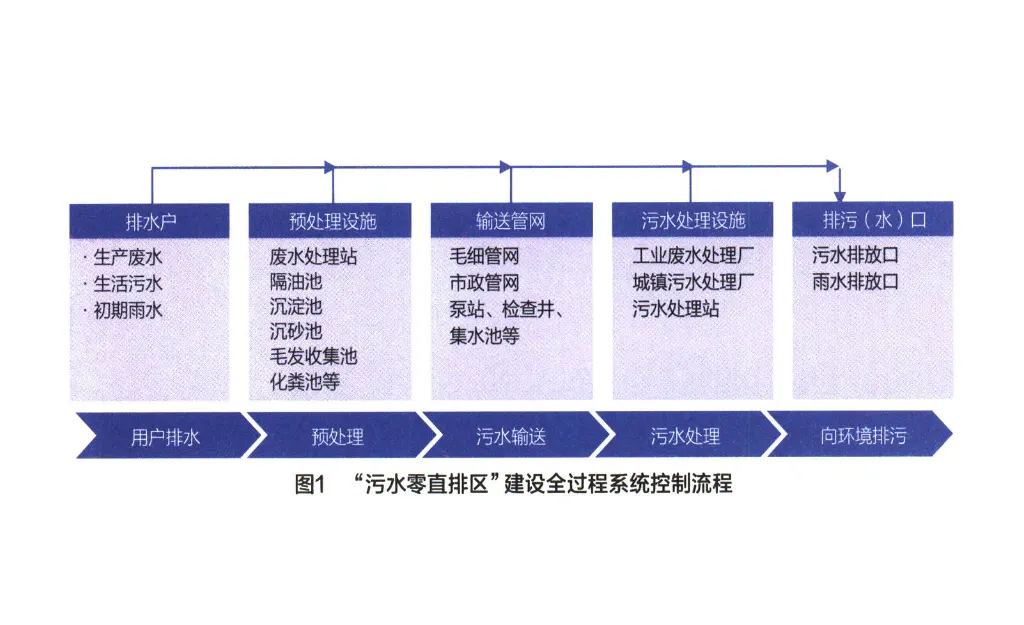
其對系統(tǒng)內(nèi)產(chǎn)生的污水都進行了處理,杜絕了污水的直接排放現(xiàn)象。這些環(huán)節(jié)和過程也承載著系統(tǒng)內(nèi)污染物的物質(zhì)流。}基金項目:浙江省重點研發(fā)計劃“排水管網(wǎng)提質(zhì)增效與系統(tǒng)優(yōu)化關(guān)鍵技術(shù)、裝備研發(fā)與應(yīng)用示范”(2020C03082)用戶排水。排水戶是排放污水的單位,是系統(tǒng)外物質(zhì)向系統(tǒng)內(nèi)輸送的通道。污水的來源與社會經(jīng)濟發(fā)展狀況相關(guān),人口數(shù)量、生活方式、產(chǎn)業(yè)特點、經(jīng)濟規(guī)模、生產(chǎn)工藝、用水情況等,都會造成不同系統(tǒng)排水戶排放污水的成分、數(shù)量、結(jié)構(gòu)各不相同。排水戶產(chǎn)生污水的數(shù)量、種類和濃度等是影響系統(tǒng)對污水輸送和處理的主要因素。不同的排水戶產(chǎn)生的污水,可分為生活污水、生產(chǎn)廢水、初期雨水等類別。其中生活污水又分為廚房廢水、廁所廢水和洗滌廢水等,生產(chǎn)廢水可以分為高濃度廢水和低濃度廢水,有機廢水和無機廢水等不同種類。
污水預(yù)處理。預(yù)處理是對排水戶排放的高濃度廢水或帶有雜質(zhì)的可能會影響污水收集、輸送、處理的污水進行簡單處理,以達到降低排放濃度的效果。預(yù)處理主要指排人市政管網(wǎng)前的污水處理,包括工業(yè)企業(yè)廠內(nèi)的廢水處理站和城鎮(zhèn)生活小區(qū)與不同行業(yè)設(shè)置的隔油池、沉淀池、沉砂池、毛發(fā)收集池、化糞池等配套設(shè)施,可分為工業(yè)廢水預(yù)處理和生活污水預(yù)處理。
管網(wǎng)輸送。管網(wǎng)輸送是污水系統(tǒng)借助管網(wǎng)等設(shè)施和設(shè)備,規(guī)范污水等物質(zhì)流向和走向,實現(xiàn)排水戶和處理設(shè)施之間污水輸送的行為。污水系統(tǒng)里的管網(wǎng)是連接排水戶和污水處理廠的通道,其中管網(wǎng)設(shè)施包括各級系統(tǒng)的內(nèi)部毛細管網(wǎng)和外部市政管網(wǎng),以及泵站、檢查井、集水池等附屬設(shè)施。污水處理。污水處理是將管網(wǎng)輸送的污水通過物理、化學(xué)、生物及其組合的方法,降低污水中的污染物濃度,達到相關(guān)回用和排放標準。
污水處理減少了排入環(huán)境的污染物數(shù)量,從而避免受納水域水質(zhì)受到影響,是系統(tǒng)內(nèi)物質(zhì)向系統(tǒng)外輸送的通道,包括工業(yè)廢水處理廠、城鎮(zhèn)污水處理廠、污水處理站等。浙江省治水實踐“污水零直排區(qū)”建設(shè)內(nèi)容“污水零直排區(qū)”建設(shè)是基于系統(tǒng)治水理論的水污染防治,是對以往系統(tǒng)排水和處理的改造及重塑。“污水零直排區(qū)”建設(shè)是在不同尺度的污水處理系統(tǒng)中,將系統(tǒng)內(nèi)部污水無序的物質(zhì)流變?yōu)橛行虻奈镔|(zhì)流,規(guī)范物質(zhì)的輸入、輸出和傳遞、輸送、處理的方法和途徑,根據(jù)污水物質(zhì)流的輸送環(huán)節(jié)和處理情況,對排水戶排水、收集、輸送、處理和人河等進行全過程控制和規(guī)范,開展“應(yīng)分盡分”“應(yīng)截盡截”“應(yīng)處盡處”的改造和建設(shè),以使產(chǎn)生的廢水和污水在通過分類收集與分質(zhì)處理后,廢水量和污染物排放量達到削減目標。“污水零直排區(qū)”建設(shè)強調(diào)的是用系統(tǒng)治水和全過程治水的思路達到全面收集和處理的目的,防止系統(tǒng)內(nèi)污水未經(jīng)處理直接排入環(huán)境。
重塑源頭排水。排水戶是污水產(chǎn)生的源頭,是系統(tǒng)內(nèi)物質(zhì)輸入的起點。重塑源頭排水是對排水戶排放污水的水量和水質(zhì)進行規(guī)范,排水戶污水的產(chǎn)生受產(chǎn)業(yè)類型、生產(chǎn)工藝、人口數(shù)量、用水量等因素的影響。在重塑過程中,需根據(jù)排水戶的特點,制定具體的方案和措施,就產(chǎn)業(yè)轉(zhuǎn)型和工藝升級的可能性、生產(chǎn)設(shè)備的先進性、污水的分質(zhì)處理和中水回用的可行性、初期雨水處理的必要性、用水量和污水排放量的相關(guān)性等方面,制定源頭減少污水排放量和降低污染物排放濃度的具體方案,通過“一戶一策”方案的實施,促進產(chǎn)業(yè)的轉(zhuǎn)型升級與排水的優(yōu)化改造。
重塑污水收集。對排水戶的污水排放進行系統(tǒng)梳理,根據(jù)不同排水戶排放污水的特點和特征,進行分類、分質(zhì)收集。一方面,重塑排水戶的源頭排水,做到污水收集全覆蓋,重點對工業(yè)企業(yè)的生活污水、生產(chǎn)環(huán)節(jié)的工藝廢水、生活小區(qū)的陽臺污水和洗滌污水等進行收集。另一方面,根據(jù)污水的性質(zhì),如排放濃度、污染物種類的特殊性等,實行分類收集;如工業(yè)廢水和生活污水的分類收集,工業(yè)廢水中化工廢水、重金屬廢水等不同性質(zhì)的廢水分類收集;生活污水中廁所污水、廚房廢水、洗滌廢水的分類收集等。重塑污水輸送。污水的輸送依靠各級輸送管網(wǎng)及其附屬的檢查井、窨井、泵站等輸送設(shè)備,是實現(xiàn)污水從排水戶收集到污水處理廠處理的重要途徑。管網(wǎng)是排水系統(tǒng)的“血管”,是“污水零直排區(qū)”建設(shè)的重要環(huán)節(jié)。
重塑污水輸送就是在對管網(wǎng)系統(tǒng)進行排查、分析與評估后,通過規(guī)劃、修復(fù)、改造和建設(shè),提高管網(wǎng)覆蓋率和完好率,從而實現(xiàn)管網(wǎng)全覆蓋和全完好、雨污全分流、布局全合理,規(guī)范污水系統(tǒng)中物質(zhì)流的流量和方向,實現(xiàn)輸送能力與流量匹配,污水流量和流向合理可控。重塑污水處理。污水處理是水污染防治的“兜底環(huán)節(jié)”,也是“污水零直排區(qū)”建設(shè)的關(guān)鍵環(huán)節(jié),包括排水戶端的污水預(yù)處理和管網(wǎng)終端的污水處理。污水預(yù)處理是為了保障輸送管網(wǎng)和污水處理廠的正常運行,防止出現(xiàn)管網(wǎng)腐蝕、堵塞和污水處理廠受沖擊等情況;終端污水處理廠是通過污水的深度處理,保障系統(tǒng)所有污水得以凈化,避免影響環(huán)境水質(zhì)。
重塑污水處理通過對系統(tǒng)污水處理設(shè)施的評估、規(guī)劃、優(yōu)化和建設(shè),提高污水處理率、達標率和回用率,實現(xiàn)污染物削減和總量控制,達到水環(huán)境質(zhì)量提升的目標。
重塑系統(tǒng)平衡。“污水零直排區(qū)”建設(shè)是對區(qū)域污水系統(tǒng)的重塑。通過對源頭排水、污水收集、輸送、處理等關(guān)鍵節(jié)點的改造和建設(shè),使污水系統(tǒng)達到新的平衡,增加污水排放、輸送、處理等環(huán)節(jié)的匹配度和關(guān)聯(lián)度,從而使系統(tǒng)運行更加穩(wěn)定,污水收集、處理、排放和回用處于一個良性循環(huán)和螺旋式上升遞進的狀態(tài)。
“污水零直排區(qū)”建設(shè)步驟“污水零直排區(qū)”建設(shè)是一個系統(tǒng)工程,是對區(qū)域排水系統(tǒng)的重塑,也是對區(qū)域水污染防治的重新構(gòu)架,是系統(tǒng)的思路統(tǒng)籌和治水工作的重塑,需要有一個系統(tǒng)的建設(shè)思路和嚴密的建設(shè)過程,浙江省治水辦(河長辦)先后出臺《浙江省“污水零直排區(qū)”建設(shè)行動方案》(浙治水辦發(fā)(2018]28號)、《浙江省城鎮(zhèn)“污水零直排區(qū)”建設(shè)攻堅行動方案(2021—2025年)》(浙治水辦發(fā)(2021]17號)等文件規(guī)范了“污水零直排區(qū)”建設(shè)要求。全面排查。
“污水零直排區(qū)”建設(shè)前,需對污水系統(tǒng)進行全面體檢,對系統(tǒng)內(nèi)排水戶及其排水特點、污水收集情況、管網(wǎng)輸送現(xiàn)狀、污水處理設(shè)施和排污(水)口等系統(tǒng)各個環(huán)節(jié)進行全面深度地排查。排查既要做到全覆蓋、無盲區(qū),又要做到有重點、有目標,特別要突出城中村、城郊結(jié)合部、老城區(qū)、城鎮(zhèn)建成區(qū)、工業(yè)園區(qū)(工業(yè)集聚區(qū))等重點區(qū)塊。排查結(jié)果不但要搞清污水系統(tǒng)的特點和基本情況,而且要發(fā)現(xiàn)問題和反映問題,排查后要形成詳細的排查報告、清單和圖件等成果。規(guī)劃設(shè)計。在現(xiàn)實性評價、合理性分析和前瞻性預(yù)測的基礎(chǔ)上,對系統(tǒng)排查問題進行梳理,做好頂層設(shè)計,制定工作方案。對全面、系統(tǒng)性的問題要做好規(guī)劃,如管網(wǎng)與污水處理設(shè)施的布局要統(tǒng)籌考慮系統(tǒng)現(xiàn)狀條件、地形特點、排水特點和未來發(fā)展等因素進行規(guī)劃,明確排水管網(wǎng)的走向、管徑、標高、負荷和污水處理設(shè)施的數(shù)量、選址、能力等內(nèi)容以及管網(wǎng)互聯(lián)互通等內(nèi)容;對于老城區(qū)、古鎮(zhèn)、工業(yè)集聚區(qū)等難點、重點地區(qū)要制定“一點一策”,根據(jù)實際情況做好設(shè)計工作;對于普遍性的問題,制定統(tǒng)一的建設(shè)要求和原則。建設(shè)改造。“污水零直排區(qū)”建設(shè)改造是重塑城鎮(zhèn)污水處理系統(tǒng)的關(guān)鍵。
“污水零直排區(qū)”建設(shè)改造應(yīng)按照科學(xué)合理的規(guī)劃設(shè)計方案和相關(guān)的施工技術(shù)規(guī)范實施,在現(xiàn)場建設(shè)過程中如果遇到特殊情況無法實施原有規(guī)劃設(shè)計方案時,應(yīng)根據(jù)實際情況重新調(diào)整和再設(shè)計。當(dāng)前建設(shè)改造的重點為:排水戶內(nèi)部的排水改造(分質(zhì)收集與預(yù)處理、污水回用、內(nèi)部管網(wǎng))、預(yù)處理設(shè)施建設(shè)與改造(工業(yè)污水預(yù)處理改造、商業(yè)和住宅預(yù)處理設(shè)施改造)、城鎮(zhèn)雨污分流建設(shè)與改造(污水管網(wǎng)建設(shè)、管網(wǎng)問題修復(fù))、污水處理設(shè)施建設(shè)與改造(處理能力、排放提標、尾水再生利用)等。
動態(tài)管理。動態(tài)管理是“污水零直排區(qū)”建設(shè)完成后確保系統(tǒng)各環(huán)節(jié)正常運行必不可少的組成部分,包括制度建設(shè)、人員落實、監(jiān)管內(nèi)容等。其中監(jiān)管內(nèi)容既包括對排水戶排水情況、收集情況、預(yù)處理設(shè)施運行情況、管網(wǎng)健康情況、污水處理設(shè)施運行情況等硬件設(shè)施運行情況的日常檢查和運行維護,也包括對各關(guān)鍵節(jié)點(重點排水戶接人點、排水干管節(jié)點、污水泵站、污水處理廠進水口和出水口等)水質(zhì)和水量的監(jiān)控與監(jiān)測。通過“污水零直排區(qū)”數(shù)字化平臺對污水系統(tǒng)進行建設(shè)、運行與監(jiān)控、監(jiān)督檢查與整改、決策支持與預(yù)警、成效分析與評價等動態(tài)管理,促進區(qū)域污水系統(tǒng)健康運行。系統(tǒng)評估。通過建立評估技術(shù)導(dǎo)則等有關(guān)標準和文件,定期開展“污水零直排區(qū)”建設(shè)評估,對區(qū)域排水的工藝升級改造和節(jié)水潛力、產(chǎn)業(yè)轉(zhuǎn)型與污水分質(zhì)處理、區(qū)域污水排放與管網(wǎng)的匹配、污水處理能力與污水產(chǎn)排的平衡、污水處理設(shè)施的互聯(lián)互通、區(qū)域系統(tǒng)污水排放的應(yīng)急處置。
‘‘‘污水零直排區(qū)”建設(shè)投入與產(chǎn)出的績效、設(shè)施運行與維護的效能、污水處理效率與河道水質(zhì)的變化等方面進行全面分析,評估系統(tǒng)運行的成效、復(fù)雜性和穩(wěn)定性,并針對存在的問題及時調(diào)整系統(tǒng)結(jié)構(gòu),修復(fù)系統(tǒng)缺陷,引導(dǎo)系統(tǒng)向良性方向發(fā)展。
“污水零直排區(qū)”建設(shè)成效浙江省從2018年全面開展“污水零直排區(qū)”建設(shè)以來,通過全面部署和重塑,著力實現(xiàn)污水系統(tǒng)“源頭全減排、污水全收集、管網(wǎng)全覆蓋、管道全完好、雨污全分流、污水全處理、排放全達標、水質(zhì)全提升”。經(jīng)過4年的努力,部分地區(qū)建設(shè)成效初顯。治水理念有了較大改變按照“污水零直排區(qū)”的建設(shè)要求,各地制定了“污水零直排區(qū)”建設(shè)實施方案,在反思既往的治水方法和方式的基礎(chǔ)上,結(jié)合本地實際情況和基礎(chǔ)條件,系統(tǒng)整合源頭排水戶排水、預(yù)處理設(shè)施建設(shè)、管網(wǎng)建設(shè)與布局、污水處理廠提標改造,并預(yù)測與分析區(qū)域污水處理的匹配程度。通過主成分分析和多因子分析,查找水污染防治的主要問題和影響水環(huán)境質(zhì)量的主要因素,實現(xiàn)從污水產(chǎn)生、收集、輸送、處理和排放的全過程水污染防治,是從末端治水向源頭治水、從工程治水向系統(tǒng)治水的轉(zhuǎn)變,開啟了區(qū)域系統(tǒng)治水的新探索和新研究,為全面完善系統(tǒng)治水打下堅實的基礎(chǔ)。
系統(tǒng)績效實現(xiàn)較大提高通過“污水零直排區(qū)”建設(shè),部分地區(qū)建設(shè)成效開始顯現(xiàn),一是污水收集率和管網(wǎng)覆蓋率有了大幅度提高。排水戶原來散排和直排的污水大部分都得以收集,原來污水管網(wǎng)未覆蓋地區(qū)和雨污合流地區(qū)均建設(shè)了獨立的污水管網(wǎng)。二是污水處理廠的進水濃度逐步提高,進水水量更加穩(wěn)定。總體來說,污水處理廠進水的化學(xué)需氧量、五日生化需氧量、氨氮和總磷等污染物濃度和污水處理效率都得到大幅提高;從晴天和雨天的水量變化來看,污水處理廠進水水量的變化幅度較小。三是附近地表水環(huán)境質(zhì)量穩(wěn)步向好。以“污水零直排區(qū)”建設(shè)較好的典型地區(qū)為例,建設(shè)前后主要指標變化情況見圖2。污水處理廠進水BOD。濃度從建設(shè)前的51.6mg/L提高到建設(shè)后的88.7mg/L,提高了71.9%;進水水量從建設(shè)前的16420萬t增加到建設(shè)后的18479萬t,增加了12.5%;地表水環(huán)境質(zhì)量從建設(shè)前的IV類和V類提高到建設(shè)后的III類。
污水系統(tǒng)功能得到較大提升“污水零直排區(qū)”建設(shè)是污水處理系統(tǒng)的生態(tài)化改造和重塑。在建設(shè)過程中形成了“四張清單(問題清單、任務(wù)清單、項目清單和責(zé)任清單)一張網(wǎng)(排水管網(wǎng)布局圖)”,做到了重難點突出,有的放矢。一方面對系統(tǒng)流程的每個環(huán)節(jié)進行改造,提升管網(wǎng)的復(fù)雜性和連通性,推進污水處理互聯(lián)互通,提高系統(tǒng)的穩(wěn)定性:另一方面有重點地進行改造,加強老城區(qū)、城鄉(xiāng)接合部、工業(yè)園區(qū)等重污染地區(qū)的建設(shè),規(guī)范了系統(tǒng)的物質(zhì)流向。治水范圍取得較大拓展“污水零直排區(qū)”建設(shè)的范圍圖2典型地區(qū)“污水零直排區(qū)”建設(shè)前后污水廠進水主要指標變化從局部污水排放系統(tǒng)擴展到整個污水處理系統(tǒng),從“網(wǎng)(輸送管網(wǎng))廠(污水處理廠)”向“源(排水戶)河(地表水環(huán)境)”延伸。結(jié)合排水戶改造以用水量來重塑源頭排水,將“污水零直排區(qū)”建設(shè)的源頭分類減排理念落實到區(qū)域產(chǎn)業(yè)優(yōu)化、小微工業(yè)園區(qū)建設(shè)、老舊小區(qū)改造、城市有機更新、污水資源化利用等相關(guān)領(lǐng)域的各個環(huán)節(jié),積極提高中水回用比例,試點建設(shè)“污水零排放”系統(tǒng),既實現(xiàn)了污水源頭減量減排,又解決了黑臭水體等河道水質(zhì)問題;同時開展河湖生態(tài)緩沖帶建設(shè)和水生態(tài)修復(fù),在建設(shè)和管理中深化生態(tài)環(huán)境治理能力和治理體系現(xiàn)代化建設(shè)。
討論“污水零直排區(qū)”建設(shè)是解決城鎮(zhèn)排水系統(tǒng)“管網(wǎng)底數(shù)不清,截污納管不到位,雨污分流不徹底,污水處理效率低下”等問題,重塑污水系統(tǒng)各個環(huán)節(jié)的重要手段。建立一套基于系統(tǒng)治水的“污水零直排區(qū)”建設(shè)體系,涉及面廣、點多、任務(wù)重,需要在全面調(diào)查和分析的基礎(chǔ)上,規(guī)劃和設(shè)計一套符合系統(tǒng)特點的治水方案,按照計劃逐步開展建設(shè)和評估,落實各個環(huán)節(jié)的建設(shè)任務(wù),逐步達到建設(shè)成效與治水目標,切不可匆忙上馬,一擁而上,造成質(zhì)量問題,達不到建設(shè)效果。“污水零直排區(qū)”建設(shè)的理想目標是:源頭全減排、污水全收集、管網(wǎng)全覆蓋、雨污全分流、污水全處理、排放全達標、水質(zhì)全提升。在實際建設(shè)過程中,不可能達到百分之百的建設(shè)目標,應(yīng)根據(jù)實際情況和建設(shè)目標,運用主成分分析和多因子綜合分析等方法,因地制宜地制定切實可行的建設(shè)方案、驗收目標、評估規(guī)則、運維方法等,并建立逐步完善和動態(tài)更新制度,促進“污水零直排區(qū)”建設(shè)成效不斷提升。“污水零直排區(qū)”建設(shè)是個系統(tǒng)工程,是集排水企業(yè)和單位的清潔生產(chǎn)改造、排水管網(wǎng)提質(zhì)增效和污水處理提標改造等內(nèi)容于一體,從污水產(chǎn)生與產(chǎn)業(yè)轉(zhuǎn)型、管網(wǎng)設(shè)計與規(guī)劃、污水處理與布局等諸多方面來考慮分析,研究系統(tǒng)的復(fù)雜性和穩(wěn)定性,實現(xiàn)污水系統(tǒng)的重塑。因此,“污水零直排區(qū)”建設(shè)理論需要進一步深入研究,通過不斷實踐加以完善。
“污水零直排區(qū)”建設(shè)的目的是改變系統(tǒng)中的物質(zhì)流,變無序為有序。“污水零直排區(qū)”建設(shè)沒有捷徑,需要我們在掌握建設(shè)理論和理設(shè)要求的基礎(chǔ)上,腳踏實地地從每一塊區(qū)域、每一根管網(wǎng)、每一個單元開始建設(shè),并運用感知設(shè)備、數(shù)字化工具等,通過模型分析不斷完善建設(shè)內(nèi)容和運行體系,不斷驗證和提高“污水零直排區(qū)”的建設(shè)成效。陸域上污水排放涉及城市、農(nóng)業(yè)、農(nóng)村、交通等相關(guān)生產(chǎn)和生活活動,應(yīng)拓展“污水零直排區(qū)”建設(shè)范圍,積極開展農(nóng)業(yè)、農(nóng)村等領(lǐng)域“污水零直排區(qū)”建設(shè)研究;同時加強節(jié)水和回用的研究,解決污水的減量(Reduce)、治理(Repair)、回用(Recycle)等問題,遵循“堅持節(jié)約優(yōu)先,加強源頭管控,轉(zhuǎn)變發(fā)展方式”的原則,進一步推動綠色生產(chǎn)和生活方式的形成,實現(xiàn)“污水零直排區(qū)”建設(shè)和生產(chǎn)、生活的融合。
展望構(gòu)建系統(tǒng)的“污水零直排區(qū)”建設(shè)理論體系“污水零直排區(qū)”建設(shè)涉及系統(tǒng)科學(xué)、地理科學(xué)、環(huán)境科學(xué)與工程、城市規(guī)劃與設(shè)計、給水和排水工程、測繪科學(xué)、管理科學(xué)等多學(xué)科知識。未來應(yīng)進一步開展包括源頭、污水收集、輸送、處理、回用與排放等全過程的治理研究,形成排查、規(guī)劃設(shè)計、建設(shè)、驗收與評估等一系列“污水零直排區(qū)”建設(shè)技術(shù)規(guī)范和基本理論。細化各個內(nèi)容的建設(shè)原理和要求,形成各種不同類型和不同建設(shè)內(nèi)容的建設(shè)標準和要求,指導(dǎo)不同區(qū)域、不同類型、不同建設(shè)內(nèi)容的“污水零直排區(qū)”建設(shè),形成一個系統(tǒng)、詳細、全面的“污水零直排區(qū)”建設(shè)理論。
建立統(tǒng)一的“污水零直排區(qū)”建設(shè)行業(yè)體系
一是完善和豐富“污水零直排區(qū)”建設(shè)標準體系,建立市、縣(市、區(qū))、城鎮(zhèn)、工業(yè)園區(qū)、生活小區(qū)、六小行業(yè)和企事業(yè)單位“污水零直排區(qū)”建設(shè)的技術(shù)規(guī)范,完善排查、規(guī)劃、設(shè)計、建設(shè)、施工、驗收和運維的技術(shù)要求。
二是完善“污水零直排區(qū)”建設(shè)人員配備,培養(yǎng)各級各類行政人員、管理人員、排查人員、設(shè)計人員、施工人員及技術(shù)骨干。
三是建立“污水零直排區(qū)”建設(shè)的技術(shù)培訓(xùn)體系,通過技術(shù)培訓(xùn)、現(xiàn)場指導(dǎo)、督導(dǎo)幫扶、專業(yè)論壇和宣傳教育等方式,將“污水零直排區(qū)”建設(shè)的標準和要求進行培訓(xùn)和宣傳,將“污水零直排區(qū)”建設(shè)的系統(tǒng)理論落實到排查、設(shè)計、建設(shè)、施工、驗收、運維等各個節(jié)點的建設(shè)過程中,指導(dǎo)各地開展建設(shè)。推進嚴格的“污水零直排區(qū)”建設(shè)制度體系推進“污水零直排區(qū)”建設(shè)的立法工作,加強“污水零直排區(qū)”建設(shè)的相關(guān)制度建設(shè)。制定和明確“污水零直排區(qū)”建設(shè)的責(zé)任清單,做到每個項目和建設(shè)內(nèi)容都有責(zé)任人;制定和細化責(zé)任追究相關(guān)制度,加強督查、巡查和檢查力度;運用數(shù)字化技術(shù)手段對建設(shè)和運維進行監(jiān)管,倒逼“污水零直排區(qū)”建設(shè)要求落實到位;制定系統(tǒng)評估與考核制度,確保重塑后的污水系統(tǒng)正常健康運行。
作者:牟永銘教授 劉長軍教授 申開麗教授 李倩倩教授
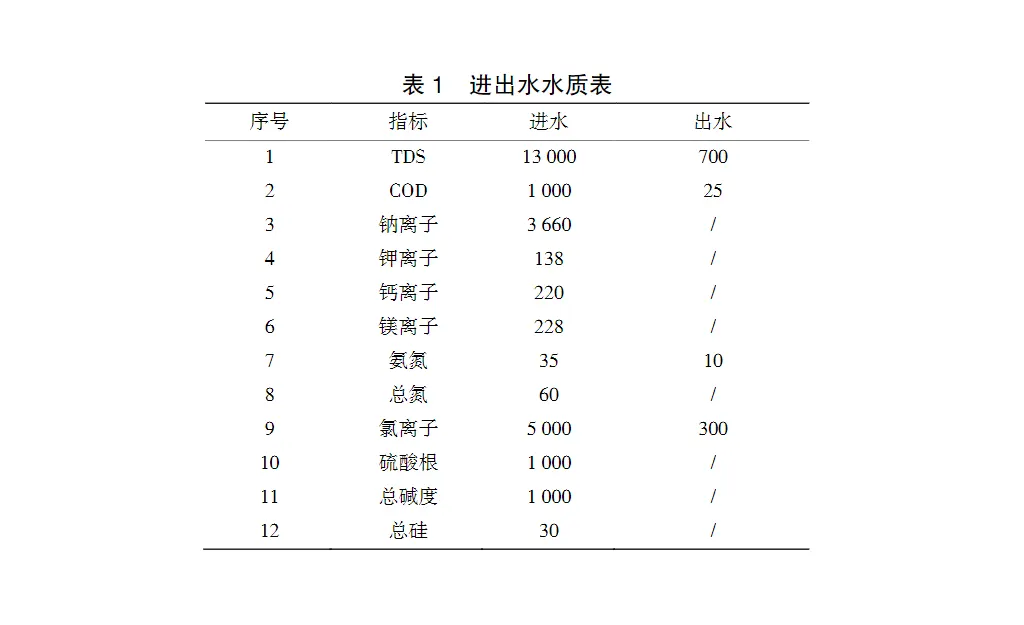
Biopharmaceutical enterprises use soybean oil, corn starch, betaine, corn germ, corn protein powder, soybean meal, cottonseed protein and other raw materials to produce vitamin B12, methylcobalamin, vitamin B2, adenosylcobalamin and other APIs. The production process generates about 3000 m3-d-1 of wastewater with high salt and high organic matter, which is discharged after biochemical treatment to meet the standard. In order to save water resources, the enterprise new wastewater zero-discharge process, the effluent water quality to meet the "recycled cooling water reclaimed water quality standards" (HG/T3923-2007) standards [1], the reuse rate of not less than 95%. Concentrate for evaporation and salt separation, evaporation and crystallisation of by-products of sodium chloride to meet the GB / T 5462 -2015 "Industrial Salt" industrial dry salt secondary standards, the rate of impurity salt is less than or equal to 15% [2-5].1 Zero-discharge process 1.1 Water quality The wastewater is high in salt, chloride ions, sodium ions and other monovalent ions account for the total salt ratio is high, and the design of the incoming and outgoing water quality is shown in Table 1, and the units are mg-L-1.
1.2 Process flow as shown in Figure 1, water reuse and zero discharge process for "pretreatment system + NF system + NF concentrate reduction system + RO system + secondary dehardening to remove silica system + high-pressure HPRO concentration + subsequent MVR evaporation and cryocrystallisation system". The processing idea of the whole system is to separate COD, divalent salt and monovalent salt through nanofiltration membrane retention, and then separate COD and divalent salt and monovalent ions in NF concentrate through material membrane, so that the divalent salt and COD in the whole sewage are enriched in the secondary concentrate of the reduced concentrate and the primary concentrate, and the COD in the concentrate after the primary reduction is non-biochemical degradation of COD, which can be improved by advanced oxidation technology to improve biochemical degradation. The COD in the concentrated liquid after the first reduction is non-biochemical degradable COD, which is used as the carbon source of the biochemical system after improving the biochemistry through advanced oxidation technology. The concentrate after secondary reduction mainly contains most of the divalent salts, which can be removed by the subsequent freeze crystallisation unit. The clear liquid after treatment by NF and NF reduction units contains mainly monovalent salts, at which point the salt concentration can be carried out. After RO treatment, the total hardness of calcium and magnesium in the concentrated liquid rises, and the hardness, alkalinity and total silica are removed through the synergistic removal of the per-caustic soda-soda ash-magnesium chloride agent [6]. For the subsequent HPRO re-concentration as a front-end guarantee pretreatment, HPRO concentrate for high TDS, high COD. can through the NF into the NF clear liquid of organic matter molecular weight, most of which belongs to the volatile substances, will not have a greater impact on the subsequent MVR evaporation operation process. Therefore, the main idea for the first separation of COD and divalent salt, a salt concentrate evaporation salt crystallisation, divalent salt concentrate freezing crystallisation, COD by oxidation pretreatment into the biochemical system to deal with, so as to achieve the purpose of zero emission. The whole process consists of pretreatment system, NF system, NF concentrate reduction system, reverse osmosis system, softening system, HPRO system, sludge disposal system, seven major components.
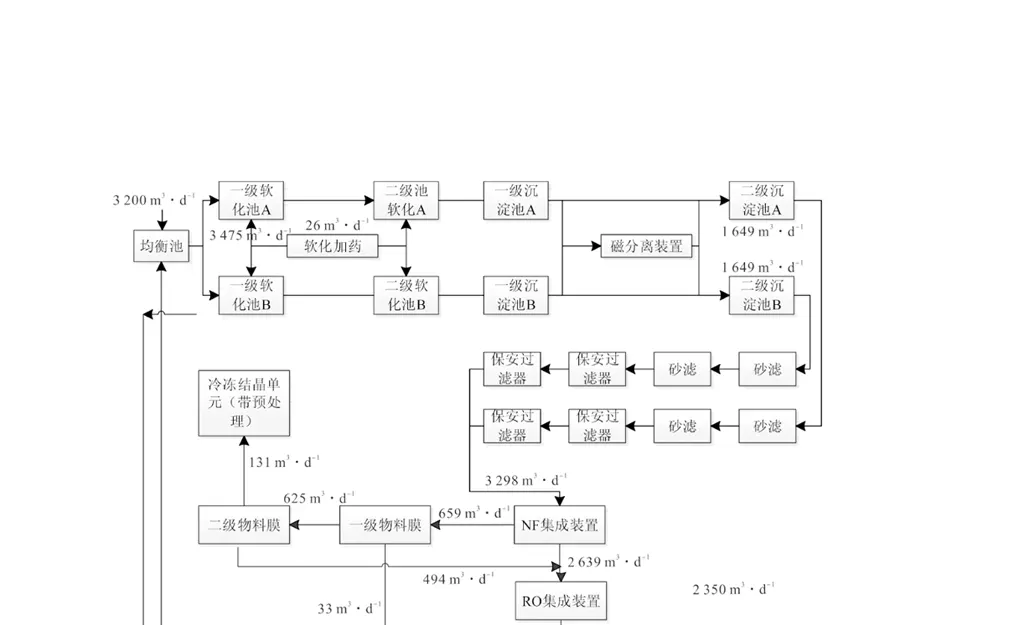
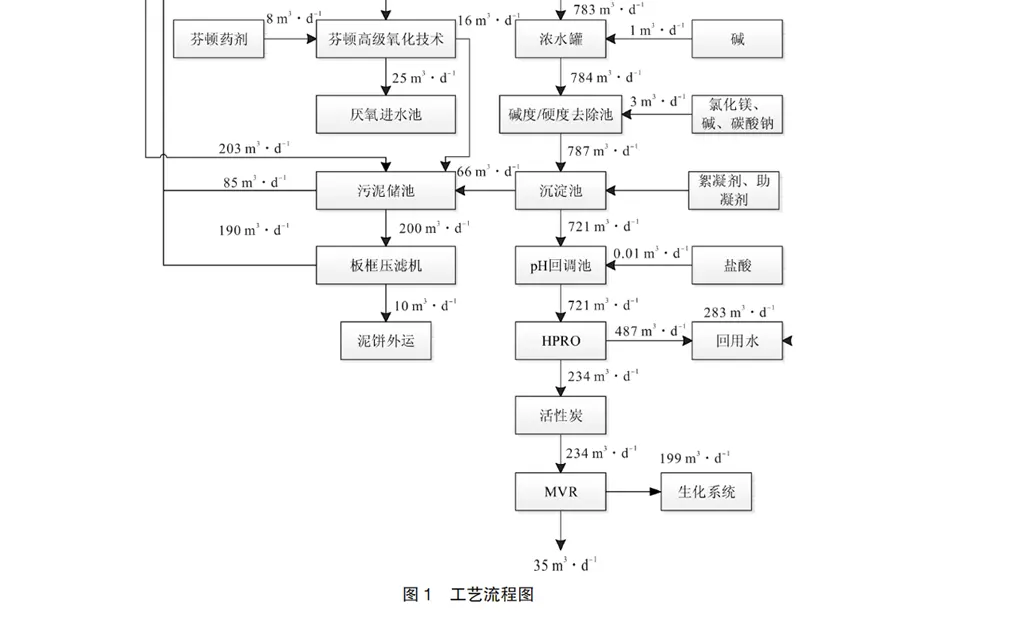
Pre-treatment system includes: hardening and softening system, magnetic separation system, sand filter, security filtration system, etc. NF system includes: NF inlet pump, NF inlet tank, NF integrated equipment, NF clear liquid tank, NF concentrate tank and other ancillary dosing units, etc. RO system includes: RO inlet pump, RO integrated equipment, RO concentrate tank, and scale inhibitor required for the RO system, such as dosing and cleaning units, etc. NF concentrate reduction system includes: a feed pump, two feed pumps, a booster pump, two booster pumps, intermediate tanks, storage tanks at all levels of materials and other units, cleaning and dosing units. Deep softening system: including pH adjustment tank, calcium and magnesium precipitation area and hardness removal reaction area. Sludge disposal system includes: diaphragm-type plate and frame filter press, press pump, press tank, belt conveyor, dewatering clear liquid conveyor pump, sludge hopper, flap system, sludge storage tank, plate and frame feed pump, and so on.
2 Parameters of major structures and equipment
2.1 Pre-treatment system Biochemical system of the second sedimentation tank effluent presents high COD, high suspended solids, high hardness characteristics, in order to meet the minimum requirements of the NF influent, it is necessary to carry out pre-treatment to precipitate COD, calcium and magnesium hardness and TSS, etc. first. Then sand filter and security filter to retain the suspended solids and organic matter that are not completely precipitated. The main role of raw water pretreatment is to prevent fine particles from contaminating the NF membrane; to prevent colloidal substances from contaminating and clogging the NF membrane; and to prevent oxidative damage to the NF membrane by strong oxidants. The project design adopts the combination of "softening in addition to hardness + magnetic separation + sedimentation + sand filtration + security filters" to pre-treat the original biochemical system of the two sedimentation tank water. There are 4 softening reaction areas, each with a capacity of 50 m3, dosing sodium hydroxide, magnesium chloride, calcium oxide, sodium carbonate, 2 sedimentation tanks, each with a capacity of 275 m3, sedimentation time of 3 h. There are 4 sets of sand filtration equipment, with a single set of processing capacity of 70 m3-h-1 and a filtration speed of 10 m-h-1. There are 2 sets of security filters, with folded high-flow cartridges, with a length of 1,016 mm, and a filtration precision of 5 μm.
2.2NF system biochemical system after treatment of the secondary sedimentation tank effluent difficult to biochemical degradation of organic matter formed COD, salinity and chromaticity exceeded the serious, after the front-end pretreatment system, the effluent suspended solids, hardness is greatly reduced, but the COD, salinity and so on is still very high. NF using integrated modular device, according to the design of 3,298 m3-d-1, a total of four sets of 900 m3-d-1NF integrated equipment, total capacity of 3600 m3-d-1. Single set of 9 membrane shells, 54 membrane elements, a total of 216 membrane elements, designed membrane flux 16 LHM, designed production capacity of 16 LHM. 1NF integrated equipment, a total treatment capacity of 3600 m3-d-1, a single set of configuration 9 membrane shells, 54 membrane elements, a total of 216 membrane elements, the design of the membrane flux 16 LHM, the design of the water production rate of 80%.
2.3 RO system using RO system will be monovalent salt concentration, clear liquid reuse, RO membrane concentration of liquid volume into the high-pressure HPRO for further concentration treatment, as far as possible to reduce the amount of evaporation.RO using integrated modular device, according to the design of 3200 m3-d-1, a total of 4 sets of capacity of 800 m3-d-1 RO integrated equipment, a single set of configuration of 12 membrane shells, 72 membrane elements, a total of 288 membrane elements, designed membrane flux of 12 LHM, design yield 75%. Total 288 membrane elements, design membrane flux 12 LHM, design water yield 75%.
2.4 NF concentrate reduction system For the characteristics of NF membrane concentrate with high COD and high divalent salt, in order to improve the overall water resource recovery rate, COD and divalent salt need to be separated. A total of four sets of integrated equipment for NF concentrate reduction are designed for this project. The single set is divided into two stages of separation, with the first stage divided into two sections, one section of clear liquid from the first stage enters the second stage to ensure the COD of the clear liquid effluent, and one section of concentrated liquid from the first stage enters the first stage of the second stage for re-concentration, which reduces the amount of the tailing of the NF concentrate to the maximum extent. The clear liquid produced by the reduction system is mixed with the nanofiltration clear liquid to carry out reverse osmosis treatment, the first two sections of the concentrated liquid by the original Fenton advanced oxidation technology to improve the biochemical system, then enter the original anaerobic unit for treatment, the second stage of the concentrated liquid enters the freezing crystallisation unit to carry out the sodium sulphate crystallisation. n F concentration liquid reduction and concentration module device, according to the design of 659 m3-d-1, 495 m3-d-1 of water, the design of the Primary membrane flux 12 LMH, secondary membrane flux 5.8 LMH, total number of membrane elements 112.
2.5 Depth softening system RO concentrate is enriched with most of the calcium, magnesium and other divalent ions in the NF produced water as well as silica, which has a strong tendency of scaling and fouling in the subsequent HPRO treatment system, and therefore needs to be chemically softened [8]. Depth softening reaction area 4, a single pool capacity of 30 m3, dosing order were sodium hydroxide, magnesium chloride, calcium oxide, sodium carbonate, sedimentation tank 2, a single pool capacity of 150 m3, sedimentation time of 6 hours.
2.6 HPRO system RO concentrate is still 721 m3-d-1, directly on the evaporation and crystallisation, then the investment and operating costs will be high, after the material balance calculation and ion concentration estimation, the TDS of RO concentrate is about 35,000 mg-L-1, through the HPRO to further concentrate the TDS to about 100,000 mg-L-1, the amount of water into the evaporation can be reduced to 234 m3-d- 1 [9]. 1[9].The HPRO is an integrated modular unit designed according to 730 m3-d-1 with 84 membranes, a design membrane flux of 10 LHM, and a design water yield of 60%.
2.7 Sludge disposal system The sludge generated by this project is mainly softening process, Fenton oxidation system, coagulation and precipitation system generated by the chemical sludge is mainly, moisture content of 95% ~ 98% between the cohesive properties, the main components of calcium carbonate, magnesium hydroxide, magnesium silicate, calcium silicates, calcium silicate, ferric hydroxide, and some of the flocculants and organic pollutants [11], suitable for the selection of plate and frame filter presses For treatment, the design adopts 2 sets of high-pressure diaphragm dewatering machine, with a single filtration area of 200 m2, a feeding capacity of 297 m3-d-1, a supporting feeding pump of 40 m3-h-1, a synchronous supporting discharge silo, sludge thickening tank, etc., and the water content of the dewatered sludge is 60%~70%.
3 Running Costs Running costs include chemicals, electricity and labour. Calculated on the basis of the project's water treatment capacity of 3200 m3-d-1, the steam is on-site waste heat steam, which is not costed, and is offset by the proceeds from the finished salt of sodium chloride and sodium sulphate and the disposal fee.
(1) Pharmaceutical costs: including membrane cleaner, scale inhibitor, hydrochloric acid, coagulant aid, flocculant, magnesium chloride, sodium carbonate, sodium hydroxide, calcium oxide, hydrogen peroxide, ferrous sulphate, biocide and reducing agent a total of 12 kinds of chemicals, the cost of treatment of tonnes of water is about 13.23 yuan;
(2) Electricity: the total operating power of the sewage treatment system equipment running every day is 1593.347 kW. the maximum daily electricity consumption for tonnes of water is: 1593.47 kW × 0.8 × 24h ÷ 3200m3 = 9.56 kW-h-m-3. industrial electricity is calculated at 0.407 yuan - (kW-h)-1. The electricity cost for tonnes of water treatment is 3.89 yuan-m-3.
(3) Labour cost: the project requires a total of about 24 personnel, estimated at 100,000 yuan/person-year, the labour cost of tonnes of water is about 2.27 yuan. The comprehensive operating cost is about 19.39 yuan-m-3, of which the cost of pharmaceuticals will change with the change of water quality and quantity.
4 Conclusion
(1) The wastewater generated by biopharmaceuticals can be treated by biochemical system and the standard water can be reused by way of hardness removal, filtration and membrane separation to achieve water reuse, and the water quality reaches the Water Quality Standard for Recycled Water of Circulating Cooling Water (HG/T3923-2007).
(2) The mono- and divalent salts in the wastewater can be separated by the NF nanofiltration membrane integrated equipment, and the NF concentrate can be separated by two-stage material separation membrane to achieve the separation of COD and salts, which further reduces the volume of the NF concentrate and at the same time reduces the COD value of the influent of the sodium sulphate evaporation and crystallisation system, and improves the quality of the sodium sulphate crystalline salt.
(3) The clear liquid after separation by NF membrane system is concentrated by RO and HPRO, which effectively reduces the scale of sodium chloride evaporation and crystallisation system and saves investment and operation cost.
(4) The setting of the softening and hardening system reduces the cleaning frequency of the membrane, which can improve the service life of the membrane.
(5) Overall water reuse rate of 95% or more.
Welcome to call us for consultation, technical exchange, and material experiment.
Shanxi Coking Coal Group Limited Liability Company Ximing Mine currently has two sets of mine wastewater treatment system, two sets of systems with a total treatment capacity of 5000m3 / d, the treatment process for the "cyclone clarification + filtration", the treated water basically meets the water quality standards for fire sprinkler water. However, with the increase of national environmental protection and the increase of mine water influx, the previous two sets of mine wastewater treatment system can't meet the current treatment water quantity and quality requirements, and the previous two sets of mine wastewater treatment system has been in use for more than ten years, the equipment is aging seriously, the treatment efficiency and treatment capacity can't reach the original design level, the original design of sand sedimentation tank and adjusting tank are small, which brings a lot of problems to the subsequent treatment process. The original design sand sedimentation tank and conditioning tank are small, which brings a lot of problems to the subsequent treatment process. In view of the above situation, the current water treatment system of Ximing Mine was comprehensively renovated and the subsequent treatment process was increased, so that the final quality of produced water could reach the water quality standard of Class III in the Environmental Quality Standard for Surface Water.
2 mine water treatment upgrading and transformation ideas
2.1 Design water volume According to the data provided by Ximing Mine, the water treatment station after the transformation of the mine water treatment system should have a treatment water volume of 9,000m3/d. After comprehensive consideration, it is determined that the final treatment volume is 10,000m3/d.
2.2 Design of inlet and outlet water quality According to the raw water quality report provided by Ximing Mine, it can be seen that the pollutants exceeding the standard are mainly COD, BOD5, total nitrogen and fluoride, of which COD and BOD5 are mainly exceeding the standard. The treated water can be directly discharged or reused underground, and the quality of the effluent water is controlled according to the water quality standard of Class III in the "Environmental Quality Standard for Surface Water", and the requirements of water quality indexes are shown in Table 1.
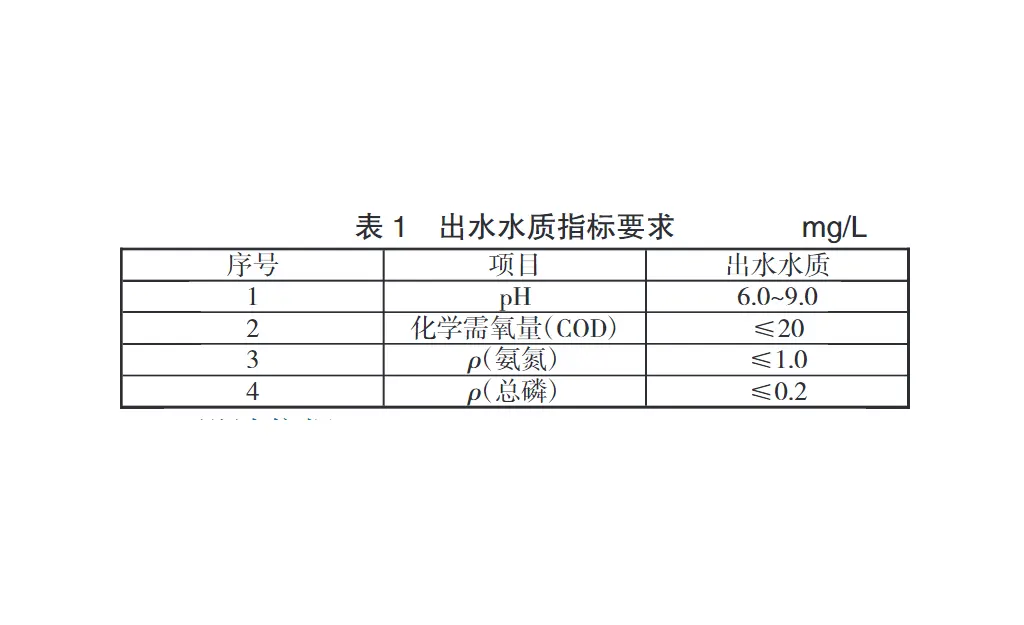
2.3 Design basis design basis mainly includes "Environmental Protection Law of the People's Republic of China"; "Law of the People's Republic of China on the Prevention and Control of Water Pollution"; "Environmental Quality Standards for Surface Water" (GB3838-2002); "Comprehensive Sewage Discharge Standards of Shanxi Province" (DB14/1928-2019); "Design Code for Outdoor Drainage Design Code (GB50014-2014); Design Code for Coal Mines; Design Code for Underground Coal Mine Firefighting and Sprinkler (GB50383-2006); Design Code for Pumping Stations (GB/T50265-2010); and relevant information and water quality test reports provided by the owner. information and water quality laboratory report provided by the owner.
3 Analysis of treatment process flow after modification
3.1 Principles of selection of technology programmes in the selection of water treatment processes generally consider the following aspects: whether the process can meet the requirements of the water indicators; whether the process is reliable; the cost of the process programme; whether the operation and management is convenient; high and low operating costs.
3.2 Treatment process and flow analysis of mine wastewater treatment upgrading process shown in Figure 1, mine wastewater first into the regulating tank, and then lifted to the cyclone coagulator through the lifting pump to remove most of the sand particles in the water, and make the medicine and wastewater fully mixed, coagulant effluent into the horizontal pipe sedimentation tank, through the horizontal pipe sedimentation to remove most of the suspended solids in the water, the effluent is self-flowing into the biological fast filtration tank, in the fast filtration tank for aeration to remove COD and ammonia nitrogen, the fast filtration tank effluent into the intermediate pool, through the intermediate lifting pump to lift the wastewater to the integrated water purifier. The effluent from the fast filter pool enters into the intermediate pool, and the wastewater is lifted to the integrated water purifier by the intermediate lifting pump, and the flocculant is added through the pipeline mixer during the lifting process. The wastewater is treated by coagulation, sedimentation and filtration in the integrated water purifier, and the effluent enters into the outlet pool of the purifier, and the wastewater in the outlet pool of the purifier is lifted to the activated carbon rotary lift by the filter lifting pump. The wastewater in the water purifier outlet pool is lifted to the activated carbon spin-up filter by the lifting pump, and the water produced after the activated carbon filtration can reach the water output index by adding chlorine through the folding point, and then it enters into the clear water pool for reuse in the mining area or direct discharge. The sludge generated from the above process enters the sludge buffer tank and is lifted to the sludge thickener by the sludge pump. After the sludge is thickened by the sludge thickener, the supernatant returns to the regulating tank, and the sinking sludge is transported to the plate-and-frame filter press through the screw pump to carry out the sludge-water separation, and the separated filtrate returns to the regulating tank, and the sludge cake is transported out on a regular basis.
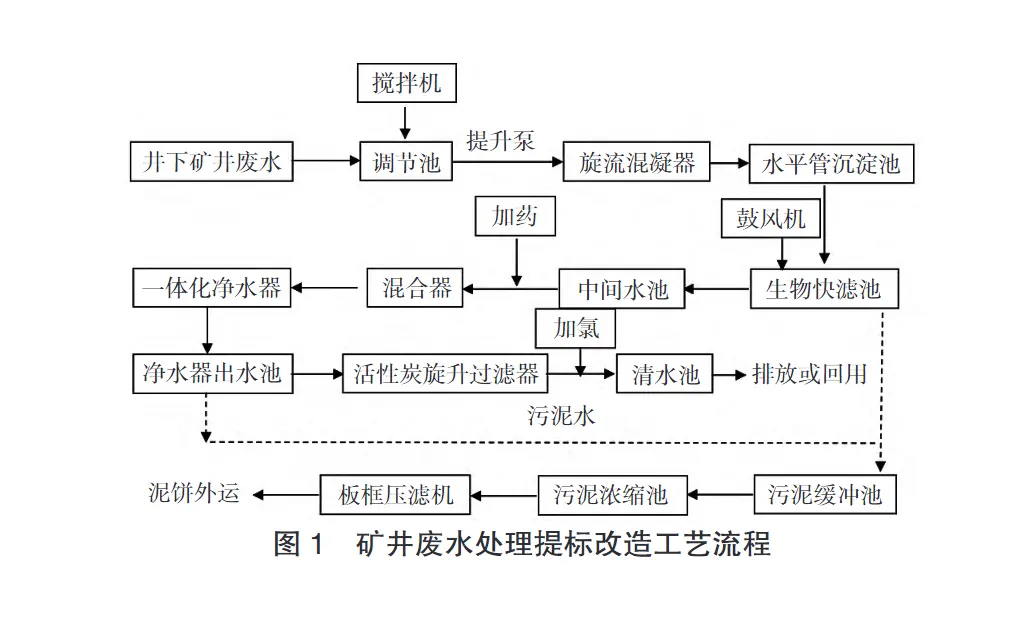
3.3 The main process and equipment analysis design processing capacity of 500m3/h, the system 24h continuous operation.
1) Conditioning tank. A submersible mixing system is set up in the regulating pool to prevent suspended matter from settling in the regulating pool. The regulating pool is designed as follows: effective volume, 1250m3; quantity, 2 seats; material, steel concrete; form, underground type. The main equipment is submersible mixer: model, QJB100-615; power, 10kW; quantity, 4 sets. Regulating pool lifting pump: model, 150WQ150-16-11; flow rate, 150m3/h; power, 11kW; head, 16m; quantity, 4 sets.
(2) Cyclone coagulator. Cyclone coagulator main equipment pipeline mixer: model, take over the calibre DN200; quantity, 4 sets. Cyclone coagulator: model, Ф3 200mm; maximum water treatment capacity, 150m3/h; quantity, 4 sets. Dosing system, 1 set. Dosing metering pump: model, GM0120; power, 0.25kW; quantity, 4 sets.
(3) Horizontal pipe sedimentation tank. Horizontal pipe sedimentation tank: quantity, 2; material, steel concrete; form, semi-underground type. Horizontal pipe sedimentation device: 2 sets. Horizontal pipe sedimentation device: 2 sets. Horizontal pipe cleaning trolley: 2 sets. 4) Bio-quick filtration tank. Bio-rapid filter: quantity, 2; material, steel concrete; form, semi-underground. Bio-filter filter material: 2 batches. Filter tank aeration system: 2 sets. Filter pool water distribution system: 2 sets. Filter tank aeration fan: air volume, 7.12m3/min; power, 11kW; quantity, 4 sets. Filter backwash pump: model, 200WQ400-18-37; flow rate, 400m3/h; power, 37kW; head, 18m; quantity, 2 sets. 5) Intermediate pool. Intermediate pool: effective volume, 600m3; quantity: 1; material, steel concrete; form, underground. Intermediate pool lifting pump: model, 200WQ270-14-15; flow rate, 270m3/h; power, 14kW; head, 15m; quantity, 3 sets.
(6) Full hydraulic control integrated water purifier. The use of LWJS-250 type full hydraulic self-control integrated water purifier, net size: Ф9400mm × 6200mm; Material: carbon steel; Number: 2 sets. Equipment room and control room: material, steel structure; form, ground type; quantity, 1 seat. Dispensing tank: net size, Ф1200mm×900mm; material, carbon steel; quantity, 4 sets. Dosing mixer model: BLD0.75-15-59Q; power, 0.75kW; quantity, 4 sets. Dosing metering pump: model, GM0170; power, 0.75kW; quantity, 4 sets. Pipeline mixer: Model, SF-250; Quantity, 2 sets.
7) Water purifier outlet tank. It is used to store the effluent of integrated water purifier. A certain amount of sodium hypochlorite is added to the water through the folding point chlorination method, and through a certain residence time, the sodium hypochlorite and the effluent water are fully mixed and reacted, so that the purpose of reducing the total nitrogen in the water is achieved. Water purifier outlet pool: effective volume, 600m3; quantity, 1; material, steel concrete; form, underground. Filter lifting pump: Model, 200WQ270-28-37; Flow rate, 270m3/h; Power, 37kW; Lift, 28m; Quantity, 3 sets (two for one standby).
(8) Clear water pool. After the activated carbon spin-up filter treatment of produced water, a certain amount of sodium hypochlorite is injected into the water through the folding point chlorination method, and through a certain retention time, so that the sodium hypochlorite and the effluent water are fully mixed and reacted, and the purpose of reducing the total nitrogen in the water is achieved, and it enters into the clearing basin for reuse in the mining area or direct discharge. Clear water pool: effective volume, 600m3; quantity, 1; material, steel concrete; form, underground type. Sodium hypochlorite generator: effective chlorine yield: 300g/h; quantity: 1 set.
(9) Sludge buffer tank. The mud-water mixture discharged from the cyclone desander and integrated water purifier firstly enters into the sludge pool buffer to homogenise the sludge water, and two submersible mixers are set up in the sludge buffer pool in order to prevent the sludge water from settling in the buffer pool. Sludge buffer tank: effective volume, 200m3; material, steel concrete; form, underground; number, 1. Buffer pool lifting pump: model, 100WQ80-25-11; flow rate, 80m3/h; head, 25m; power, 11kW; quantity, 2 sets. Buffer pool mixer: model, QJB022-320; power, 2.2kW; quantity, 2 sets. 10) Sludge thickener. It is used to thicken the sludge discharged from cyclone desander and integrated water purifier, which is more conducive to the operation of subsequent sludge treatment system. Sludge thickener: Model: Ф2 800mm; Quantity, 1 set. Screw pump: model, G40-1; flow, 12m3/h; head, 60m; power, 4kW; quantity, 2 sets.
4 Analysis of the operational effects of the project
4.1 Operation effect of Ximing mine mine water treatment upgrading and renovation project was completed in October 2020, after the renovation of the mine water treatment system can reach a capacity of 10,000m3 / d, the effluent water quality to meet the "surface water quality standards" in the class III water quality standards.
4.2 Running cost analysis of electricity: the total installed capacity of 400kWh, the actual operating capacity of 245kWh, equivalent to tonnes of water power consumption of 0.49kW - h. Electricity at 0.60 yuan / kW - h, then the electricity cost of 0.294 yuan / t. Labour costs: according to the three-shift shift, each shift according to the two on duty to consider, and another shift commander, a total of seven people, according to each person's monthly salary of 3500 yuan, a total of 24,500 yuan / month. 24500 yuan/month, equivalent to 0.068 yuan per tonne of water. Pharmacy fee: need to add coagulant (polymerisation of aluminium chloride), dosage of 5g/m3, polymerisation of aluminium chloride according to 2,000 yuan / t, then 0.01 yuan / t (water); coagulant (polyacrylamide) dosage of 2g / m3, polyacrylamide according to 7,000 yuan / t, then 0.014 yuan / t (water). The total pharmaceutical cost is 0.024 yuan/t (water). Therefore, the total operating cost is 0.294 + 0.068 + 0.024 = 0.386 yuan / t (water).
5 Conclusion In order to better treat mine water in Ximing Mine, Ximing Mine has carried out capacity expansion and upgrading transformation of the existing mine water treatment system. The expansion and upgrading of the idea of safeguard analysis, from the principle of selection of process solutions, treatment processes and procedures, the main process and equipment, etc., the expansion and upgrading of the transformation programme is described. After the transformation, the mine water treatment capacity has been effectively improved, and the operating cost of mine water treatment is only 0.386 yuan/tonne of water, which has better social and economic benefits.
Author: Prof Zhao Shujuan
Welcome to call us for consultation, technical exchange, and material experiment.
]]>某工程機械公司主要生產(chǎn)建筑機械和駕駛艙。在生產(chǎn)過程中需要前處理、電泳等工藝,其中前處理包括熱水洗、脫脂、表調(diào)、磷化、水洗噴淋等工序。生產(chǎn)所用的主要原輔材料有電泳涂料、上涂涂料、稀釋用溶劑、洗滌用溶劑、脫脂液、化成液、表面調(diào)整液等。磷化、水洗噴淋工序會產(chǎn)生含磷廢水,因為要執(zhí)行政府的節(jié)能減排政策和遵循含磷廢水零排放原則,所以含磷廢水需要單獨處理。前處理中的非磷工序產(chǎn)生的廢水和電泳廢水經(jīng)處理達標后與生活污水集中接管排入污水處理廠集中處理。后文的前處理廢水均指非磷工序產(chǎn)生的廢水。而含磷廢水進行深度處理后全部回用于生產(chǎn),大部分磷經(jīng)混凝處理形成沉淀除去,干燥后壓成泥餅委外處理,少部分磷經(jīng)離子交換和反滲透(RO)處理后濃縮成廢液,再委外處理。這樣處理后廢水回用于生產(chǎn)和集中排放,既減少排放總量,又節(jié)省水資源,能夠取得經(jīng)濟和環(huán)保的雙重效益。
1 工程要求
1. 1 處理規(guī)模前處理、電泳廢水:36.0 m3/d,即1.5 m3/h,每天按24 h連續(xù)運轉(zhuǎn),處理達標后與生活污水一起接管排入城市污水處理廠。含磷廢水:12.0 m3/d,即0.5 m3/h,每天按24 h連續(xù)運轉(zhuǎn),經(jīng)過中水回用處理系統(tǒng)之后,全部回用于生產(chǎn)工藝中的噴淋段。生活污水:全部接入污水管網(wǎng),送城市污水處理廠處理。
1. 2 廢水水質(zhì)及排放標準業(yè)主提供的水質(zhì)資料見表1。排放遵循《污水綜合排放標準》(GB 8978–1996)中“表4”的一級標準,見表2。中水回用指標參照同類型企業(yè),見表3。
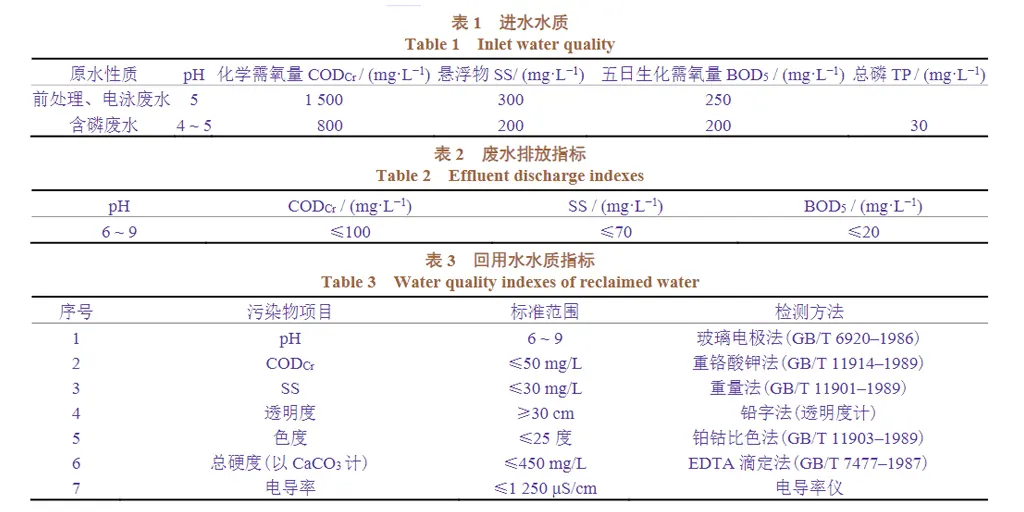
2 工藝設(shè)計
2. 1 指導(dǎo)思想(1)認真貫徹執(zhí)行國家關(guān)于環(huán)境保護工作的方針、政策,使方案設(shè)計符合國家的有關(guān)法規(guī)、規(guī)范和標準[1]。(2)根據(jù)廢水水質(zhì)及處理出水要求,力求選用技術(shù)先進、工藝成熟穩(wěn)定、處理效率高、維修管理簡便、占地面積小、投資少、運行費用低的處理工藝,并留有一定的余地,便于發(fā)展及改造。(3)選用質(zhì)量可靠、維修簡便、能耗低的機電設(shè)備,適當(dāng)引進技術(shù)先進、功效顯著的關(guān)鍵設(shè)備。(4)廢水的水量和水質(zhì)日變化較大,處理構(gòu)筑物適當(dāng)留有余地,以便在高沖擊負荷下也能保持穩(wěn)定的處理效果。(5)設(shè)施在正常運行時不會影響周圍的環(huán)境衛(wèi)生。
2. 2 處理工藝前處理和電泳廢水處理工藝流程見圖1,含磷廢水處理工藝流程見圖2。前處理和電泳廢水經(jīng)過格柵池1的攔截,去除大顆粒懸浮物后,進入調(diào)節(jié)池1進行水質(zhì)水量的調(diào)節(jié),再經(jīng)過提升泵打入混凝反應(yīng)池1。該池分3格:第1格為pH調(diào)整槽,調(diào)整廢水pH至偏堿性;第2格為快混槽,添加混凝劑PAC(聚合氯化鋁);第3格為慢混槽,添加高分子絮凝劑PAM(聚丙烯酰胺)。充分反應(yīng)后的廢水進入沉淀池1進行固液分離,污泥排入污泥濃縮池,經(jīng)廂式壓濾機壓干后泥餅委外處理,濾液回至調(diào)節(jié)池。沉淀池1的上清液經(jīng)中和池1中和后進入曝氣池1,采用活性污泥法處理,即向廢水曝氣,并持續(xù)一段時間,廢水中會生成一種絮凝體(主要由大量繁殖的微生物群體所構(gòu)成),易于沉淀分離,使廢水得到澄清,且大部分的有機物經(jīng)微生物分解后可被去除。曝氣池1的出水在終沉池1中實現(xiàn)固液分離,污泥排入污泥濃縮池,經(jīng)廂式壓濾機壓干后泥餅委外處理,濾液回至調(diào)節(jié)池1,上清液流入中間池1,再經(jīng)砂濾和活性炭吸附,確保廢水處理達標后再與生活污水一起計量接管排入污水處理廠集中處理和外排。
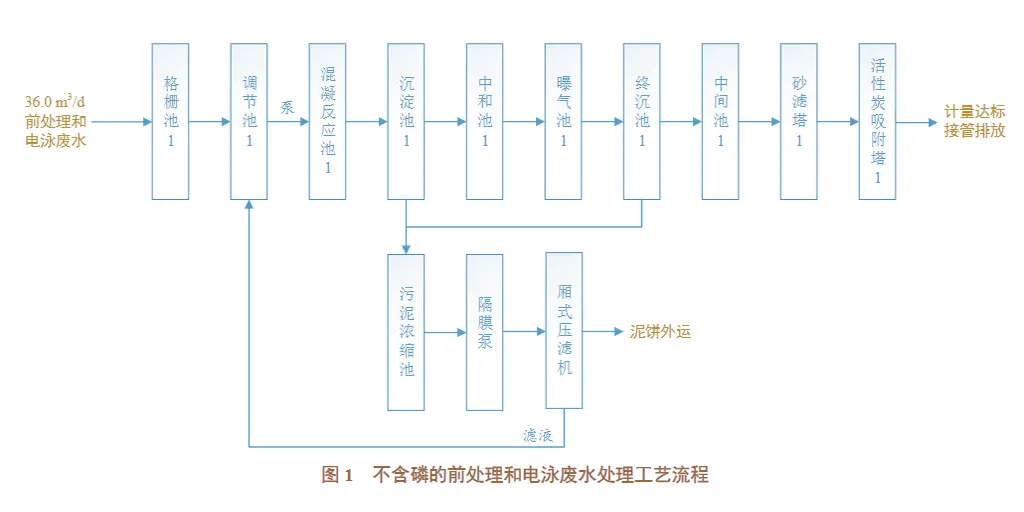
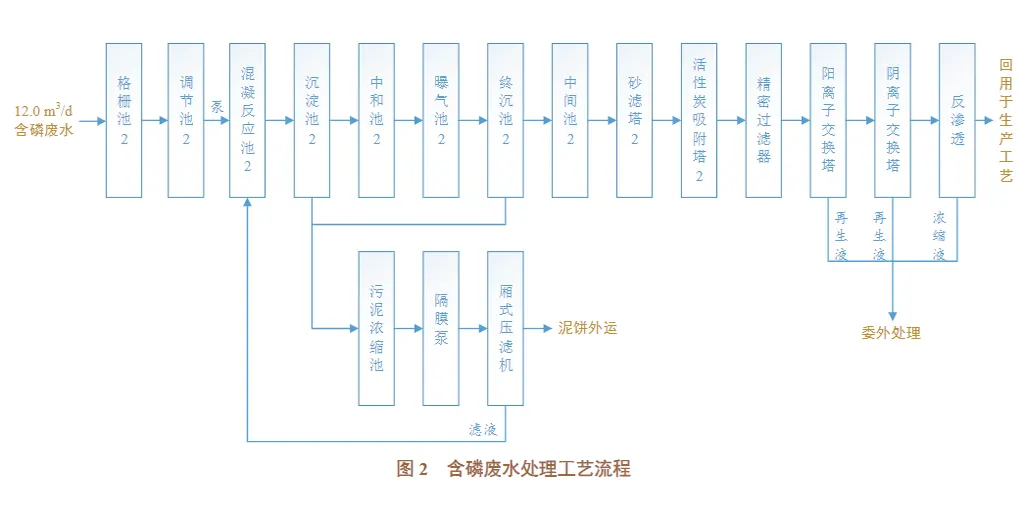
含磷廢水經(jīng)過格柵池2的攔截,去除大顆粒懸浮物后,進入調(diào)節(jié)池2進行水質(zhì)水量的調(diào)節(jié),再經(jīng)過提升泵打入混凝反應(yīng)池2。該池也分3格:第一格是pH調(diào)整槽,調(diào)整廢水pH至偏堿性;第二格是快混槽,添加PAC;第三格是慢混槽,添加高分子絮凝劑PAM。廢水中的磷與PAC和PAM發(fā)生混凝反應(yīng),充分反應(yīng)后大部分磷形成絮狀沉淀得以除去。廢水進入沉淀池2進行固液分離,含磷污泥排入污泥濃縮池,經(jīng)廂式壓濾機壓干后泥餅委外處理,濾液回至調(diào)節(jié)池2。沉淀池2的上清液經(jīng)中和池2中和后進入曝氣池2,經(jīng)活性污泥分解,可去除大部分的有機物。曝氣池2的出水經(jīng)終沉池2固液分離,污泥排入污泥濃縮池,經(jīng)廂式壓濾機壓干后泥餅委外處理,濾液回至調(diào)節(jié)池2,上清液流入中間池2,經(jīng)砂濾和活性炭吸附。因為環(huán)保部門要求含磷廢水必須實行零排放,所以上述處理后的廢水還需再經(jīng)精密過濾,并結(jié)合離子交換和反滲透工藝,除去殘磷和其他污染物,以滿足回用水的要求。陽離子交換塔可以去除廢水中的金屬離子,而陰離子交換塔可以去除廢水中的非金屬離子,反滲透膜可以截留其他雜質(zhì),從而使回用水中不含磷,也不影響生產(chǎn)工藝。離子交換塔產(chǎn)生的少量再生液和反滲透截留的濃縮液都含有磷,作為廢液委外處理而不排入環(huán)境,不會造成二次污染,既節(jié)約了水資源,又做到磷的零排放。該工藝有如下特點:
(1)系統(tǒng)自動化程度高,操作管理和維護方便,盡量減少了運行成本。
(2)采用了操作方便的曝氣生化系統(tǒng),通過好氧微生物的作用,使廢水中復(fù)雜的、大分子有機物被好氧微生物分解和攝取為簡單的小分子有機物。在系統(tǒng)中首先對微生物菌種進行篩選和優(yōu)化,接著被氧化及分解。這樣就抑制了池中絲狀菌的繁殖和生長,從而避免污泥膨脹現(xiàn)象的發(fā)生,同時起到脫氮效果。本方案設(shè)計了較低的BOD負荷,較長的水力停留時間,可以確保出水的有機污染物指標達到標準。
(3)以重力流為主,壓力提升為輔,同時降低了能耗及運行費用。
(4)中水回用工藝中離子交換塔產(chǎn)生的少量再生液和反滲透產(chǎn)生的少量濃縮液作為廢液委外處理。
(5)系統(tǒng)產(chǎn)生的所有污泥集中排入污泥濃縮池,定期通過氣動隔膜泵打入廂式壓濾機進行干化處理。泥餅集中裝袋外送至磚瓦廠制磚,避免產(chǎn)生二次污染,濾液則回流至調(diào)節(jié)池。
2. 3 工程設(shè)計指標廢水處理站主要技術(shù)指標如下:占地面積200 m2,總裝機容量40.32 kW,運行功率24 kW,日處理量48 m3。電氣負荷見表4,主要設(shè)備和構(gòu)筑物分別列于表5和表6。
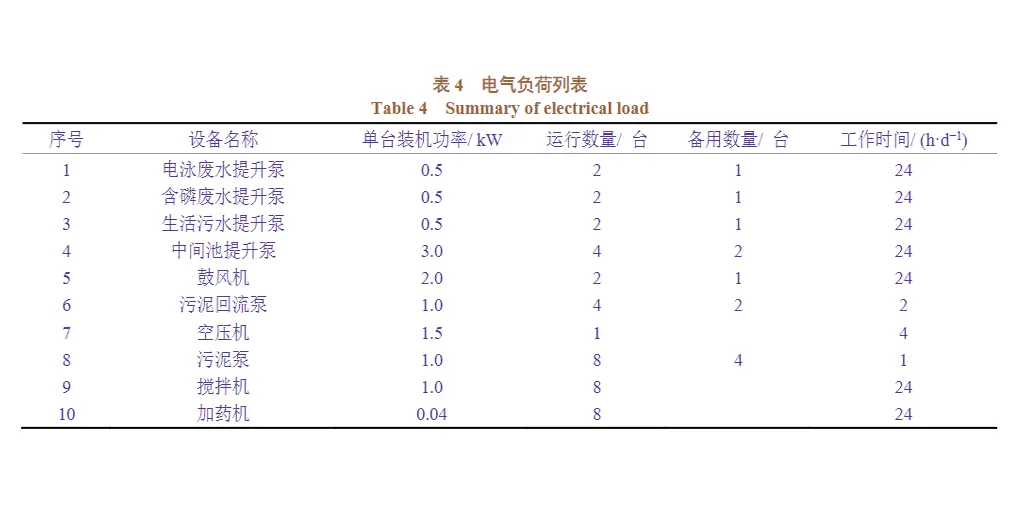
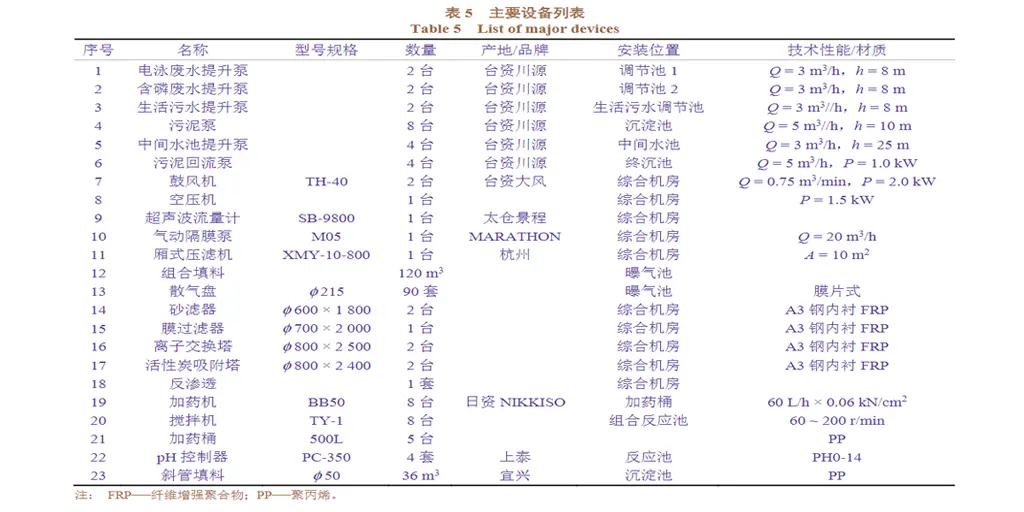
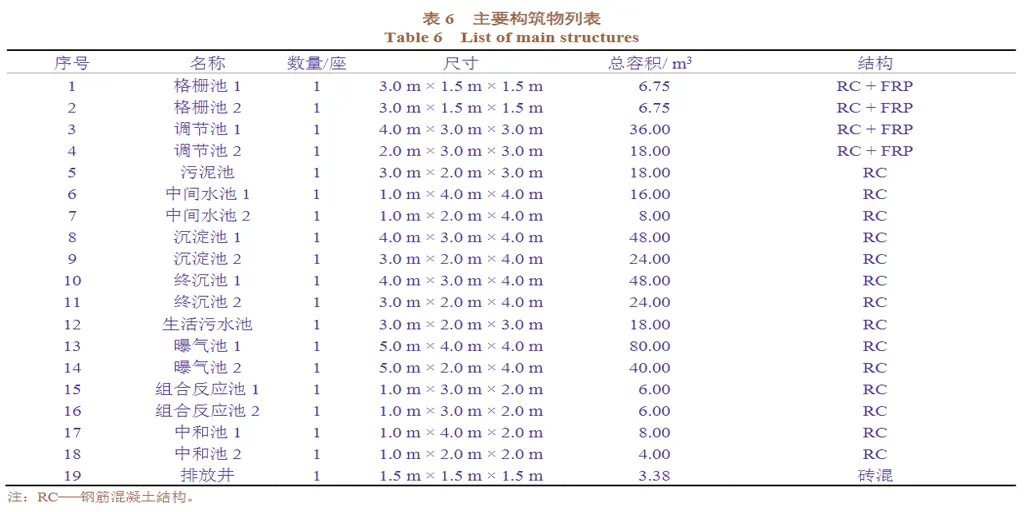
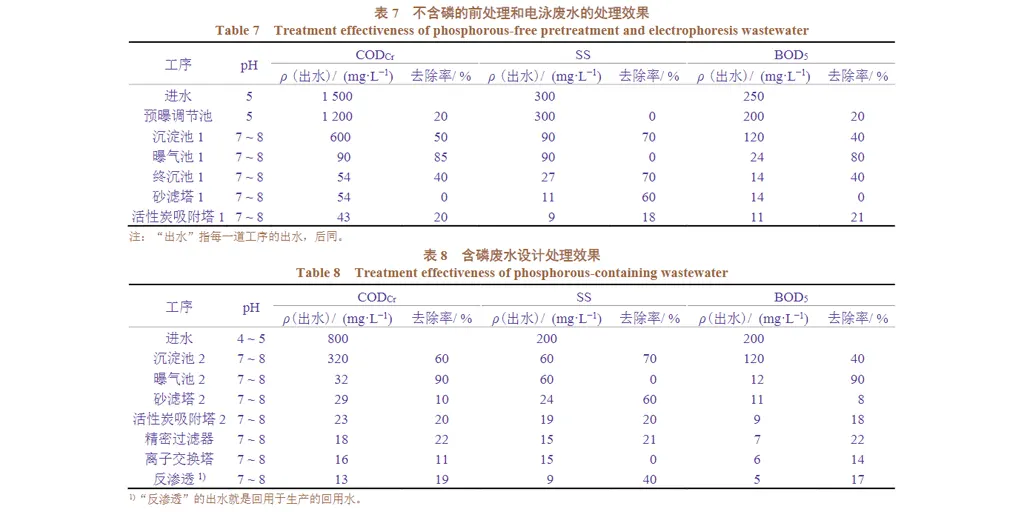
3 處理效果由表7和表8可知,最終(活性炭吸附塔1)的出水達到排放標準,回用中水達到相關(guān)企業(yè)標準。
Welcome to call us for consultation, technical exchange, and material experiment.
Enquiry: 188517-18517
]]>
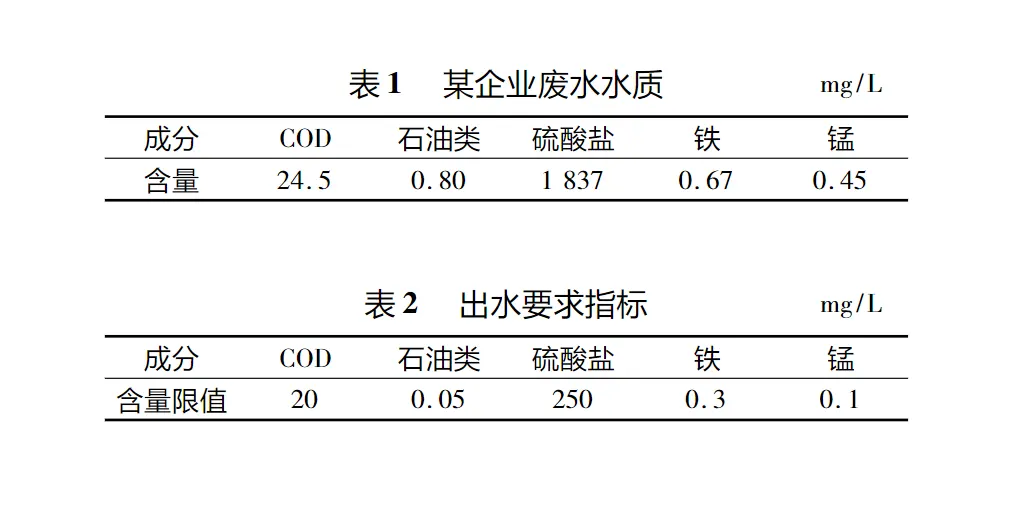
Some of the wastewater produced in the production process of an enterprise is discharged into the surrounding water bodies, and the local environmental protection department has found that sulphate exceeding the standard is more serious, which has changed the original ecological function of the surrounding water bodies. People drinking the surrounding water bodies occasionally diarrhoea phenomenon, contaminated water bodies will also cause the local workshop produced by the tofu quality decline, affecting the surrounding environment, agricultural production and residential life. Therefore, the elimination of excessive sulphate in the water body to protect the environment and human and animal safety is of positive significance.1 Wastewater indicators of the sulphate wastewater volume of 4500m3 / d, pH 7.7, alkaline, wastewater quality is shown in Table 1.
According to the requirements of the local environmental protection department, the pH of treated wastewater should be controlled from 6 to 9, and meet the requirements of the indexes of Class III water body of "Environmental Quality Standard for Surface Water" (GB3838-2002), see Table 2.
2 Conventional treatment methods
At present, the main treatment methods commonly used for sulphate wastewater are chemical precipitation method, physical-chemical method and biochemical method. (1) Chemical precipitation method, including barium salt precipitation method, calcium salt precipitation method, calcium alumina precipitation method, etc., mainly using barium ions, calcium ions, etc. and sulfate combined with the solubility of the product difference to remove sulfate. (2) Physical and chemical method, is the current industrial wastewater treatment technology commonly used methods, mainly the use of membrane separation technology to achieve the removal of impurities, including nanofiltration and reverse osmosis. The principle is to use different ions with different particle sizes to pass through man-made membranes with different pore sizes to carry out physical filtration under appropriate conditions. The advantage of membrane separation technology is that the treatment effect is good, the disadvantage is that the water quality of the water inlet side of the higher requirements, generally need pretreatment, one-time investment and operating costs are high, but also produce concentrated liquid, increasing the difficulty of subsequent treatment. (3) biochemical method, is the use of sulfate bacteria metabolism will be converted to sulfide sulfide. Sulphide can be converted into simple sulphur either by metal sulphide precipitation or by micro-oxygen metabolism of sulphur bacteria. The technology can be used for the treatment of inorganic and organic sulphate industrial wastewater.
3 Treatment process design
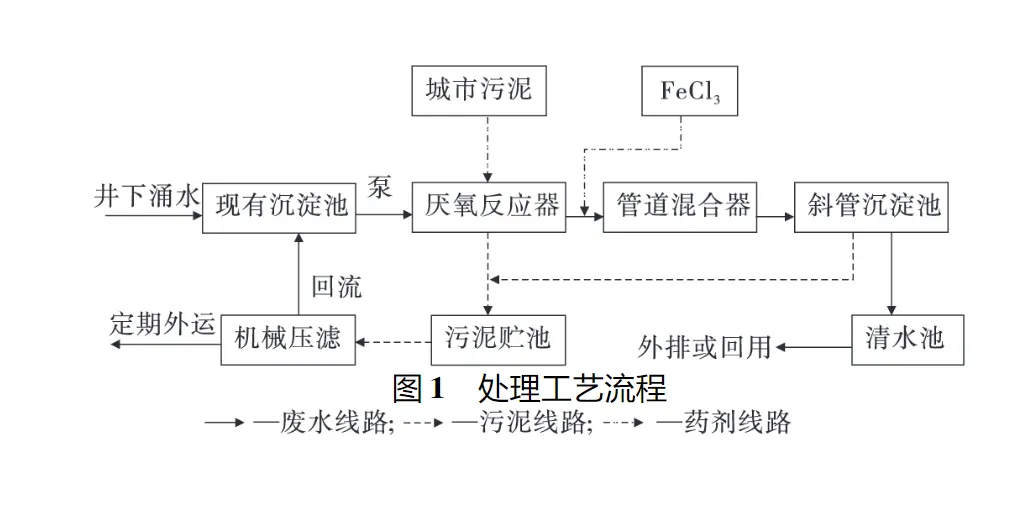
3.1 Process design Comparing the above three commonly used sulphate wastewater treatment methods and their advantages and disadvantages, according to the characteristics of the enterprise and the surrounding environment, the treatment process design is based on anaerobic treatment technology. The designed treatment process is shown in Fig. 1. The wastewater is lifted into the existing sedimentation tank, and then lifted to the anaerobic reactor (UASB) by a lifting pump to provide carbon source for the wastewater by adding municipal sludge to make the COD/SO2-4 value over 1. The UASB is designed to meet the advantageous environment of SRB bacteria. To satisfy the advantageous environment of SRB bacteria, the sulphate in the wastewater will be converted into hydrogen sulphide, and the toxic gas will be separated and collected and discharged through the three-phase separator in the anaerobic reactor. The effluent of the anaerobic reactor is fed with the pharmaceutical agent ferric chloride into the pipeline mixer, which further converts sulphur ions in the wastewater into metal sediments, and the pipeline mixing will enter into the inclined tube sedimentation tank to remove the metal sulphide precipitation formed. After precipitation, the wastewater flows into the existing clean water tank for reuse or external discharge. The bottom sludge in the UASB and inclined pipe sedimentation tank in the system flows into the sludge storage tank, which is briefly stored and then lifted to the mechanical filter press by the sludge lifting pump, after which the sludge is solidified and regularly transported out, and can be disposed of in a unified manner with the tailings of the plant, and the filtrate produced in the filter press process is returned to the existing sedimentation tank.
3.2 Design and selection of structures and equipment (1) lifting pumps, the existing sedimentation tank in the wastewater lifting to the anaerobic reactor. Select IS type axial suction single-stage centrifugal pump, model IS200-150-200, flow rate Q = 190m3/h, height H = 12.5m, power N = 8.55kW, choose 2 units, one with a backup. (2) Anaerobic reactor (UASB), anaerobic reaction of wastewater, through the artificial addition of carbon sources to increase the COD/SO2-4 value of wastewater, to promote the growth and reproduction of the SRB bacteria, the wastewater in the conversion of sulfate to hydrogen sulfide. Above ground type, size 20.0m×15.0m×5.3m, effective water depth 5.0m, total effective capacity 1500m3, surface load 0.625, total hydraulic retention time 8h. Equipment has stainless steel material up and down two sets of three-phase separator, supporting the inlet and outlet water and sludge discharge, exhaust piping, steel corrosion-resistant material. (3) pipe mixer, FeCl3 and wastewater for full mixing, reaction, to facilitate the formation of S2- metal precipitation. Choose GH type pipe mixer, model GH-250, carbon steel lined with rubber material, 1 unit. Equipment including pipe pump, used to pressurise the UASB water pressure. In order to make the water through the pipeline mixer can meet the flow rate and pressure requirements, choose SG-type pipeline pump, model 200SG200-20, flow rate Q = 200m3 / h, height H = 20m, power N = 18.5kW, choose 1; FeCl3 configuration system, used to configure the FeCl3 solution to be added to the pipeline mixer dosing port, mixing fully to form the metal sulphide precipitation. Choose integrated configuration equipment, model JY-II, machine power 1.5kW, choose 1. (4) Inclined pipe sedimentation tank, the formed metal sulphide will be precipitated to remove S2- and Fe3+ ions in the waste water. Above ground type, size 12.0m×12.0m×4.0m, effective volume about 245m3, super high 0.3m, effective water depth 1.7m, buffer layer height 0.5m, sludge hopper height 1.5m, sludge hopper volume about 80m3. Adopting honeycomb inclined pipe filler, height 1.0m, full-ground arrangement, 1 set. (5) Sludge storage tank, temporary storage of bottom sludge in UASB and inclined pipe sedimentation tank, regularly transported to filter press equipment. Semi-underground type, size 8.0m×3.5m, effective height 3.0m, effective volume about 150m3. The equipment has sludge lifting pump, used for lifting the sludge to the filter press, model G35-1, flow rate Q=8m3/h, height H=60m, power N=3.0kW, choose two sets, one with a spare; filter press, the sludge in the sludge storage tank is mechanically pressed and dewatered to form filter. Filter press, for the sludge in the sewage sludge storage tank to form filter cake by mechanical filter press and dewatering, choose belt filter press, model FDNY500, wet sludge processing capacity of 5-10m3/h, power 1.3kW, equipment size of 3.75m × 1.05m × 1.95m, choose 2 sets, one for one; filter press rinse pump, choose IS type axial suction single-stage centrifugal pump, model IS50-32-200, flow rate Q = 7.5m3/h, height H = 60m, power N = 3.0kW, choose 2 sets, one for one. 5m3/h, height H=52.5m, power N=2.82kW, choose 2 sets, one with a backup. (6) equipment plant, placing pharmaceutical dosing equipment, filter presses and ancillary equipment, etc., size 6.0m × 4.5m × 4.5m; built-in structures have filter press rinsing pool, size 1.5m × 1.5m × 1.5m, semi-subterranean structure, indoor depth of 1.0m below the ground level, the water from the existing lifting pumps connected to all the way to DN50 pipeline into the. (7) 1 power distribution room, above ground, size 6.0m × 4.5m × 4.5m; duty lounge 1, above ground, size 3.6m × 3.6m × 3.0m; rinse pool 1, above ground, size 1.5m × 1.5m × 1.5m.
3.3 application effect of sulphate wastewater treatment process route estimated engineering investment direct cost of about 5 million yuan, wastewater treatment cost of about 1.4 yuan / t (excluding depreciation). Using a small test simulation process route, in the influent flow 500L / h simulation, debugging 15d after continuous operation of 12h, respectively, take 3, 7, 12h effluent water samples for testing. Combined with the pollutant discharge limits in Table 2, the small-scale simulation test water indicators to meet the discharge requirements.
4 Conclusion (1) The process design focuses on the removal of sulphate in wastewater. Small simulation test effluent indicators show that the sulphate wastewater treatment process effluent can meet the water quality requirements of the pollution factors. (2) Small-scale simulation test commissioning time is relatively long, because the outdoor temperature is low in winter, adding the city sludge for the sewage treatment plant dewatering sludge, need to be fully dispersed; operation of the first few hours of the effluent water quality is relatively poor, the COD content is even more than 20mg / L, the reason is that the biochemical reaction time is shorter, the wastewater in the sludge content of the relatively small. (3) The treatment process uses less water and has a better treatment effect, which can provide guidance for subsequent medium-sized or on-site industrial tests and commissioning.
Welcome to call us for consultation, technical exchange, and material experiment.
Enquiry: 188517-18517
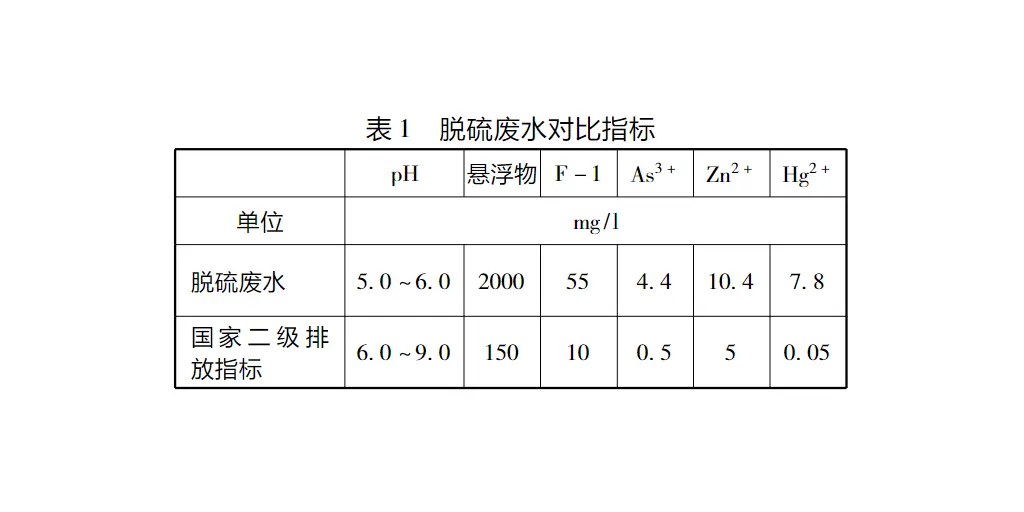
]]>Wastewater generated from the process of wet desulphurisation of boiler flue gas (limestone/gypsum method) mainly comes from gypsum dewatering and cleaning system absorption tower discharge water, which is generated and discharged from the system in order to maintain the balance of substances in the slurry circulation system of the desulphurisation plant, prevent the soluble part of flue gas, i.e., the concentration of chlorine, from exceeding the prescribed value and to ensure the quality of gypsum. In order to meet the national secondary emission standards, heavy metals, suspended solids, etc., need to be removed from the wastewater; and its pH value needs to be adjusted to a suitable range. The national secondary discharge standard and typical FGD wastewater comparison indicators are shown in Table 1.
2 Desulphurisation wastewater treatment process principle
The impurities contained in the wastewater mainly include suspended solids, oversaturated sulfites, sulfates and heavy metals. The main characteristics of the popular wet desulfurisation wastewater at this stage are: (1) The wastewater is weakly acidic, with a low pH value; the suspended solids are high, but the particles are fine, and the main components are dust and desulfurisation products (CaSO4 and CaSO3). (2) Contains soluble chloride and fluoride, nitrate, etc.; and Hg, CdPb, Ni, As, Cr and other heavy metal ions. Based on these properties of wet desulfurisation wastewater, the main physical and chemical method for different types of pollutants, respectively, to create the corresponding physical and chemical reaction conditions, so that it is completely removed, the main reaction steps are as follows: (1) PH adjustment: calcium hydroxide/lime slurry [Ca (OH) 2] alkaline wastewater treatment, some of the heavy metals in the form of hydroxides precipitated, and neutralise the acidic substances in the wastewater. Adjust the wastewater PH value between 9.0 and 9.5 to create suitable reaction conditions for the subsequent treatment process. (2) Precipitation treatment: add organic sulfide, TMT (Trimer ~ Capto-Trianzin), so that certain heavy metals form precipitation such as cadmium, lead, mercury and so on. (3) Flocculation, coagulation treatment: through the addition of flocculant FeClSO4 and the appropriate amount of coagulant (polymerised electrolyte anionic) to make most of the suspended matter in the wastewater precipitation. (4) Pressing and neutralisation treatment: the precipitate is dewatered through a filter press, and hydrochloric acid is added to neutralise the discharge.
3 wastewater treatment equipment and process introduction
According to the process principle of desulphurisation wastewater treatment, desulphurisation wastewater treatment mainly includes the following four sub-systems: wastewater treatment system, chemical dosing system, sludge treatment system and supporting monitoring and automation system.
3.1 Wastewater treatment process (Figure 1)
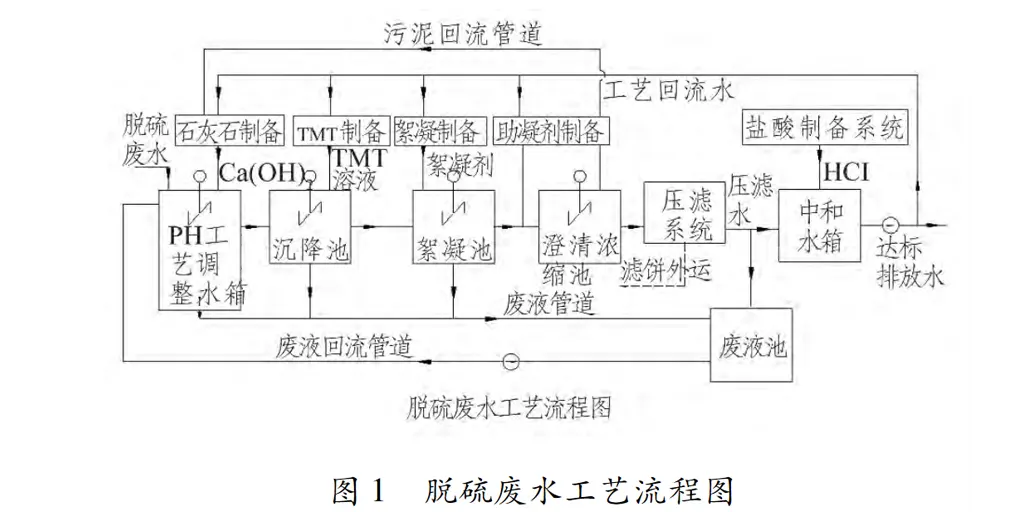
(1) limestone alkalisation treatment, this step is mainly completed in the pH process adjustment box. Alkalisation treatment using calcium hydroxide/lime slurry [Ca(OH)2], plus lime slurry for wastewater alkalisation treatment, the acid in the water (H2SO4, H2SO3) according to the following reaction to be neutralised:H2SO4+Ca(OH)→2CaSO4+2H2OH2SO3+Ca(OH)→2CaSO3+2H2OGenerally trivalent heavy metal ions are more likely to be precipitated than bivalent Metal ions are easier to precipitate, when the PH value reaches 9.0 ~ 9.5, divalent and trivalent heavy metal ions through the formation of slightly soluble hydroxide precipitated from the wastewater, while the lime slurry Ca2+ can also react with some of the F- in the wastewater, generating insoluble CaF2; and complex with the As3+ to generate Ca (AsO2)2 and other insoluble substances. Reaction formula into the following:Me2++2OHMe(OH)2Me3++3OHMe(OH)3Trivalent metal ions precipitation of the PH value is usually lower than the divalent metal ions, due to the heavy metal ions to different PH value precipitation out of this step, so this step is the formation of each hydroxide of the decisive step. In addition, the pH value at which the precipitation of metal ions occurs is also affected by the presence of a large amount of excess electrolytes in the FGD wastewater.In the PH process adjustment box, the hydraulic retention time is about 1.0 h. Perforated aeration tubes are installed at the bottom of the tank to pre-aerate the FGD wastewater and increase the dissolved oxygen in the water. Because the desulphurisation wastewater is discharged at a high temperature, so the perforated stainless steel pipe. (2) precipitation treatment, this reaction step is mainly completed in the precipitation tank. Not all heavy metals can be completely precipitated out in the form of hydroxide, especially cadmium and mercury. Therefore, organic sulphur (TMT15) is added proportionally to the amount of wastewater being treated. Organic sulphur first forms slightly soluble compounds with cadmium and mercury, which are precipitated as solids. The basic reaction principle equation is (in the case of mercury):Hg+S-2HgS.(3) Flocculation and coagulation aid reaction:This stage is completed between the flocculation tank in the flocculation tank and the sedimentation and concentration tank:The hydroxides and sulphides that precipitate out of the settling tank are fine particles as are the solids in the original wastewater from the desulphurisation, dispersed throughout the system, and are very difficult to settle. In order to improve the settling behaviour of the solids, a flocculant (FeClSO4) was added to the wastewater to form an iron hydroxide/Fe(OH)3 small particle floc. Heavy metal hydroxides and compounds attach to the iron hydroxide small-particle flocs to form larger, more settleable flocs. This process is completed in the flocculation tank. The flocculation tanks are equipped with agitators to ensure uniform mixing of the wastewater and chemicals. In order to minimise fragmentation of the formed floc, the agitators in the flocculation tanks rotate at a slightly lower speed than in the first two reaction tanks. In order to promote the formation of flocculated particles in the settling tank and flocculation tank, it is necessary to add a small constant amount of contact slurry drawn from the clarifying and concentrating tank, which has formed the nuclei of the settled material, as shown in the FGD wastewater process flow diagram. Wastewater flows out of the flocculation box through the pipe mixer, that is, to which the coagulant aid (polyelectrolyte anionic type), in order to produce more easily settled large flocculated particles.
3.2 Chemical dosing system The role of the chemical system is mainly for the storage of drugs, stirring and mixing, formulated into the required concentration of the solution, are quantitatively added by the metering pump to the corresponding dosing point. Dosing system includes lime slurry dosing system, organic sulfur (TMT15) dosing system, flocculant (FeCLSO4) dosing system, coagulant dosing system, hydrochloric acid neutralisation dosing system. The dosage control indicators and other information of each system are shown in Table 2.
3.3 The relevant technical characteristics of the sludge press treatment system and filter press In order to completely remove all kinds of impurities generated in the FGD wastewater, the popular treatment programme at this stage is to use vacuum dehydration belt to vacuum filter the FGD saturated solution, or leaching. The use of vacuum belt filtration is prone to the following problems, which seriously affects the quality of desulfurisation wastewater and filtered solids: (1) the dehydration belt system supporting equipment is more than one, and the impact of system failure. Points are many. (2)Restricted by the operation of the desulphurisation system, such as gypsum quality is not high resulting in the quality of the dewatering belt dewatering and the quality of the solid output is not high. Plate and frame filter press in practical application, simple structure, compact equipment, large filtration area but small footprint, high operating pressure, low water content of the filter cake, strong applicability to a variety of materials, suitable for intermittent operation occasions.
The filter chamber of the plate and frame filter press consists of filter plates and frames arranged in groups. The filter plate of the plate and frame filter press is designed with grooves on the surface for installing and supporting the filter cloth and guiding the flow direction of the filtrate, while the filter frame and the filter plate constitute the liquid circulation channel after assembly, which is used to pass into the suspension, washing water and lead out the filtrate. The filtrate through the feed pump under a certain pressure, from the fixed tail plate feed holes into the various filter chambers, through the filter cloth, the solids are retained in the filter chamber, and gradually formed into a filter cake; the liquid is discharged through the water outlet holes on the plate and frame. As the filtration process proceeds, the cake filtration begins, the thickness of the cake gradually increases, and the filtration resistance increases. The longer the filtration time, the higher the separation efficiency. The frame pressure filter press automatically completes the solid and liquid separation and other processes by pressing the filter plate, feeding, cake pressing, cake washing, cake blowing, discharging and other processes. The structure and working principle diagram is shown in Figure 2.
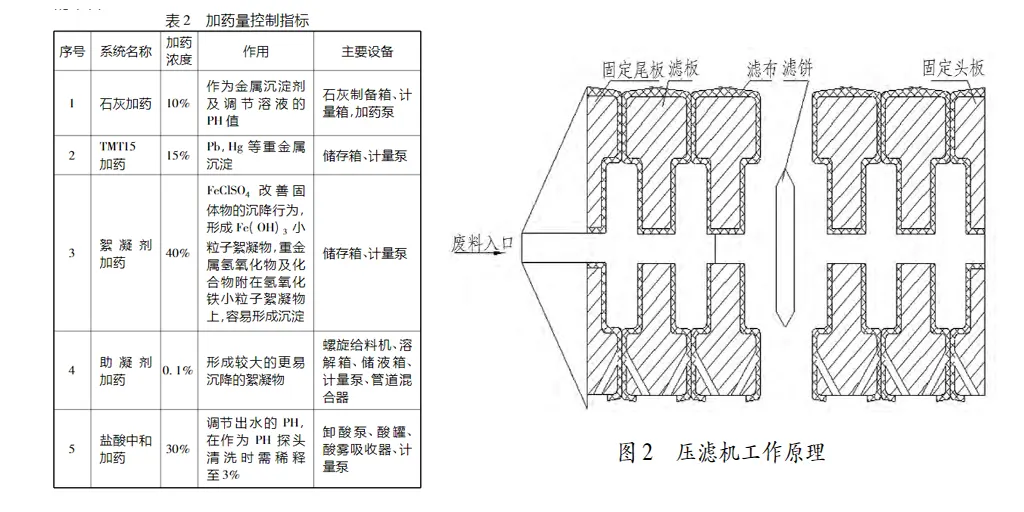
Welcome to call us for consultation, technical exchange, and material experiment.
Enquiry: 188517-18517
]]>有色金屬冶煉廠污廢水的來源為設(shè)備冷卻水、沖渣水、煙氣凈化廢水及濕法冶煉過程排放或泄漏的廢水。其中冷卻水基本未受到污染,沖渣水僅受到輕度污染,而煙氣凈化廢水及濕法冶煉過程排放的廢水污染較嚴重,是重點治理對象。有色金屬冶煉廠的污廢水主要包括以下幾種:
1)爐窯設(shè)備冷卻水:它是冷卻冶煉爐窯等設(shè)備而產(chǎn)生的,排放量大,約占總量的40%。
2)煙氣凈化廢水:它是冶煉、制酸等煙氣進行洗滌所產(chǎn)生的,排放量大,含有酸、堿及大量重金屬離子和非金屬化合物。
3)沖渣水:它是對火法冶煉中產(chǎn)生的熔融態(tài)爐渣進行水淬冷卻時產(chǎn)生的,其中含有爐渣微粒及少量重金屬離子等。
4)沖洗廢水:它是對設(shè)備、地板、濾料等進行沖洗所產(chǎn)生的廢水,還包括濕法冶煉過程中因泄漏而產(chǎn)生的廢液,此類廢水含重金屬和酸。筆者對北方某鉛鋅冶煉廠排放的污廢水進行了調(diào)查和分析,確定了污廢水處理技術(shù)路線,為有色金屬冶煉廠污廢水處理的工程設(shè)計提供了依據(jù)。
1 工程簡介與污廢水水質(zhì)
北方某鉛鋅冶煉廠生產(chǎn)污水水量為1523m3/d(其中冶煉污水水量為1427m3/d,硫酸污水水量為96m3/d),生產(chǎn)廢水水量為1741m3/d。考慮到水量的波動系數(shù),確定設(shè)計污水處理站的處理能力為1600m3/d,其中冶煉污水為1500m3/d,硫酸污水為100m3/d;生產(chǎn)廢水處理能力按1800m3/d來設(shè)計。
2 處理后水質(zhì)標準
經(jīng)處理的出水要求全部回用于冷卻循環(huán)補充水、冶煉用水、制酸用水及道路綠化,出水水質(zhì)執(zhí)行GB25466—2010《鉛、鋅工業(yè)污染物排放標準》。
3 污廢水處理工藝
該工程包括硫酸污水、冶煉污水和生產(chǎn)廢水3部分,分別采用不同的工藝來處理。硫酸污水經(jīng)污酸管道自流進入污酸調(diào)節(jié)池,再通過提升泵揚送至一級反應(yīng)槽,加入石灰乳溶液將pH值調(diào)至3.5,在一級反應(yīng)槽反應(yīng)后出水經(jīng)一級沉淀池將石膏渣分離,一級沉淀池出水自流至氧化反應(yīng)槽,在氧化反應(yīng)槽中加曝氣頭通入壓縮空氣,同時投加FeSO4溶液(鐵砷比10∶1)以去除水中的As,出水經(jīng)二級沉淀池將砷渣分離,二級沉淀池出水自流至污水調(diào)節(jié)池與冶煉污水一起處理。冶煉污水經(jīng)生產(chǎn)污水管道自流進入污水調(diào)節(jié)池,再通過提升泵揚送至二級反應(yīng)槽,加入石灰乳溶液將pH值調(diào)至7.5,然后自流進入電凝聚槽,同時向電凝聚槽內(nèi)投加PAC和PAM,再經(jīng)自浮槽進行渣水分離,去除水中的Cd、Pb、Zn、Cu和剩余的As,自浮槽上清液自流至回用水池回用。生產(chǎn)廢水經(jīng)生產(chǎn)廢水管道自流進入廢水調(diào)節(jié)池,再通過提升泵揚送至三級反應(yīng)槽,同時向三級反應(yīng)槽內(nèi)投加PAC,三級反應(yīng)槽出水自流至三級沉淀池,經(jīng)三級沉淀池去除水中的SS,三級沉淀池出水自流至回用水池回用。硫酸污水一級沉淀池的底流用底流泵揚送至壓濾機1,經(jīng)壓濾機1脫水后,干渣為石膏,進行填埋處理;二級沉淀池的底流用底流泵揚送至壓濾機2,經(jīng)壓濾機2脫水后,干渣為砷渣,送當(dāng)?shù)匚U處置中心處置;自浮槽的浮渣用泵揚送至壓濾機3,經(jīng)壓濾機3脫水后,干渣為重金屬氫氧化物綜合渣,返回冶煉進料系統(tǒng);生產(chǎn)廢水三級沉淀池的底流用底流泵揚送至壓濾機4,經(jīng)壓濾機4脫水后,干渣為懸浮物泥渣,運至渣場存放。污廢水處理工藝流程見圖1。污水處理藥劑用量為:PAM用量9kg/d,PAC用量15kg/d,生石灰用量1050kg/d,F(xiàn)eSO4用量280kg/d。污水處理產(chǎn)生渣量為:石膏2465kg/d(含水率70%),砷渣1004kg/d(含水率80%),重金屬氫氧化物綜合渣150kg/d(含水率80%),懸浮物泥渣20kg/d(含水率80%)。
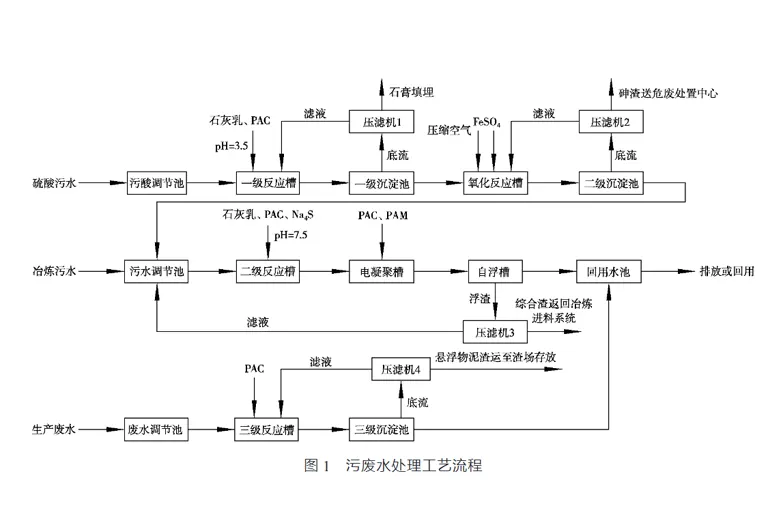
4 構(gòu)筑物設(shè)計及設(shè)備選型
1)污酸調(diào)節(jié)池:尺寸L×B×H=7m×10m×3.5m,地下式,有效容積約210m3,停留時間約33h。污酸提升泵選用50FZU-28工程塑料立式自吸泵2臺(1用1備),其性能為Q=20m3/h,H=28m,N=5.5kW(每天工作8h)。
2)污水調(diào)節(jié)池:尺寸L×B×H=15m×10m×3.5m,地下式,有效容積約450m3,停留時間約3.6h。污水提升泵選用100FZU-35工程塑料立式自吸泵3臺(2用1備),其性能為Q=65m3/h,H=30m,N=18.5kW。
3)廢水調(diào)節(jié)池:尺寸L×B×H=10m×10m×3.5m,地下式,有效容積約300m3,停留時間約7.2h。污水提升泵選用80FZU-32工程塑料立式自吸泵2臺(1用1備),其性能為Q=45m3/h,H=30m,N=11kW。
4)中間水池:尺寸L×B×H=10m×10m×3.5m,地下式,有效容積約300m3,停留時間約1.8h。回水泵選用100LB-36.4×2型立式長軸泵2臺(1用1備),其性能為Q=75m3/h,H=75m,N=30kW。
5)回用水池:尺寸L×B×H=10m×10m×3.5m,地下式,有效容積約300m3,停留時間約3.6h。回水泵選用100LB-36.4×2型立式長軸泵2臺(1用1備),其性能為Q=85m3/h,H=70m,N=30kW。
6)一級反應(yīng)槽:尺寸L×B×H=2.5m×2.5m×3.5m,地上式,有效容積約18m3,選用XFJ-1700型反應(yīng)攪拌機1臺,攪拌機直徑為1700mm,N=0.8kW。污酸水力停留時間約0.9h。
7)二級反應(yīng)槽:尺寸L×B×H=5m×5m×3.5m,地上式,有效容積約75m3,選用XFJ-3580型反應(yīng)攪拌機1臺,攪拌機直徑為3580mm,N=0.8kW。污水水力停留時間約0.65h。
8)三級反應(yīng)槽:尺寸L×B×H=5m×4m×3.5m,地上式,有效容積約60m3,選用XFJ-3000型反應(yīng)攪拌機1臺,攪拌機直徑為3000mm,N=0.8kW。廢水水力停留時間約1.5h。
9)氧化反應(yīng)槽:尺寸L×B×H=2.5m×2.5m×3.5m,地上式,有效容積約18m3,選用XFJ-1700型反應(yīng)攪拌機1臺,攪拌機直徑為1700mm,N=0.8kW。污酸水力停留時間約1.0h。
10)一級沉淀池:采用L×B=4m×4m斜管沉淀池1座,有效高度3.5m,有效容積48m3,表面水力負荷1.25m3/(m2·h),沉淀時間2.4h。底流泵選用32FTU-20陶瓷復(fù)合泵2臺(1用1備),其性能為Q=5m3/h,H=25m,N=2.2kW。
11)二級沉淀池:采用L×B=4m×4m斜管沉淀池1座,有效高度3.5m,有效容積48m3,表面水力負荷1.25m3/(m2·h),沉淀時間2.4h。底流泵選用32FTU-20陶瓷復(fù)合泵2臺(1用1備),其性能為Q=5m3/h,H=25m,N=2.2kW。
12)三級沉淀池:采用L×B=8m×6m斜管沉淀池1座,有效高度3.5m,有效容積144m3,表面水力負荷0.86m3/(m2·h),沉淀時間3.5h。底流泵選用32FTU-20陶瓷復(fù)合泵2臺(1用1備),其性能為Q=5m3/h,H=25m,N=2.2kW。
13)電凝聚裝置:選用Xkq-30電絮凝裝置1臺,覫1.8m×1.8m,N=75kW;自浮槽1座,覫2.8m×3.5m。電絮凝車間尺寸12m×6m×6m。
14)壓濾及石灰乳制備廠房:2層,尺寸30m×12m×14m,壓濾機1選用BMZG630-U廂式壓濾機1臺,單臺過濾面積40m2,N=2.2kW;壓濾機2選用XMZG1250-U廂式壓濾機1臺,單臺過濾面積200m2,N=4kW;壓濾機3選用BMZG800-U廂式壓濾機1臺,單臺過濾面積80m2,N=2.2kW;壓濾機4選用BMZG430-U廂式壓濾機1臺,單臺過濾面積20m2,N=2.2kW;LX-10型電動單梁懸掛橋式起重機1臺,起重量10t,N=16.2kW。
15)FeSO4制備系統(tǒng):JY-0.5/0.6-1型加藥裝置1臺,N=0.74kW。
16)PAC制備系統(tǒng):JY-0.5/0.6-1型加藥裝置1臺,N=0.74kW。
17)PAM制備系統(tǒng):JY-0.5/0.6-1型加藥裝置1臺,N=0.74kW。
18)石灰乳制備系統(tǒng):石灰消化機2臺,單臺處理能力10t/d,N=4.0kW;螺旋分級機2臺,單臺N=2.2kW;石灰乳投加泵采用HTB-65-50-160型陶瓷泵2臺(1用1備),Q=25m3/h,H=20m,N=18.5kW;石灰乳攪拌槽2臺,覫3m×3m,單臺N=0.75kW。
6 結(jié)語
自該污水處理站投入運行后,設(shè)備運行穩(wěn)定,處理后能確保實現(xiàn)污水達標回用,有效地改善了冶煉廠環(huán)境,為冶煉廠可持續(xù)發(fā)展提供了可靠的基礎(chǔ)。依照理論計算年減少超標污水排放量108.9萬t(污染負荷量是按照每年生產(chǎn)330d計算的),有非常明顯的環(huán)境效益和社會效益。
Welcome to call us for consultation, technical exchange, and material experiment.
Enquiry: 188517-18517
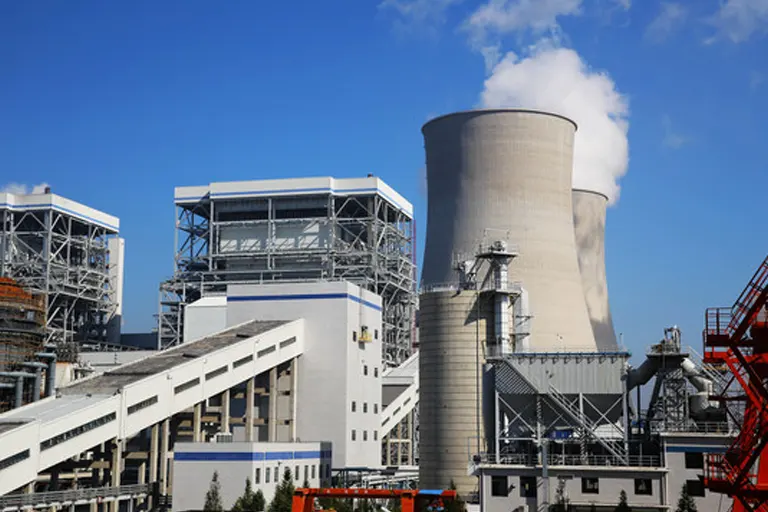
]]>The flue gas desulphurisation system of the power plant unit adopts limestone-gypsum wet desulphurisation process, and the desulphurisation wastewater generated by the system is transported by transfer pumps to the first and second phase desulphurisation wastewater treatment station respectively. The designed capacity of the unit phase I FGD wastewater is 67.3t/h, and the designed capacity of the phase II FGD wastewater is 2×36t/h, with one use and one backup. The phase II FGD wastewater system includes the following three sub-systems: FGD device wastewater treatment system, chemical dosing system, and sludge dewatering system. The main process flow is as follows: desulfurisation wastewater from desulfurisation island → wastewater pre-settling tank → wastewater buffer tank → wastewater transfer pump → neutralisation tank (adding lime emulsion) → reaction tank (adding organic sulphur) → flocculation tank (adding aluminium sulphate or FeSO4 and coagulant aids) → thickening and clarifying tank → clarifying tank → clarifying pump → dual media filter → clarifier (adjusting pH value) → clarifier pump → reuse after reaching the standard. Sludge circulation pump is set in the pre-settling tank and clarifying tank, and the sludge generated from sedimentation is transported to the plate and frame filter press by the sludge transfer pump for desludging and external transport. Due to the company's first phase of desulfurisation wastewater is in the period of shutdown and reconstruction, a period of equipment can not be put into operation normally, a unit of desulfurisation wastewater generated by the second phase of desulfurisation wastewater system needs to be discharged to the second phase of the desulfurisation wastewater system to be processed, so that the original design of a system of one operation and one standby system has become a two sets of normal operation system, increasing the maintenance and operation of the personnel workload. Meanwhile, since the FGD wastewater system was put into operation, abnormal problems such as equipment blockage and mud-bearing water often occurred, which caused difficulties in the operation of FGD wastewater system and increased the safety risks and work intensity in operation and maintenance, etc. In order to solve the problems mentioned above, the relevant technicians of the company analysed and solved the problems of FGD wastewater of the second phase.
1 Problems with desulphurisation wastewater systems
At present, the main problems of the second phase of desulphurisation wastewater are summarised as follows: Firstly, the wastewater treatment pre-settling tank is silted up, and the pre-settling tank scraper is out of operation due to faulty shutdown, which prevents it from operating normally. Second, the buffer pool aeration fan abnormal, fan noise, current rise, over current forced to shut down. Third, the desulfurisation wastewater sludge removal system of each mud pipeline is often clogged, when serious, resulting in pipeline connecting flange holding pressure bared mud, resulting in pollution of the surrounding environment, desulfurisation wastewater system was forced to shut down. Fourthly, the dosing pump and dosing pipeline of the triple box lime milk dosing system are often clogged, resulting in a reduction in the output of the lime milk dosing pipeline, and the amount of lime milk dosing of wastewater treatment fails to meet the design requirements. Fifth, the plate and frame filter press compressed mud cake is not shaped or the mud is bared between the filter plates of the filter press, resulting in pollution of the surrounding environment, and in serious cases, the plate and frame filter press is forced to stop operation. Sixthly, the two sets of plate and frame filter presses set up in the desulphurisation wastewater system are controlled by the mother, which cannot operate flexibly, the equipment utilisation rate is low, and the efficiency of sludge removal has not been brought into full play effectively.
2 Analysis of causes
2.1 pre-settling tank blockage reasons First, the design of desulfurisation wastewater treatment wastewater solids content requirements for less than 0.8%, team members of the second phase of the desulfurisation wastewater system water sampling and observation, found that the solids content of the incoming water samples is not stable, more often, wastewater solids content of the incoming water is far more than 0.8%, exceeding the capacity of the existing system wastewater treatment may result in pre-settling tank clogging. Secondly, there are foreign materials in the pre-settling tank, causing the tank body scraper jamming, scraper stop running, pre-settling tank silt deposition, and ultimately clogging.
2.2 The fan is forced to stop running because one is that the fan lubricant is not qualified, resulting in damage to the fan bearings and high noise. Secondly, the aeration fan inlet screen is blocked, resulting in increased resistance to fan operation, increased load, reduced air volume, and motor overcurrent. Third, the aeration fan outlet pipe is blocked, resulting in fan holding pressure, current increase, and ultimately over-current tripping.
2.3 Causes of holding pressure bared sludge and water reasons First, the sludge conveying pipeline arrangement is unreasonable. Team members observed the site sludge conveying pipeline, including pre-settling tank, clarification and thickening tank sludge circulation pipe, conveying pipe arrangement is more complex. Secondly, the sludge conveying pipeline flushing frequency is low or the flushing effect is poor resulting in pipeline clogging, holding pressure, and ultimately the flange gasket breaks, resulting in the phenomenon of mud and water.
2.4 Pipeline clogging causes one is the lime milk dosing pump import and export pipeline lining off, resulting in pipeline clogging. Secondly, the milk of lime solution box is set as a single-layer stirring impeller, the stirring is not sufficient, which is easy to cause the milk of lime to be clogged at the bottom of the solution box at the exit pipe. Thirdly, check the serious clogging inside the milk of lime pipeline, pipe scale accumulates along the inner wall of the pipe in layers, gradually reducing the diameter of the pipe, resulting in a gradual decrease in the dosage of the system. Analyse and observe the composition of the pipe scale, and found that the scale is milky white in appearance, similar to ceramic, insoluble in acid, and analysed mainly as calcium sulphate. Milk of lime dosing using desulphurisation wastewater tank water, the water source exists in a certain amount of sulphate ions, and calcium ions in the milk of lime to react to produce calcium sulphate, and ultimately clogging the pipe. Fourthly, the low frequency and poor effect of lime milk pipeline flushing, resulting in the accumulation of lime milk in the pipeline, and ultimately clogging the pipeline.
2.5 Plate and frame filter press stopping reason is that the quality of filter cloth of plate and frame filter press is poor or the washing of filter cloth is not thorough, resulting in poor sealing of filter cloth between filter plates, thus mud and water are bared. Secondly, the water outlet hole of the plate and frame filter press is blocked, and the wastewater through the filter cloth cannot be discharged smoothly, which ultimately causes excessive pressure in the chamber between the two filter plates, resulting in the deformation of the filter cloth and the emergence of muddy water. Third, the second phase of desulfurisation wastewater set up pre-sedimentation tank, pre-sedimentation tank part of the internal precipitation of sludge with the sludge conveying pipeline together with the filter press, due to the pre-sedimentation tank sludge has not been dosed, the sludge can not complete the complex reaction to form a more stable complex, the existence of static charges on the surface of the sludge has not been eliminated, resulting in the sludge is difficult to be compressed into a mud cake in the plate and frame filter press, resulting in the final cake is not shaped or bared water phenomenon. Or the phenomenon of bare mud and water. Fourthly, the plate and frame filter press bares mud or unloads mud during the period often causes sludge on the ground between the plate and frame on the first floor, and the sludge pressed into square cake shape falls directly from the open cavity of the filter plate to the flat steel support of the sludge discharge hopper, the sludge splashes in all directions, and it scatters in the gap around the sludge discharge hopper on the ground floor to pollute the ground and wall of the sludge discharge room. As the sludge of the plate and frame filter press has a certain degree of viscosity, once the wall and floor are polluted, it is more difficult for the staff to clean up.
3 Identification of the main causes
Through the field test analysis, lock the main causes of the problems caused by the system: a pre-sedimentation tank clogging the main reasons: pre-sedimentation tank empty, clean up the internal silt, found that there is a small portion of debris inside the sedimentation tank, but on the operation of the mud scraper has a small impact. Judge the main reason for the pre-sedimentation tank clogging is that the solid content of the incoming wastewater exceeds the standard. Second, the buffer pool aeration fan was forced to stop the main reason: members of the team on the aeration fan lubricant inspection, found that the fan oil quality is good, did not find the phenomenon of unqualified oil, discharged for this reason; members of the team organised to clean up the replacement of the fan filter, but the results achieved are not good, can be discharged for this reason; members of the team to check the fan outlet pipeline, found that the buffer pool inside the aeration pipeline on the aeration holes are blocked by sludge, dredge the aeration holes. After dredging the aeration holes, the fan runs normally. Determine the cause of abnormal fan operation for the fan outlet pipeline aeration holes are blocked by silt caused. Third, the sludge removal system pipeline clogging sludge, resulting in holding pressure bared mud and water main reason: to strengthen the sludge pipeline flushing frequency, will shorten the flushing cycle by half, but the effect is not good, can be checked that this factor has little impact. Analysis of the main reason for the pipeline arrangement is unreasonable, large U-shaped bends caused by sludge is easier to clog, the need to optimise the piping system. Fourth, the milk of lime dosing system equipment, pipeline clogging main reason: often blocked parts of the milk of lime dosing pump outlet pipeline elbow, the dosing pump outlet pipeline material change for UPVC pipeline, but after a period of time, the pipeline is still clogging, can be investigated lining pipeline lining plastic shedding factors. Lime milk dosing pipeline flushing cycle is shortened to general, also did not see significant results, to determine the main reason for the dosing water quality does not meet the requirements.4 Countermeasures to implement a strict supervision and control of desulfurisation wastewater water quality, and desulfurisation operators to do a good job of communicating with the maximum degree of maintenance of desulfurisation wastewater quality of incoming water containing solids in the wastewater system within the capacity of the output. The second is to set up the second phase of desulfurisation wastewater pre-settling tank, buffer pool bypass system, desulfurisation wastewater water directly to the triple box for dosing, the original pre-settling tank and desulfurisation wastewater two clarification and concentration pools in parallel, as a clarification and concentration pool standby. It has been proved that this bypass can meet the requirements of unit desulphurisation wastewater treatment, and at the same time eliminates the demand for pre-settling tank mud discharge and prevents muddy water without dosing and complexing from mixing into the plate and frame machine, resulting in mud and water spraying from the plate and frame machine. Third, the second phase of desulfurisation wastewater pre-settling tank, clarification and thickening tank originally arranged in the underground pipe trench sludge transport pipeline all raised to the ground, the height of the pool to maintain the same sludge pipeline, side-by-side arrangement, direct docking to the entrance of the sludge transport pump, eliminating the original design of the U-bend structure, the transformation of the sludge transport pipeline blockage phenomenon has been basically eliminated. Fourthly, the water source of the second-phase desulphurisation wastewater lime milk solution is changed to industrial water with better water quality, eliminating the reaction between lime milk and sulphate to generate insoluble calcium sulphate, and eliminating the phenomenon of frequent blockage of pipelines.
5 Conclusion
The system optimisation of Phase II FGD wastewater treatment system as mentioned above ensures the safe and stable operation of the system, reduces the equipment failure category and lightens the workload of the maintenance personnel, and at the same time maximises the operating capacity of the Phase II FGD wastewater treatment system, providing a strong guarantee for the stable operation of the unit.
Welcome to call us for consultation, technical exchange, and material experiment.
Enquiry: 188517-18517
]]>隨著環(huán)保標準的不斷提高,帶動著廢水治理設(shè)施與處理能力 的 提 升,推動生態(tài)保護更好的發(fā)展。工業(yè)廢水類型復(fù)雜且具有處理難度大與危害大的特點,廢水處理面臨很多挑戰(zhàn)。此 類 廢 水的來源為石化行業(yè)和紡織工業(yè)與造紙工業(yè)等,采 取 的 技 術(shù) 與 方法 差 異,要 結(jié) 合 廢 水 的 特 點 特 征,選擇適宜的手段與策略,達 到高效處理的目的。
1工業(yè)廢水處理現(xiàn)狀分析
近 年 來,我國各地區(qū)不斷加大廢水處理的投入力度,積 極 研發(fā)新技術(shù)與新設(shè)施,助 力 廢 水 處 理,獲得了不錯的成效。根 據(jù)2019年生態(tài)環(huán)境部發(fā)布的448個 日 排 污 水 量 大 于100立 方 米 的直排海污染源監(jiān)測結(jié)果顯示,工業(yè)廢水排水量為25.85億 噸,同比 下 降33.3%。企業(yè)加快安裝廢水處理設(shè)施,不斷提高廢水處理能 力。生 態(tài) 環(huán) 境 部2020年5月 公 布 的《2019年中國生態(tài)環(huán)境狀況 公 報》數(shù) 據(jù) 顯 示,2018年全國廢水治理設(shè)施共計72952套,相比2017年 同 期 增 加3.7%;日處理能力已經(jīng)達到22370萬 噸。雖然工業(yè)廢水處理獲得不錯的成效,但是工業(yè)廢水處理還面臨著很大的技術(shù)挑戰(zhàn),廢水處理的把控存在系列問題,需 加 以 優(yōu) 化 與完 善。
2工業(yè)廢水處理的問題與挑戰(zhàn)
2.1廢水的針對性不強目 前,工業(yè)快速發(fā)展生產(chǎn)的產(chǎn)品多樣化,使 用 的 原 材 料 與 工藝 差 異,廢水的污染物越來越多,增加了廢水處理的難度。工 業(yè)廢水來源于化工和紡織以及食品工業(yè)等行業(yè),包 括 綜 合 廢 水 類、含鉻廢水類與含氟廢水類等,運用的方法或多或少存在些許問題,難以實現(xiàn)廢水資源的有效回收與利用。不同類型的污染物,化 學(xué) 性 質(zhì) 差 異,若未能采取針對性強且有效的措施,還 會 增 加 廢水處理藥劑的使用量,增加污水處理的成本。除 此 之 外,受 到 廢水處理技術(shù)手段的限制,污水處理成本很高。若想達到現(xiàn)行的環(huán)保 標 準,需投入一定的資金、物 力 以 及 人 力。現(xiàn) 有 的 工 業(yè) 廢 水 處理技術(shù)水平有待提高,處理能力還有很大的提升空間。
2.2資源化處理水平不高中國人口數(shù)量龐大,工業(yè)化水平較高,人 們 的 生 活 與 生 產(chǎn) 對水資源的需求很大,然 而 水 資 源 有 限,如何滿足高需求成為廢水處理需要研究的重點課題。在工業(yè)廢水處理方面,要 注 重 提 高 廢水資源化處理的水平。從廢水的類型與來源角度分析,部 分 廢 水含 有 高 鹽 等,廢水處理難度更大。例 如,高 鹽 廢 水。我 國 每 年 產(chǎn) 生的工業(yè)高鹽廢水超過3億 立 方 米,產(chǎn)生的高鹽危廢超過千萬噸,并且大部分未得到合理處置,給生態(tài)環(huán)境帶來很大壓力。一 般 來說,純水制備與化學(xué)制備以及高鹽廢水處理等水處理環(huán)節(jié),均 會產(chǎn) 生 廢 鹽。廢 鹽 含 有 有 害 雜 質(zhì),包括亞硝酸鈉和草甘膦副產(chǎn)氯化鈉 等,若未進行處理直接排放,則會造成地表水和地下水污染等,威脅人們的健康生活。一 方 面,廢水處理面臨著很大的挑戰(zhàn)。另 一 方 面,如何實現(xiàn)資源化也有著很大的難度,還 需 要 繼 續(xù) 加 大工業(yè)廢水處理的技術(shù)研究。
2.3廢水處理的投入與管理問題目 前,工業(yè)廢水處理行業(yè)的企業(yè)數(shù)量不斷增加,但 是 大 多 為規(guī)模偏小的企業(yè)。隨 著 環(huán) 保 工 程 的 推 進,城鎮(zhèn)污水處理廠數(shù)量與處理能力不斷提高,建成了大量城鎮(zhèn)污水處理廠,提 高 了 污 水 處理 能 力。從 工 業(yè) 廢 水 的 處 理 方 面 分 析,還存在著系列問題。部 分企業(yè)的環(huán)保意識不強,注重自身的利益,對廢水處理的研究與投入 不 足,生產(chǎn)中不達標排放的情況依舊存在。除 此 之 外,廢 水 處理的監(jiān)督管理力度不夠,影響著廢水處理效益目標的實現(xiàn)。
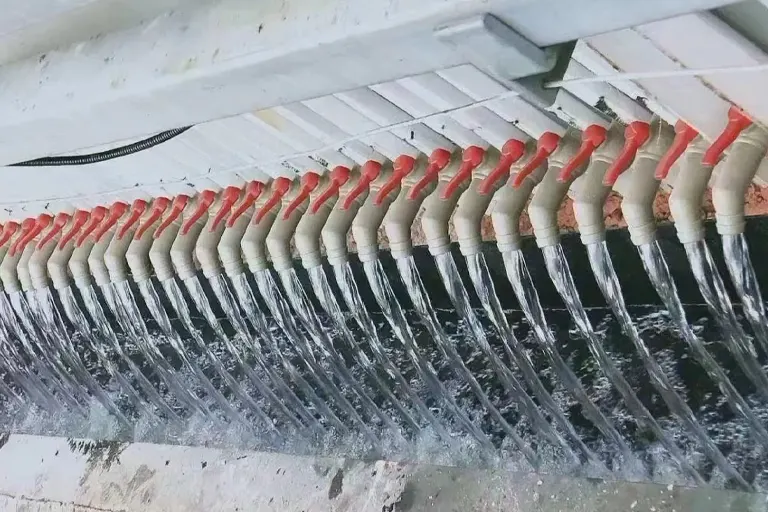
3工業(yè)廢水處理的策略總結(jié)
3.1結(jié) 合 行 業(yè) 特 點,采取針對性處理措施工業(yè)廢水的類型較多,每個行業(yè)有著不同的特點,若 想 實 現(xiàn)對廢水的有效處理,要 結(jié) 合 行 業(yè) 特 點,采取針對性處理措施。以食 品 工 業(yè) 為 例,是以農(nóng)副產(chǎn)品為原材料經(jīng)過物理加工或采用酵母發(fā)酵工藝制造食品。對食品工業(yè)進行細化,可分為食品飲料與糧食加工以及植物油加工等。由于原材料廣泛并且加工產(chǎn)品類型 繁 多,所以食品工業(yè)排出廢水水質(zhì)差異大并且水量大。一 般 來說,廢水中含有固體物質(zhì)和懸浮物以及酸堿鹽等,具 體 包 括 果皮、畜禽碎肉以及油脂、血 液 等,甚至?xí)兄虏【??體 來 說,此類廢水具有有機物質(zhì)與懸浮物含量高以及毒性小的特點,若沒有經(jīng)過有效處理排放,必將對生態(tài)環(huán)境產(chǎn)生污染,極 易 引 發(fā) 水體 富 營 養(yǎng) 化,造成水生動物與魚類死亡。廢 水 中 含 有 各 類 微 生物,例 如 致 病 微 生 物,使得水底沉積的有機物產(chǎn)生臭味,使 得水質(zhì) 被 惡 化,最終造成環(huán)境污染。目 前,食品類工業(yè)廢水多采取以下 技 術(shù):
(1)物 理 處 理 法。采用沉淀過濾工藝與離心分離工藝等,進行 廢 水 的 處 理。
(2)化 學(xué) 處 理 法。采用氧化還原工藝和電解分離工藝等,開展 廢 水 的 處 理。
(3)生物化學(xué)處理法。采用酶促降解工藝和超聲波工藝等,按照廢水處理要求進行處理。舉例來說,淀粉加工業(yè)廢水處理,先是經(jīng)過 柵 格、沉 淀 與 氣 浮等工藝去除懸浮物,之后進 入調(diào)節(jié)池,完成 水 量 調(diào) 節(jié),最 終 進 入 厭氧 反 應(yīng) 裝 置,同時投加營養(yǎng)鹽進行碳氧比調(diào)節(jié),實 現(xiàn) 厭 氧 生 物 反應(yīng)。若廢水處理標準對水質(zhì)有著較高的要求,或者廢水中含有的有 機 物 很 多,則可以采用兩級曝氣池或者兩級生物濾池,實 現(xiàn) 達標排放。工業(yè)廢水處理實踐中,要結(jié)合行業(yè)特色,選擇適宜的處理工藝與技術(shù),構(gòu)建完善的處理體系,保障廢水得到高效處理。
3.2選擇適宜的處理技術(shù)目 前 來 說,應(yīng)用較為廣泛且效果較好的技術(shù)如下:
(1)厭氧生物處理技術(shù)。若廢水的濃度很高,并 且 化 學(xué) 需 氧量 很 高,但 可 生 化 能 力 較 差,則選擇厭氧生物處理工藝,進 行 廢水 預(yù) 處 理。從廢水處理的效果來看,技術(shù)具有操作簡單的特點,同時能源資源消耗量較少,被積極推廣應(yīng)用。常 用 的UASB等 厭氧處理器裝置等,通過氣體與水污泥的有效混合,采 用 污 泥 分 離工 藝,使廢水得到有效處理,實現(xiàn)降低廢水濃度與危害的效果。
(2)工業(yè)廢水處理技術(shù)領(lǐng)域中,MBR技 術(shù)(膜 生 物 反 應(yīng) 器)成為 熱 點,集成了膜分離技術(shù)、好氧生物技術(shù)與物理處理方法的優(yōu)勢,形成的新型廢水處理工藝,可有效提高工業(yè)廢水處理的效率。使用的膜生物反應(yīng)器工藝,主 要 由 缺 氧 池、曝 氣 區(qū) 與 膜 分 離池 組 成。若想獲得較好的廢水處理效果,提高廢水處理能力,要圍繞好氧曝氣區(qū)做好研究,加大技術(shù)研究力度,增 強 浸 放 膜 組 件的 功 能,達到廢水處理的要求與效果。
(3)生物制劑增效法。利用生物處理工藝中的機械設(shè)備,通過降低廢水中含有的生物菌群,達到降低廢水中污染物含量的目 的,獲得較好的廢水處理效果。采用生物制劑增效法,無 法 替代現(xiàn)有的有害細菌群,主要是提高細菌群的反應(yīng)能力,進 而 達 到降 解 廢 水 不 良 物 質(zhì) 的 效 果,實現(xiàn)對廢水的凈化以及高效利用。
3.3提高廢水資源化水平工業(yè)廢水的產(chǎn)生量很大,若能夠?qū)崿F(xiàn)資源化利用,有 著 重 要的 意 義。目 前 來 說,廢水循環(huán)利用常用的方法如下:
(1)分 散 式 利 用。通過在工業(yè)生產(chǎn)區(qū)或者多個企業(yè)集中配置廢 水 處 理 系 統(tǒng),實現(xiàn)對工業(yè)生產(chǎn)與制造產(chǎn)生的廢水二次循環(huán)利用,解 決 水 資 源。技 術(shù) 的 具 體 應(yīng) 用,要結(jié)合企業(yè)生產(chǎn)類型與廢水的 特 點,選 擇 適 宜 的 廢水處理技術(shù),達到資源高效化利用的同時,降低廢水處理成本。
(2)集中式廢水處理。工業(yè)廢水處理實踐中,采 用 集 中 式 廢水 處 理 工 藝,能夠有效提高水處理能力與效率。對污染程度很高的 廢 水,采 取 深 度 處 理,可有效降低對環(huán)境的影響,同 時 增 強 廢水循環(huán)利用效果。將 采 集 的 廢 水,應(yīng)用到各個領(lǐng)域?qū)崿F(xiàn)高效化利用。在農(nóng)作物灌溉領(lǐng)域,可循環(huán)利用經(jīng)過處理后含有大量微量元素 的 工 業(yè) 廢 水,滿足農(nóng)作物的生長需求,提高水資源處理效率。發(fā)揮重金屬元素的價值與作用,促進植物根系吸收,保 障 人 體 健康。需 要 注 意 的 是,廢水應(yīng)用實踐中要做好廢水的全面化分析,最大程度上確保灌溉用水的安全性。
3.4加大廢水處理投入力度工業(yè)廢水處理實踐中,需配置大量的處理設(shè)施與工藝等,滿足廢水處理的需求。基 于 此,要加大廢水處理的投入力度,積 極推廣應(yīng)用新設(shè)施、新技術(shù)與新工藝等,滿 足 各 行 業(yè) 領(lǐng) 域 的 廢 水 處理 需 求,提高廢水資源的利用率。圍繞當(dāng)前工業(yè)廢水處理面臨的技術(shù)難題與挑戰(zhàn),加大技術(shù)的研究力度,積極提高廢水處理及其資源化利用的水平,滿足工業(yè)廢水處理的需求。除 此 之 外,要 加大對企業(yè)廢水處理與排放的監(jiān)督。通 過 構(gòu) 建 完 善 的 監(jiān) 測 系 統(tǒng),動態(tài)化掌握工業(yè)廢水處理的水平,督促企業(yè)按照規(guī)定處理廢水,達到 排 放 標 準。
concluding remarks
綜 上 所 述,工業(yè)廢水處理實踐中面臨很多技術(shù)難題與挑戰(zhàn),現(xiàn)有的膜處理技術(shù)與生物處理技術(shù)等,雖然能夠滿足部分工業(yè)廢水處理的需求,但也存在著不足,需 要 加 大 技 術(shù) 的 研 究。結(jié) 合工業(yè)廢水處理的現(xiàn)狀分析,提出加大廢水處理投入力度和采取針 對 性 處 理 技 術(shù) 等 建 議,提高工業(yè)廢水處理效率與資源化水平。
Welcome to call us for consultation, technical exchange, and material experiment.
Enquiry: 188517-18517
]]>